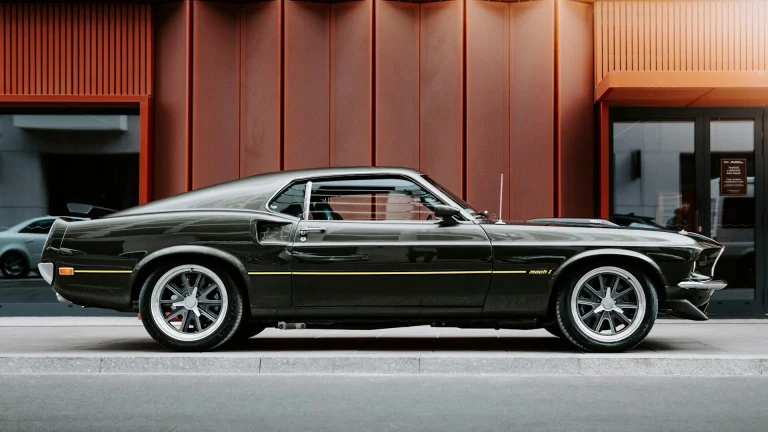
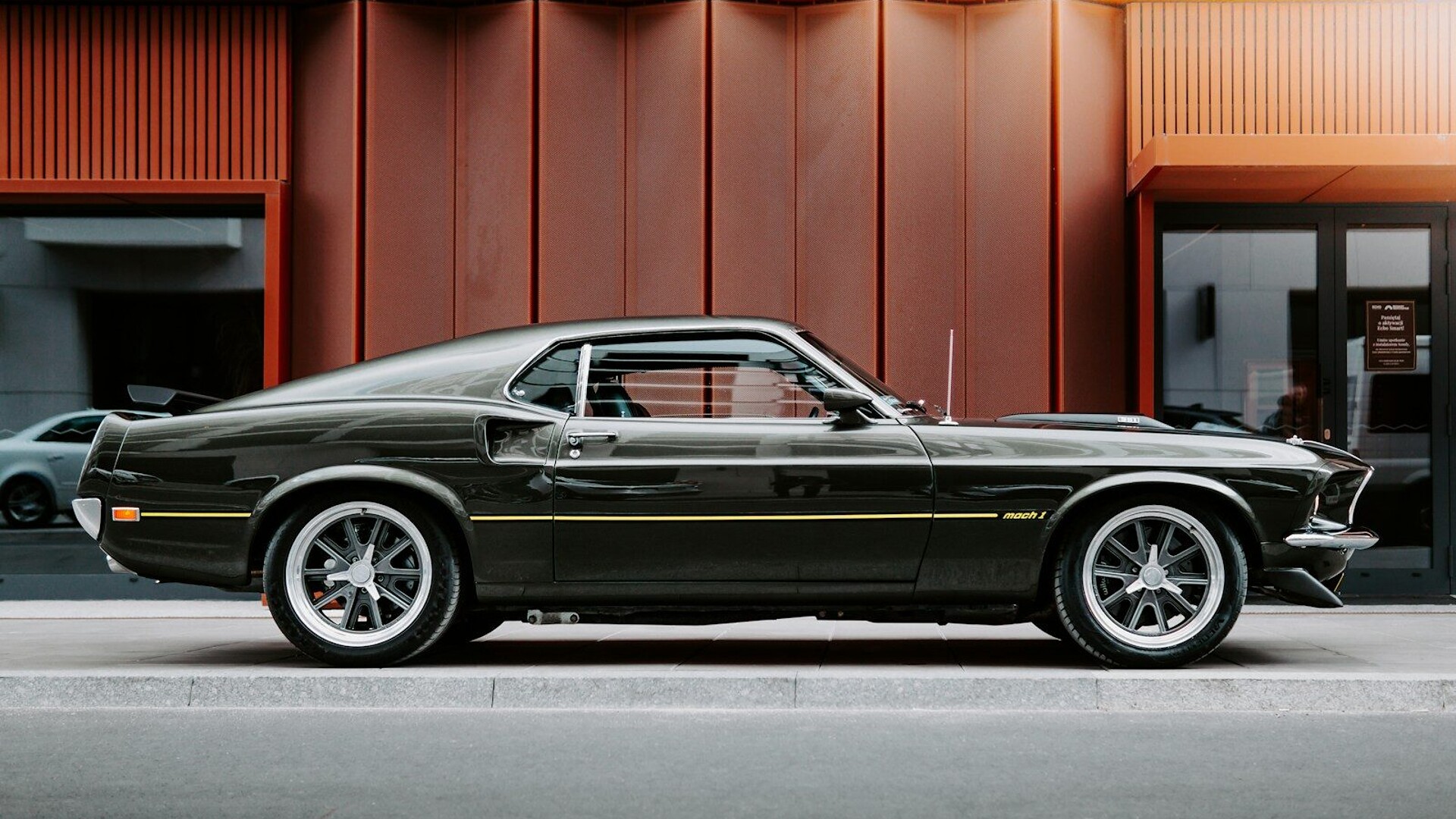
A first-generation Ford Mustang fastback, the shape Vintage Modern recreates in carbon fiber on a new Mustang. This is not a Vintage Fastback. Photo: Eugene Tkachenko via Unsplash
Vintage Modern, the Atlanta builder Ford has been suing since October 2024 over its retro-bodied Broncos, now sells a hand-laid carbon-fiber fastback in the 1967 mold built on a brand-new Mustang. It starts at $295,500, and with the optional supercharger the company rates it at 840 horsepower.
That is 25 more than the 815 horsepower Ford certified for the Mustang GTD, the most powerful production Mustang Ford has built. Vintage Modern’s number is its own claim, not an SAE certification, but it puts a small Georgia company in the position of out-muscling Ford’s flagship using Ford’s own car, while Ford’s lawyers are still in court arguing over the last one.
The car is called the Vintage Fastback. According to the company’s Nov. 19 release, it was shown at an invitation-only preview on Nov. 18 before its public debut at Retromobile New York, which runs Nov. 19-22. “The Vintage Fastback is a car we’ve always wanted to build,” founder and CEO Chau Nguyen said in the release.
A Mustang that never says Mustang
I read the release twice looking for the word Ford. It isn’t there. Neither are Mustang, Shelby, GT500 or Eleanor. The base car is described only as “a modern 2026-27 S650 platform,” and S650 is Ford’s internal code for the current Mustang. The standard engine is listed as a 5.0-liter V8 making 486 horsepower and 418 lb-ft. The optional 3.0-liter Whipple supercharger raises that to 840 horsepower and 615 lb-ft on 93-octane fuel, per the company.
The rest of the spec sheet reads like a Mustang order guide: a six-speed manual with rev matching or a 10-speed automatic, MagneRide adaptive suspension, Brembo brakes and an active-valve exhaust. The body is the change. Vintage Modern says the carbon panels are hand-laid in Detroit, then assembled and finished in Atlanta, with more than 900 hours of labor in each car.
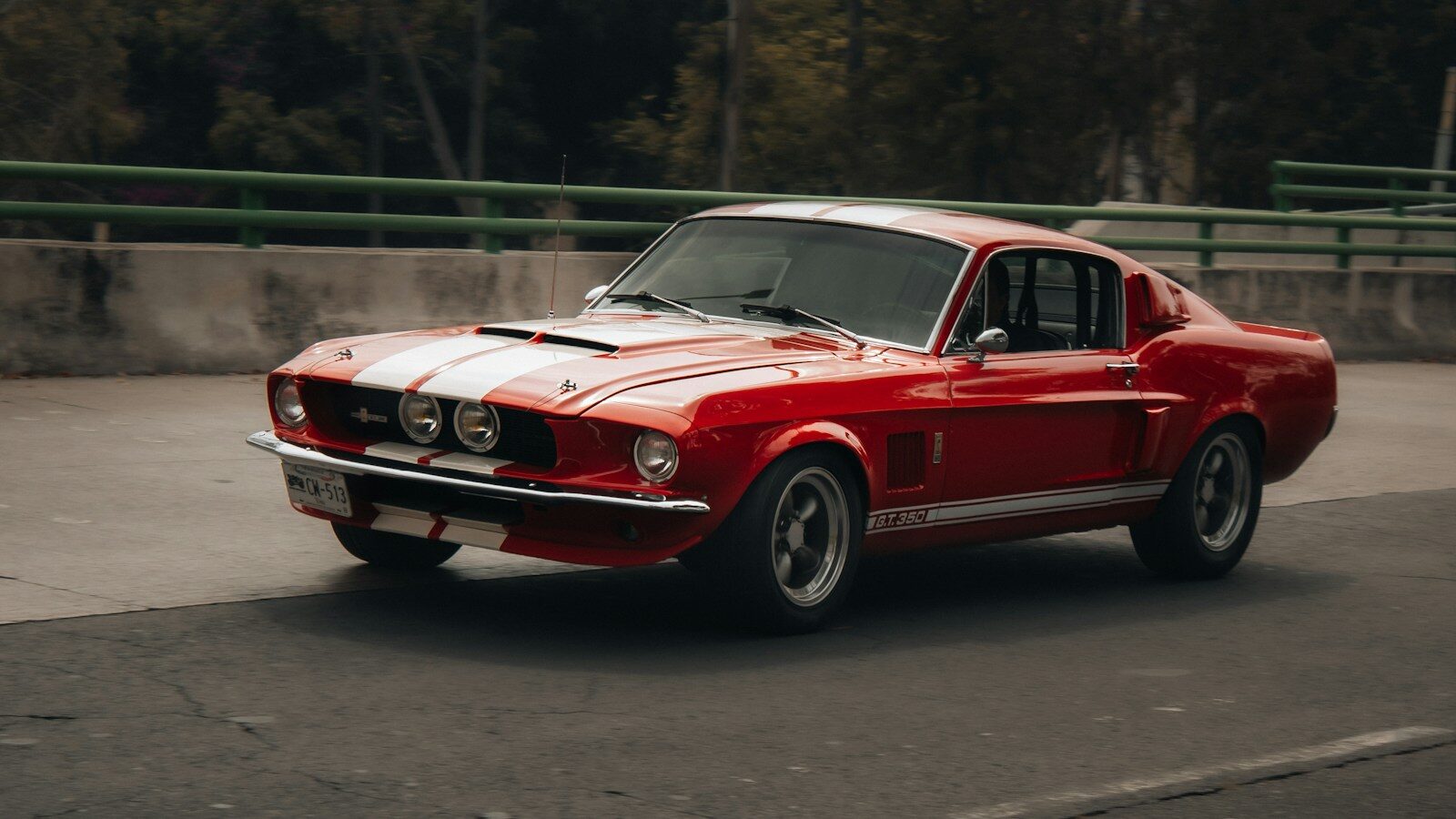
On the company’s online configurator, the car loads in Chalk Gray with black stripes, a $5,000 paint option. In its 2025 opinion on the Eleanor fight, the Ninth Circuit described the car from the 2000 remake of Gone in 60 Seconds as a gray Shelby GT-500 with black stripes. Vintage Modern’s own page also lists a billet grille with twin auxiliary driving lights, a carbon hood with a functional scoop and side scoops.
Why a builder can copy the Eleanor look in 2026
For two decades, anyone building a gray, black-striped 1967 fastback had to think about Denice Halicki, widow of the original film’s creator, who claimed a copyright in Eleanor and sued builders over it. That claim is finished. On May 27, 2025, a Ninth Circuit panel ruled in Carroll Shelby Licensing v. Halicki, No. 23-3731, that Eleanor fails every part of the court’s test for a copyrightable character. “In sum, Eleanor is not really a character,” the opinion says, calling the car a “stock” sports car. Halicki asked the Supreme Court to take the case, and the docket shows the petition was denied on Nov. 10, 2025.
The same opinion explains a detail that still shapes these cars. Halicki and Shelby settled an earlier lawsuit in 2009, and the court read that settlement as barring Shelby only from copying Eleanor’s raised hood hump and her small inset dual lights. That was a private contract with Shelby. It doesn’t bind a company in Atlanta that never signed it, and the Ninth Circuit ruling leaves no character copyright in Eleanor for anyone to enforce.
Copyright was never the only lever, though. Trademark and trade dress law protects names, logos and, in some cases, the look of a product when buyers associate it with one company. Ford is already using that law against Vintage Modern.
What Ford’s Bronco lawsuit is about, and where it stands
Ford sued on Oct. 31, 2024, in federal court in Atlanta (Ford Motor Company v. Vintage Modern, Inc., No. 1:24-cv-04988, before U.S. District Judge William M. Ray II). The defendants are the company, a subsidiary, and Nguyen personally. Ford’s amended complaint, filed Nov. 12, 2024, attaches a June 3, 2024, cease-and-desist letter, Ford and Bronco trademark registrations, and captures of the old VintageBroncos.co website and Instagram account. The company had been doing business as Vintage Broncos; the docket lists it as formerly known by that name. Its Bronco-based truck is now marketed as the Modern Classic.
Vintage Modern is fighting the suit. According to Law360’s coverage of the case, both sides filed competing summary judgment motions by late August 2026, with Ford attacking the company’s defenses and Vintage Modern accusing Ford of improperly renewing its Bronco trademark registration while the Bronco was out of production. I found no ruling on those motions in the court records I could reach, so as of this writing the case is unresolved.
That production-gap argument matters for the new car. Ford stopped selling the Bronco after 1996 and brought it back for 2021, which gave Vintage Modern room to argue Ford had let the name lapse. The Mustang has had no such gap. Whatever the judge decides about Broncos, an abandonment defense has nothing to grab onto with a Mustang, which may be why the Fastback’s paperwork avoids Ford names entirely and leans on a platform code.
The 840-hp supercharger and the $10,500 Ford kit
Ford Racing sells a 3.0-liter Whipple supercharger kit for 2024-2026 Mustang GT and Dark Horse models at a $10,500 retail price. Ford rates it at 810 horsepower and 615 lb-ft for cars with active exhaust, requires premium fuel, lists a California Air Resources Board executive order, and backs it with a 3-year, 36,000-mile warranty when a Ford dealer or ASE-certified technician installs and registers it.
Vintage Modern’s supercharger is also a 3.0-liter Whipple, and its torque figure is identical: 615 lb-ft. The difference is 30 horsepower, and the company ties its number to 93-octane fuel, while Ford’s rating assumes 91-octane premium. Vintage Modern hasn’t said how its calibration differs from Ford’s, and its materials don’t say whether its tune carries a CARB executive order. That matters to anyone registering the car in California or another state that follows its emissions rules, where an unapproved engine modification can fail a smog inspection. Vintage Modern does offer its own 3-year, 36,000-mile bumper-to-bumper warranty, and says it will fly a technician to an owner’s home within 72 hours if a problem can’t be handled remotely.
So a Mustang GT owner can buy Ford’s own 810-horsepower hardware, with a Ford warranty, for $10,500 plus installation. The Vintage Fastback buyer is paying the rest of the $295,500 for the carbon body, the cabin, the labor, and the 30-horsepower claim.
The safety certification Vintage Modern has promised but not yet shown
Ford’s case over the Broncos isn’t only about names. A summary by the law firm ArentFox Schiff notes the amended complaint accuses the company of misleading consumers about the safety of its rebuilt trucks, which Ford describes as materially altered versions of its own. Vintage Modern has answered with safety marketing: the Fastback page lists eight airbags, crumple zones, side-impact beams, stability control and ABS, and quotes Nguyen saying that if he wouldn’t put his 16-year-old daughter in one of the company’s vehicles, he wouldn’t put anyone in it.
The Fastback’s paperwork is in the future tense. The release says the Fastback “will meet applicable Federal Motor Vehicle Safety Standards (FMVSS) and undergo physical crash testing.” That is a promise, not a result. Under federal rule 49 CFR 567.7, a company that alters a certified new vehicle before its first retail sale becomes an “alterer” and must add its own label stating that the vehicle, as altered, still meets the federal safety, bumper and theft standards affected by its changes. Replacing an entire body is about as large an alteration as a shop can make. A buyer should expect to see that label and the crash-test results before writing a check this size, and to ask how the carbon panels affect insurance and repair costs after a crash.
What happens next for Vintage Modern and its buyers
Vintage Modern says demand is outrunning its plant, and that it plans to move into a factory three times the size of its current one, hire more than 100 people and triple production within two years. Its website says no Fastbacks are in inventory yet. The next thing to watch is Judge Ray’s ruling on the summary judgment motions in the Bronco case, because it will tell every builder in this business how far Ford’s trademarks reach into a body that only looks like a Ford.
Vintage Modern’s paperwork never says Ford, Mustang or Eleanor, and nobody who sees the car will need to be told. Should a trademark cover a silhouette everyone recognizes, or only the name on the badge?
About the Author