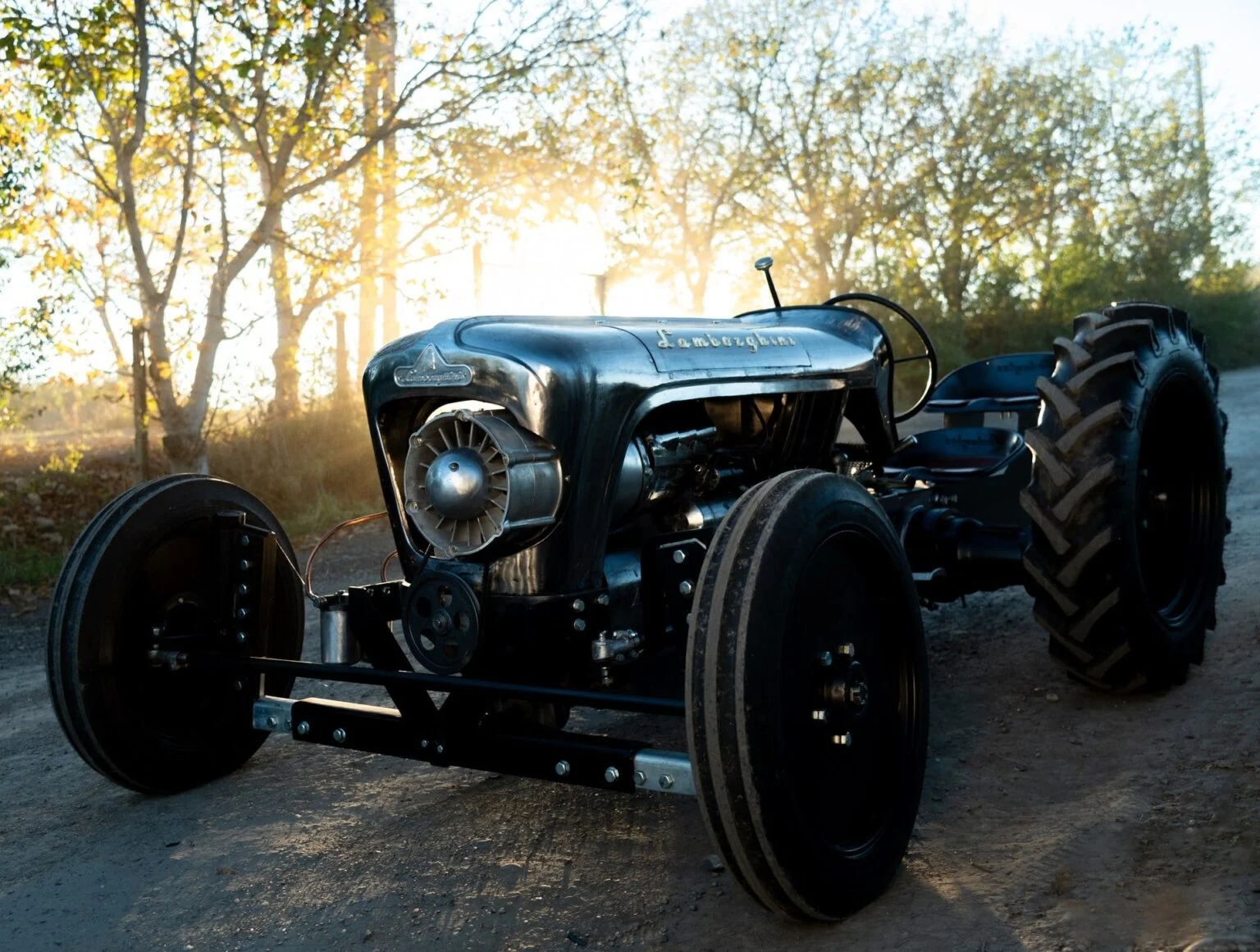
Spending supercar money on a tractor sounds absurd, until you see the one that’s back on the market. A radically reimagined Lamborghini Centenario tractor, built from a 1960s machine and turned into a rolling piece of industrial art, is pulling serious attention, not just for the way it looks, but for the number attached to it: estimates run from just over half a million dollars to more than two million. That’s where it gets uncomfortable.
A Stranger Tribute Than the Supercar Centenario
This is no backyard build. The Centenario Trattori was created to mark the 100th anniversary of Ferruccio Lamborghini’s birth. While the world fixated on the limited-run Centenario supercars, a quieter and far stranger tribute was taking shape — only five of these tractors were ever built, each blending Lamborghini’s farming roots with an aggressive, almost rebellious artistic streak. Underneath, it’s still a Lamborghini tractor. The foundation comes from original 1960s models like the DLA 35 and 2R DT, meaning a 2.2-liter three-cylinder diesel sits at its core.
An Artist’s Radical Redesign
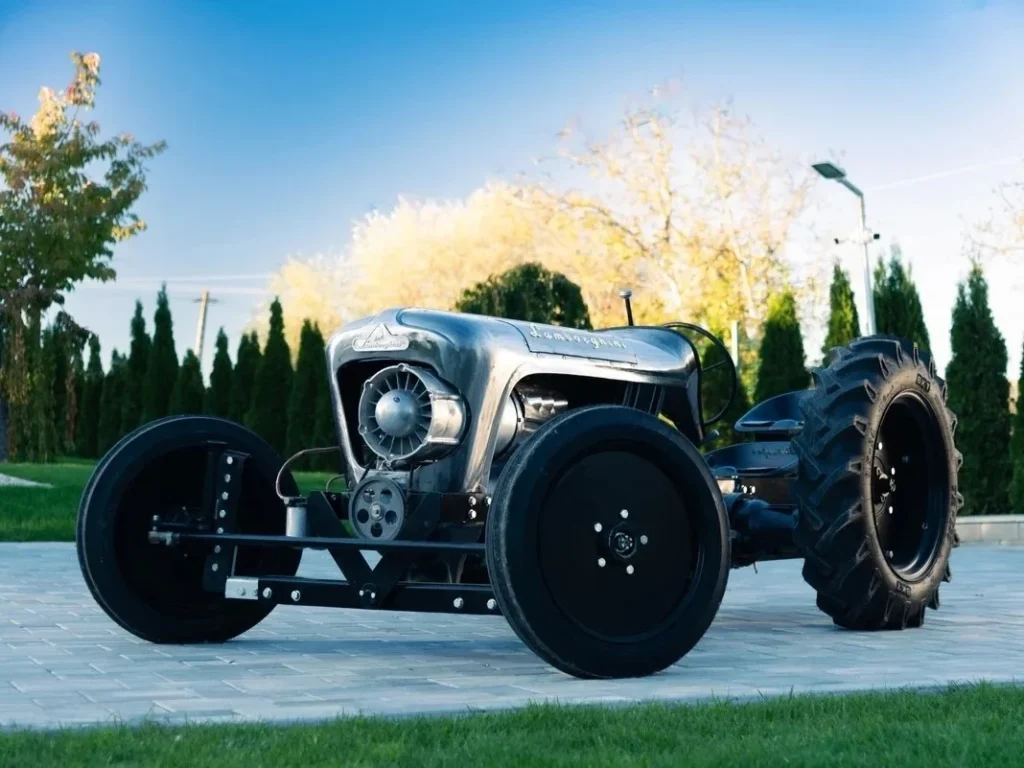
Italian artist Adler Capelli completely reshaped the machine. The bodywork is raw, unpainted metal, designed to weather naturally over time. Instead of perching the driver high above the rear axle like a normal tractor, Capelli dropped the driver and passenger down between the massive rear wheels, a single change that flips the whole visual balance. The silhouette stretches lower and longer, almost mimicking a Lamborghini grand tourer while keeping its agricultural DNA, and six side-exit exhaust pipes, two per cylinder, jut out from under the body. Excessive, theatrical, and completely intentional.
The engineering is just as wild. The tractor has been significantly lowered, not an easy thing on a machine like this, with portal axles added to reposition the drivetrain, which took extensive custom fabrication since nothing off-the-shelf exists for a vintage Lambo tractor. The front end was reworked with custom parts inspired by mid-century hot rod design. And here’s the kicker: despite all the drama, it still works. Steering, drive systems, even the rear power takeoff remain functional. This isn’t a sculpture, it’s a machine that can still do the job it was built for, even if no buyer ever will.
Buying a Statement, Not Just a Vehicle
Collectors understand rarity and craftsmanship, but even in the high-end world, this pushes into uncomfortable territory. You’re not just buying a vehicle, you’re buying a statement, and not everyone agrees on what that statement is worth. There’s real poetry in it, too. Ferruccio Lamborghini didn’t start with supercars; he built tractors because post-war Italy needed them, and that business made him rich enough to challenge Ferrari and eventually create one of the most iconic car brands ever. The tractor is the origin story. It’s the reason Lamborghini exists at all.
So turning that humble beginning into a million-dollar art piece feels both fitting and a little out of touch. On one hand, it celebrates the brand’s roots in a way no supercar could. On the other, it takes a tool built for hard work and makes it almost untouchable. The example for sale is based on a 1960s DLA 35 and has covered only about 500 kilometers since its transformation, essentially new in use, but carrying decades of history in its bones. For collectors, that’s a compelling mix. For enthusiasts, it’s more complicated, because this isn’t about speed or performance, it’s about blurring the line between function and art, heritage and excess. And as the prices climb, the question only gets louder.
About the Author