Screenshot
An IndyGo bus carrying a NASCAR-linked advertisement was left badly burned Tuesday morning after catching fire on Indianapolis’ far east side, creating a dramatic scene before sunrise and raising fresh concerns about transit vehicle safety and maintenance.
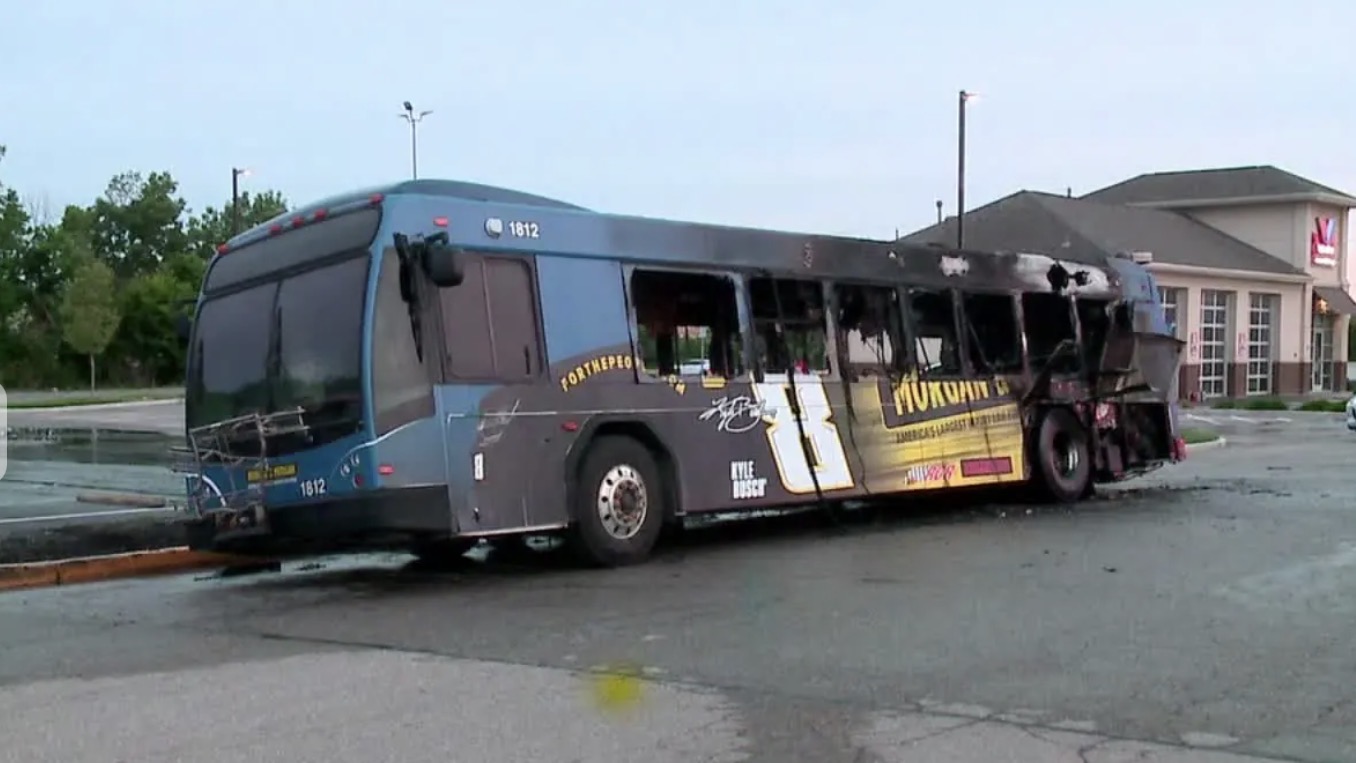
Firefighters were called to 10429 E. Washington Street just before 6 a.m. after reports of a bus fire. By the time crews arrived, flames had already caused major damage to the rear section of the vehicle. Images from the scene showed the bus heavily charred, with the back portion almost completely blackened from the fire.
What immediately made the incident stand out was the advertisement stretched across the side of the bus. The vehicle carried a promotion connected to the Morgan & Morgan-sponsored NASCAR car associated with Kyle Busch. That detail turned a routine transit fire into something far more attention-grabbing online once images from the scene started circulating.
According to the Indianapolis Fire Department, the driver reported hearing a loud bang moments before the fire erupted. That detail matters because sudden mechanical failures inside heavy transit vehicles can escalate fast, especially when the vehicle is already in operation and carrying large fuel and electrical systems underneath the bodywork.
Thankfully, nobody was hurt.
Fire officials confirmed there were no injuries connected to the fire. The driver was able to get out safely before flames consumed the rear of the bus. No passengers injured in the incident were reported either.
Still, the damage shown in photos tells a much bigger story than a simple roadside breakdown.
The rear of the bus appeared to absorb the worst of the fire, with extensive scorching visible across the engine-area body panels. Thick black burn marks stretched across the back section, and the vehicle looked completely disabled after the blaze was extinguished.
That’s where things change. Transit bus fires are not normal daily occurrences, even in large cities with aging fleets and constant stop-and-go operation. When a driver reports hearing a loud bang immediately before flames appear, attention quickly shifts toward the possibility of a catastrophic mechanical failure.
At this point, officials have not publicly identified what caused the fire. No additional information about the mechanical condition of the bus or the source of the bang was released Tuesday. That leaves major questions unanswered about what exactly failed inside the vehicle before the fire broke out.
And that’s where it gets complicated for public transit systems.
Modern buses operate under brutal conditions every day. They spend hours idling, stopping, accelerating, and carrying heavy passenger loads through traffic and weather extremes. Components in the rear engine compartment absorb enormous heat and stress over time. When something goes wrong in that environment, the damage can spread quickly.
For drivers and mechanics, the sound described before the fire stands out immediately. Loud mechanical noises followed by flames are the kind of warning signs nobody inside a transit vehicle wants to hear because the situation can escalate in seconds.
This incident also arrives at a time when transit agencies across the country continue dealing with fleet reliability pressures, maintenance demands, and public scrutiny over operational safety. Riders expect buses to be dependable. Drivers expect them to be safe enough to operate every day without fear of major equipment failures.
Here’s the part that matters. Even though no injuries were reported, incidents like this still carry consequences. A heavily damaged bus means downtime, repairs or replacement costs, service disruptions, and more pressure on transit agencies already managing tight operational demands.
And visually, scenes like this create a public relations problem almost immediately.
A burned-out city bus sitting on the roadside before dawn is the kind of image that spreads fast online, especially when the vehicle carries recognizable motorsports branding tied to a major NASCAR name like Kyle Busch. The advertisement itself had nothing to do with the fire, but once the photos circulated, the connection became impossible to ignore.
That crossover between motorsports branding and public transit disaster imagery gave the story a completely different level of visibility.
For automotive enthusiasts, this is another reminder that commercial and fleet vehicles live very hard lives behind the scenes. Most people never think about what transit buses endure mechanically every single day. Unlike privately owned vehicles that may sit parked for hours, buses operate almost constantly, stacking miles, heat cycles, and wear at an aggressive pace.
When failures happen, they tend to happen publicly and dramatically.
This is where the story turns toward accountability and maintenance concerns, even if investigators have not yet identified a cause. Drivers rely on fleet operators to catch mechanical problems before they become dangerous. Transit operators rely on maintenance schedules and inspections to keep vehicles roadworthy.
If something inside the bus failed catastrophically enough to produce a loud bang before flames erupted, investigators will likely want to determine whether the issue appeared suddenly or whether warning signs existed beforehand.
Right now, the good news is simple. Nobody died. Nobody was injured. The driver got out safely, and firefighters prevented the situation from becoming even worse.
But the images left behind are difficult to ignore.
A charred IndyGo bus sitting damaged on East Washington Street is more than just another disabled vehicle story. It’s a reminder of how quickly mechanical failures can spiral into dangerous situations when large commercial vehicles are involved. It also shows how one moment on an ordinary route can suddenly become a headline tied to fire, public safety, and one of NASCAR’s biggest names.
And until investigators determine exactly what caused that loud bang before the flames started, the biggest question surrounding this fire is still hanging in the air.