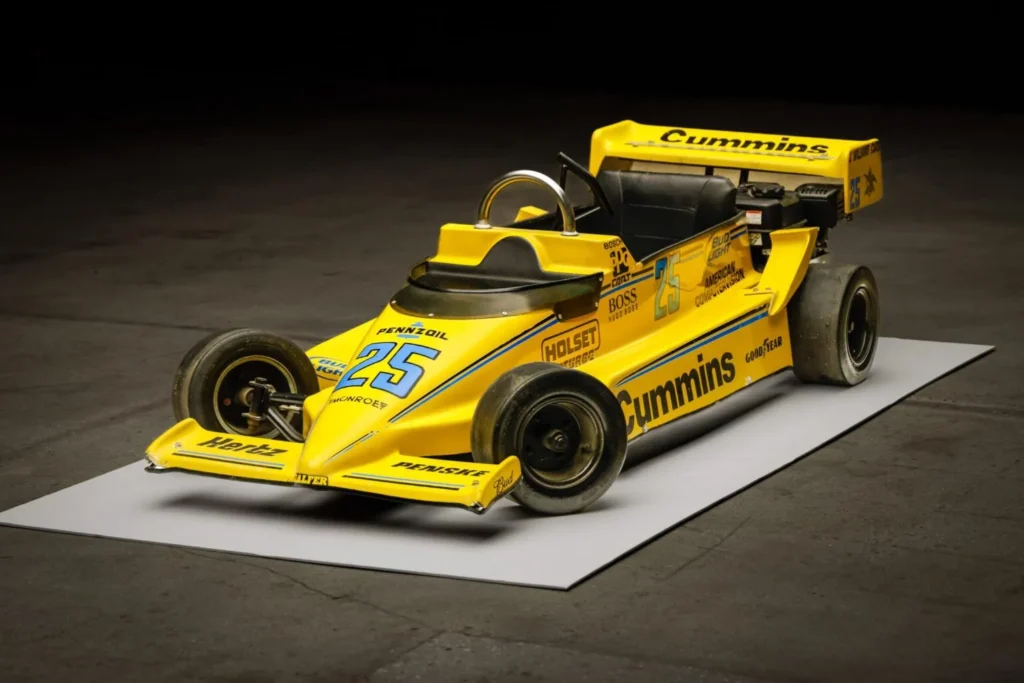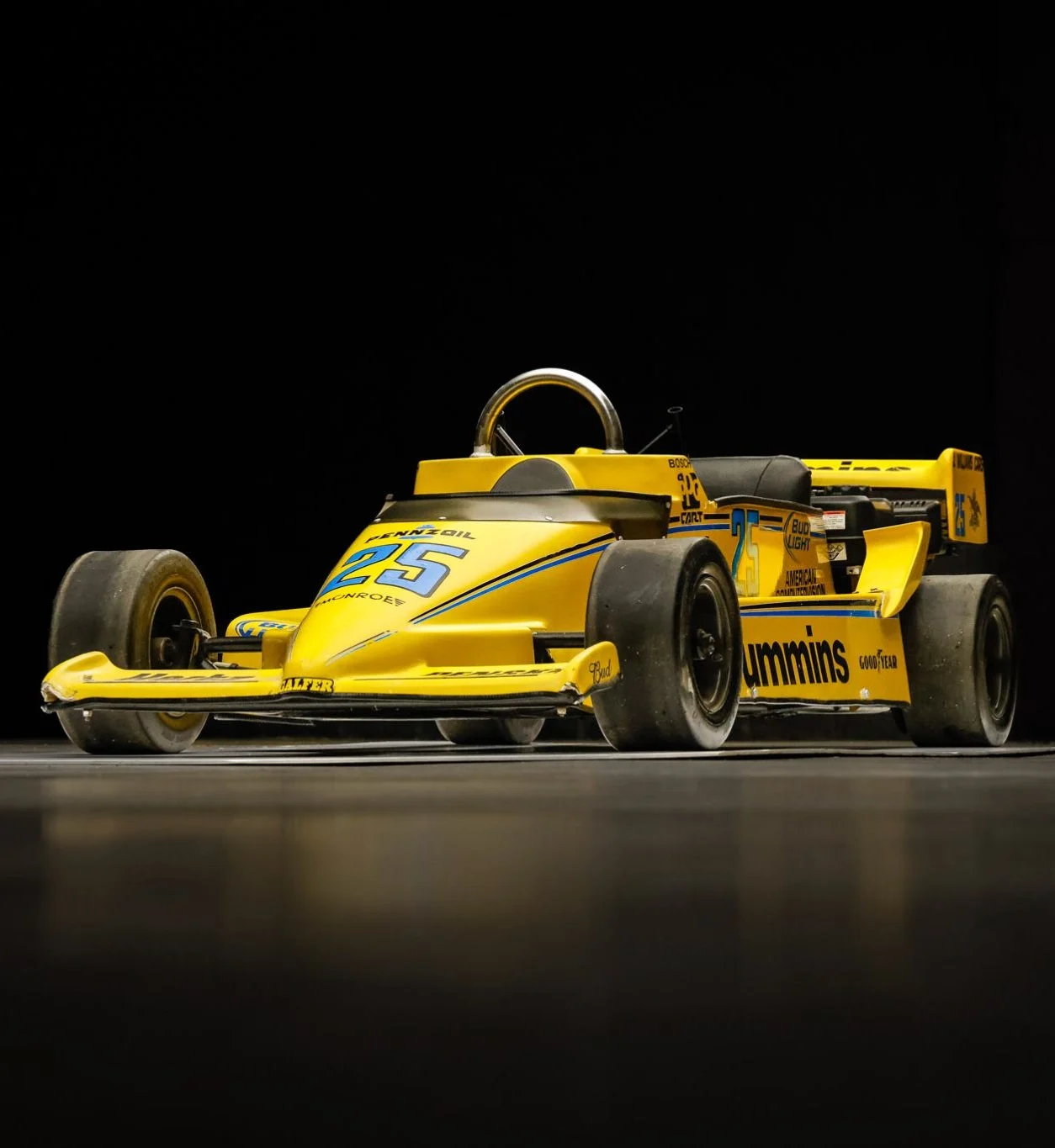
Some collectibles sit quietly in a garage. Others stop people in their tracks. That’s exactly what happens with Bird Corporation’s Indy car-style go-karts, and one particularly striking example is now attracting attention thanks to its bright yellow Cummins-inspired racing livery. Built to resemble a full-size Indy car and finished in the familiar #25 colors associated with Al Unser Sr.’s 1987 Indianapolis 500-winning machine, this miniature racer is a reminder of a strange and fascinating chapter in American motorsports collectibles.
ou Should Read This Next
- 140 MPH Chevy Malibu Police Chase Ends In Violent Rollover After Driver Tries To Outrun Arkansas Trooper
- Mercedes-Maybach Refuses to Kill the V12 as America Becomes the Last Safe Haven for 12-Cylinder Luxury
- Ferrari 488 Pista Destroyed in Moscow Crash as Rapper Navai’s Speed Claim Faces Scrutiny
- Abandoned 455 Pontiac Trans Am Found Rotting in Junkyard as Muscle Car Fans Debate Whether It’s Worth Saving
What makes these machines so unusual is that they were never just toys. They were fully functional go-karts designed to look like real race cars, blending the worlds of motorsports fandom and recreational driving into a package that remains highly desirable decades later.
A Forgotten Name From the Go-Kart Boom
The story starts with Bird Engineering, a Nebraska company founded in 1959 during the early years of America’s go-kart craze.
The company initially operated out of Omaha before moving to Fremont, Nebraska. During the 1960s and 1970s, Bird built a wide variety of recreational vehicles, including go-karts, minibikes, and three-wheelers. Many of its products followed a bird-themed naming convention that became a recognizable part of the brand’s identity.
Models like the Hawk, Eagle, Starbird, Baja, Baja Magnum, and Funderbird helped establish Bird as a significant player in the growing recreational vehicle market. The company also produced minibikes such as the Wren, Lark, Duck, and Falcon, along with a motocross-inspired Mini MX machine.
Bird’s reach extended far beyond Nebraska. Its products appeared through major retailers including Sears, JC Penney, and Montgomery Ward, sometimes wearing retailer-specific branding and equipment packages.
Built for Fun, Not Speed Records
Mechanically, Bird’s early machines followed a formula familiar to go-kart enthusiasts of the era.

Tubular steel frames provided the foundation while Briggs & Stratton and Tecumseh flathead engines supplied power. A centrifugal clutch and chain drive transferred that power to the rear axle. These components were simple, durable, and easy to maintain, making them ideal for recreational use.
Earlier models relied on scrub brakes, while later versions adopted scrub or drum brake systems. Performance was modest by modern standards, but that was never really the point. These machines were designed to deliver affordable fun during a period when backyard racing and small recreational vehicles were exploding in popularity across America.
When Bird Changed Direction
This is where the story turns.
After Bird Engineering was acquired by Phoenix Engineering in the early 1980s, the brand evolved into something very different. By the middle and later years of the decade, several entities were operating under names including Bird Corporation, Bird USA Inc., and Bird Mini-Wheels from Elkhorn, Nebraska.
The exact relationship between those organizations remains unclear today, but the Bird name survived. More importantly, the company’s focus shifted toward something far more visually dramatic.
Instead of traditional go-karts, Bird began producing fiberglass-bodied replicas modeled after real racing machines.
These weren’t generic race car shapes. They were designed to resemble actual Indy cars, Formula 1 cars, and NASCAR stock cars complete with recognizable sponsor-inspired liveries and body styles. Some even carried Ford Thunderbird and Buick-inspired NASCAR bodywork.
For racing fans, they offered something few other products could. They looked remarkably close to the machines seen on television every weekend.
The Indy Car Replica That Stands Out
The kart currently attracting attention represents that later chapter of Bird’s history.
Built by Bird Corporation of Elkhorn, Nebraska, it wears a yellow #25 Cummins-style livery accented by black and blue striping. The appearance closely echoes the March 86C-driven Indianapolis 500 winner associated with Al Unser Sr.

Even sitting still, the kart makes an impression.
Its fiberglass body features front and rear wings finished to match the body color, winglets ahead of the rear wheels, and a chrome front roll hoop. Sponsor decals cover the bodywork, including Bud Light, Holset, Hertz, Penske, Boss, and Goodyear graphics that reinforce the illusion of a full-scale race machine.
That detail matters.
Many collectible go-karts are interesting because they are rare. These Bird replicas are desirable because they are visually dramatic. They work as display pieces just as effectively as they function as actual karts.
Updated Power for a Vintage Replica
Unlike many original Bird machines that relied on older Briggs & Stratton or Tecumseh engines, this example has received a more modern powerplant.
The kart is equipped with a pull-start Predator OHV single-cylinder engine connected to a centrifugal clutch and chain drive system. It rides on six-inch wheels fitted with Cheng Shin bias-ply slick tires and uses a drum brake mounted on the rear axle.
Inside the cockpit sits a single black vinyl-trimmed seat positioned behind a steering yoke. The pedals are mounted above the front axle, reinforcing the authentic open-wheel racing layout that helped make these replicas so appealing in the first place.
While nobody is confusing one of these machines for a real Indy car, the proportions and design cues capture enough of the experience to make them uniquely entertaining.
Why Collectors Continue to Hunt Them
Bird’s early products have become increasingly difficult to find, and later racing replicas have developed their own dedicated following.
Some early Bird models are exceptionally scarce today. One collector reportedly counted only a handful of known examples of certain models. That rarity has helped push interest in the brand far beyond traditional go-kart enthusiasts.
The later fiberglass-bodied replicas appeal to a different audience. Motorsport fans, Indianapolis 500 enthusiasts, racing memorabilia collectors, and vintage recreational vehicle enthusiasts all find reasons to chase them.
And because many survived as promotional machines, giveaway prizes, or limited-production specialty products, they rarely appear in large numbers.
When one surfaces in attractive condition with period-style racing graphics, interest tends to follow.
More Than Just a Toy
What makes Bird’s Indy car replicas fascinating is that they sit between multiple worlds.
They’re not full race cars. They’re not ordinary go-karts either. They occupy a unique space where motorsports history, nostalgia, and collectible machinery intersect.
More Stories Like This
- Inside South Carolina’s $100 Million Driver Data Machine and Why Drivers Should Be Paying Attention
- McLaren Built A Le Mans Hypercar Too Extreme For Racing Rules And VIP Buyers Are Getting The Real Monster
- Motorcycle Left Hanging From Traffic Light After Violent Crash In Canada
The example now being offered for sale out of Newbury Park, California demonstrates exactly why these machines remain relevant decades after they were built. It combines recognizable Indy 500-inspired styling, functional mechanical components, and a level of visual drama that few recreational vehicles can match.
For collectors, that’s a powerful combination. And as surviving examples continue to age and become harder to find, the appeal of Bird’s unusual racing replicas may only continue to grow. The real question is whether enough of these machines remain out there for future enthusiasts to discover, or if they are quietly becoming one of the most overlooked collectibles in motorsports history.
See it here.