A Florida traffic stop that quickly exploded across social media has ended with an embarrassing reversal for law enforcement after a deputy cited a driver for allegedly holding a phone in a hand she does not have.
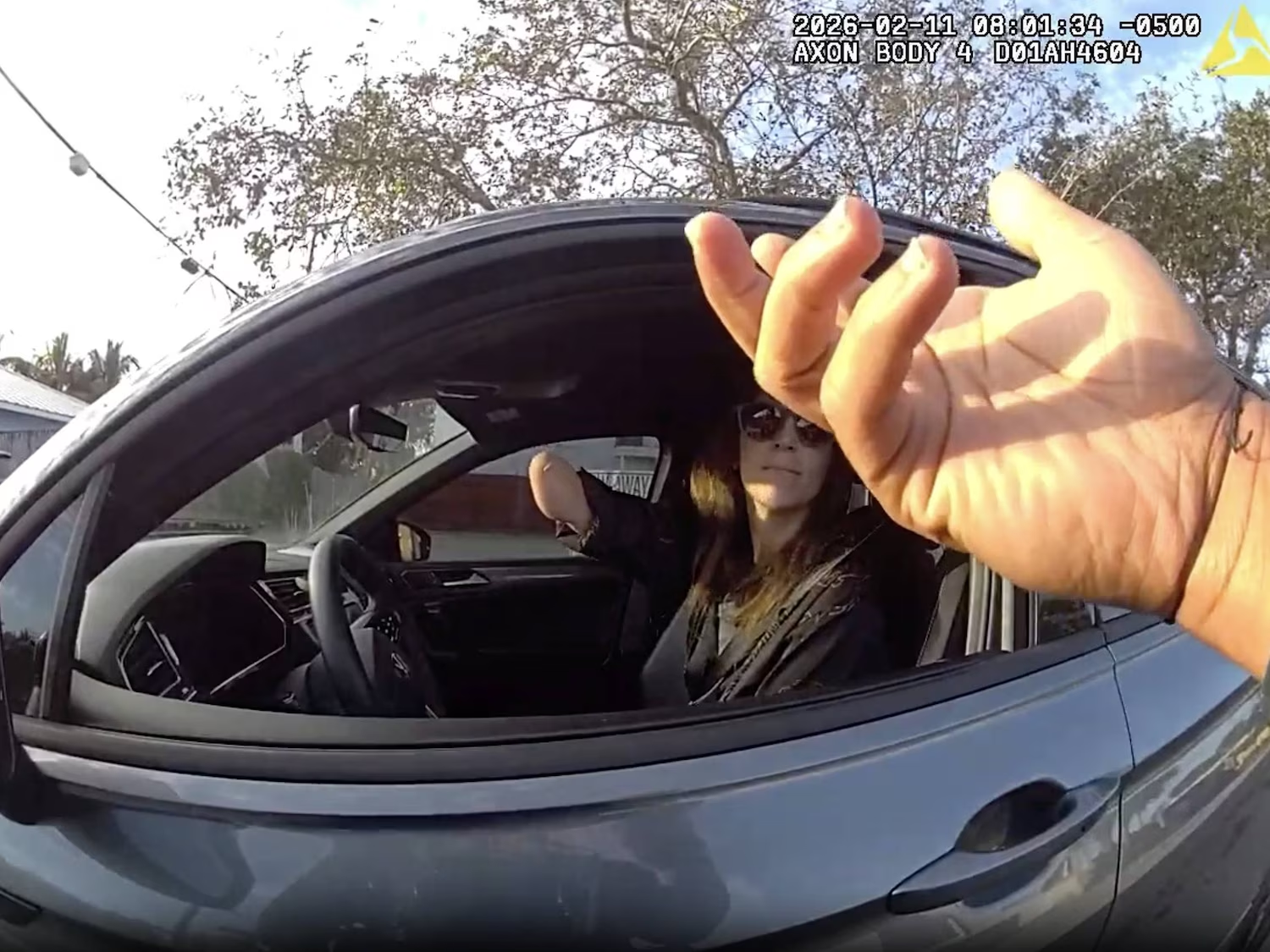
The case centered on Katie Thomas, a Florida woman who was pulled over in February and accused of texting while driving. What might have been a routine traffic stop instead became a viral story after video from the encounter showed a deputy insisting he had watched Thomas holding and manipulating a phone with her right hand.
There was one major problem.
Thomas does not have a right hand.
Months later, the citation has officially been dismissed, bringing an end to a case that drew widespread attention and left many drivers questioning how the stop ever moved forward in the first place.
The Traffic Stop That Went Viral
According to body camera footage obtained by ABC News, a Palm Beach County Sheriff’s Deputy initiated a traffic stop after believing he had witnessed Thomas using a phone while driving.
The deputy told Thomas that she had driven past him while holding and manipulating a phone with her right hand. At that point, Thomas immediately revealed her right arm, showing that she does not have a right hand.
The exchange quickly became the defining moment of the encounter.
Rather than ending the stop after seeing the obvious contradiction, the situation continued. Thomas denied the allegation, yet the deputy proceeded with enforcement action.
That decision would become the center of the controversy.
A Citation Despite the Evidence
Even after Thomas pointed out the flaw in the accusation, she was issued a traffic citation for texting while driving.
The penalty carried a $116 fine.
For many people who later watched the footage, that was the detail that changed the entire story. A mistaken observation during a traffic stop is one thing. Issuing a citation after being confronted with evidence that appeared to undermine the original claim is something else entirely.
The video spread rapidly online, generating significant attention and turning what would normally have been a local traffic matter into a national conversation.
As more viewers watched the footage, questions grew about how the citation could survive any serious review.
The Sheriff’s Office Reverses Course
This week, Palm Beach County court records showed the citation was dismissed.
The dismissal came at the request of the sheriff’s office and was attributed to insufficient evidence.
That outcome effectively ended the case against Thomas, but it also highlighted how dramatically the situation had shifted from the moment the citation was issued.
Initially, the stop was based on what the deputy described as a visual observation. Months later, after further review, the sheriff’s office determined the case should not move forward.
The agency stated that the deputy initiated the stop based on what he believed he observed at the time of the incident. The office also said the decision to dismiss the citation came after additional review of Florida statutes and consideration of the totality of the circumstances.
Why This Matters Beyond One Traffic Ticket
On the surface, this may look like a simple case involving a traffic citation that was eventually thrown out.
But that is only part of the story.
Traffic enforcement relies heavily on officer observations made in real time. In many situations, those observations become the foundation for citations and other enforcement actions. Drivers often face the choice of either paying a fine or investing time and resources to challenge a ticket in court.
That detail matters.
In this case, the citation was ultimately dismissed, but only after months passed and the incident gained public attention. Had the encounter not been recorded and shared online, it is difficult to ignore the possibility that the ticket might never have attracted the same level of scrutiny.
For drivers, that reality is often frustrating. Many traffic cases come down to competing accounts of what happened, and challenging an allegation can be costly and time-consuming.
The Role of Video in Modern Traffic Stops
The viral nature of this incident also highlights the growing influence of body cameras and personal recordings in traffic enforcement.
Years ago, disputes like this might have remained largely private. Today, video evidence can be reviewed repeatedly by the public, attorneys, courts, and law enforcement agencies themselves.
That creates a level of transparency that can dramatically alter the outcome of a case.
Here, the footage became impossible to ignore. The visual evidence allowed viewers to see the interaction unfold for themselves and evaluate the circumstances surrounding the citation.
Once the incident reached a larger audience, pressure naturally increased for a closer examination of what happened during the stop.
A Case That Leaves Uncomfortable Questions
The sheriff’s office has emphasized that officers are required to make decisions based on observations made in real time and that motorists have the right to challenge citations through the judicial process.
That explanation addresses the official process. It does not erase the unusual facts that made this case national news.
A deputy claimed to have seen a driver holding a phone in her right hand. The driver then demonstrated that she did not have a right hand. Despite that, a citation was still issued.
Months later, the case was dropped because of insufficient evidence.
For many drivers, that sequence of events is likely to remain the most memorable part of the story.
The citation may be gone, but the incident has become a powerful example of why accountability, evidence, and common sense matter in traffic enforcement. When a case reaches the point where a driver is accused of using a hand that does not exist, the bigger issue is not just the ticket itself. It is whether the system catches obvious mistakes before drivers are forced to spend months fighting them.
Via Palm Beach County Sheriff’s Office