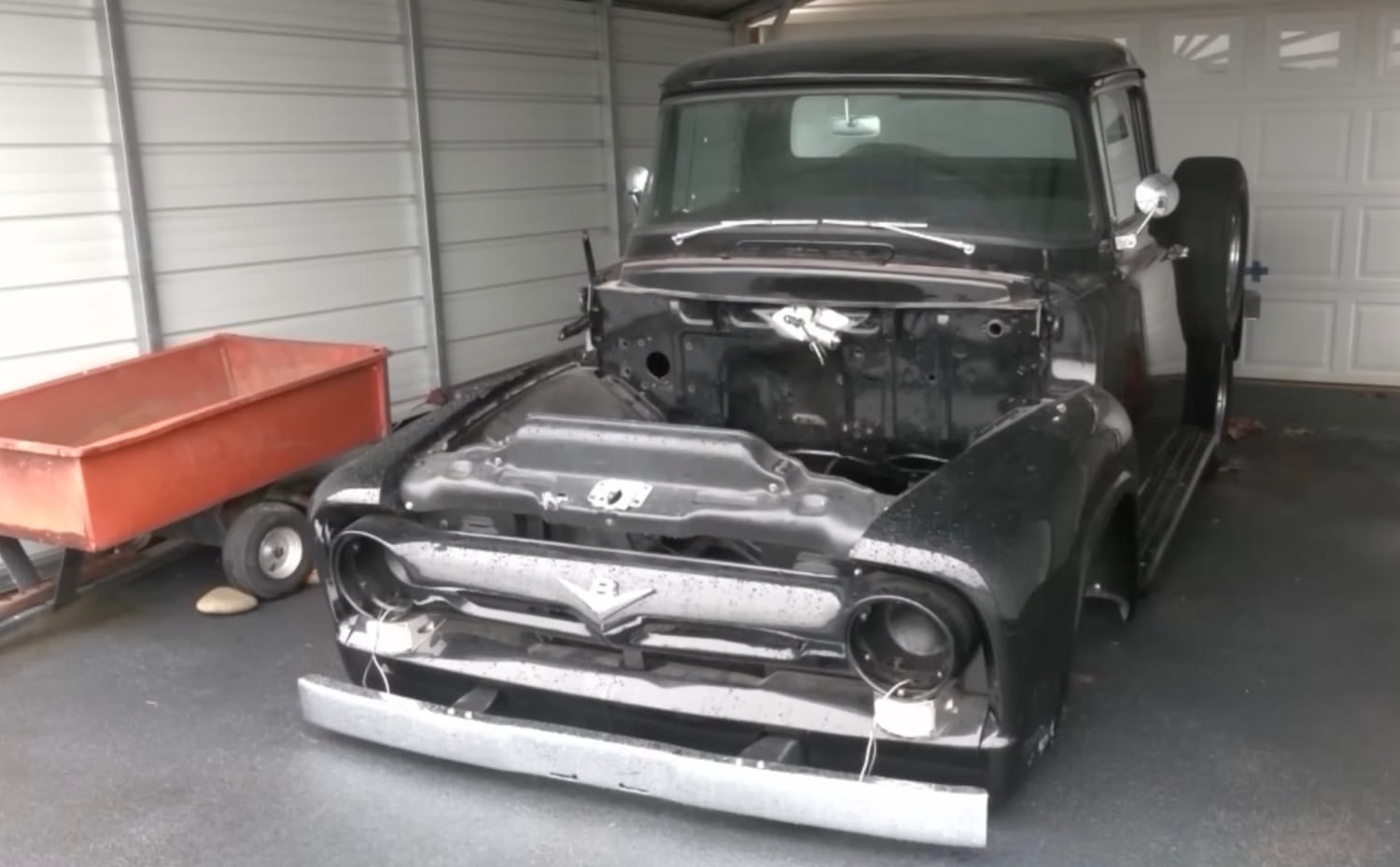
A Tennessee man has finally recovered his 1956 Ford F-100 after paying more than $25,000 to a restoration shop for upgrades that, according to court records, were never actually completed.
A Ten-Month Wait For Work That Didn’t Happen
Jeff Ratliff of Kodak, Tennessee, dropped the classic pickup off at Miller Performance and Restoration in nearby Sevierville in 2025, with a straightforward goal: modernize the truck enough to make it comfortable to drive while keeping its vintage look intact. The job list included a new engine and transmission, a tilt steering column, updated front suspension, cab soundproofing, reupholstered seats, a new dashboard, and air conditioning.
Ratliff paid for the work in stages. His first payment, $7,125.09, went out in April 2025 for parts tied to the project. A month later he paid $5,906.95 for a replacement engine, followed by $6,764.68 in May for additional parts and another $5,000 in June for labor. By the time all the payments were made, Ratliff had put more than $25,000 into the truck.
He expected the job to take roughly two to three months. Instead, the truck sat at the shop for about ten months. According to Ratliff and the court filings, none of the major work he paid for — the engine swap, suspension upgrades, or interior improvements — had actually been installed. The seat, steering wheel, and speedometer had been pulled out of the truck, but the promised restoration never materialized.
Taking It To Court
With no progress after ten months, Ratliff filed a lawsuit in January seeking to reclaim both the truck and the money he’d paid toward the unfinished work. The court ruled in his favor, allowing him to retrieve the F-100 along with the parts tied to the project. He also recovered $10,000 connected to the payment he’d made for the replacement engine that was never installed.
Shop owner Corey Miller disputed Ratliff’s account, stating that delays stemmed from Ratliff allegedly changing his mind multiple times during the build, which required parts to be returned and replaced and complicated the timeline. Despite that disagreement, the court’s ruling allowed Ratliff to regain the truck and recover part of his payment, effectively closing the legal dispute over the vehicle. Court records also indicate Ratliff isn’t the only customer who has pursued legal action against the shop, with other lawsuits reportedly raising similar complaints about paid-for work that was never finished.
What This Means For Classic Truck Owners
The 1956 F-100 sits in one of the most recognizable generations of American pickups, a design that helped bridge early work trucks with the more comfort-oriented pickups that followed, which is exactly why the mid-1950s F-100 remains such a popular restomod platform today. That popularity also means shops across the country routinely handle projects requiring engine swaps, custom fabrication, and specialty parts — work that typically requires owners to pay deposits or advance costs before parts can even be ordered.
That upfront-payment structure is exactly where disputes like this one tend to start. Once money changes hands for parts that get ordered, installed, or in this case allegedly removed and never replaced, an owner has very little leverage beyond legal action if a shop stalls. Ratliff’s case is a reminder that restoration contracts benefit both sides when they spell out milestone-based payments tied to verified, completed work rather than lump sums paid up front against a promised timeline.
Even with the court ruling in his favor, Ratliff’s truck came back to him partially disassembled and without any of the upgrades he originally paid for. The 1956 F-100 remains in his possession now, but the restoration project he set out to complete still hasn’t happened — meaning he’s effectively starting over, engine and all.
About the Author