Mercedes-Benz is quietly offering some of its steepest discounts yet on its most expensive electric vehicles in the United States, and the size of the incentives says a lot about how luxury automakers are struggling to sell high-end EVs right now.
A $25,000 Push To Move Maybach EVs
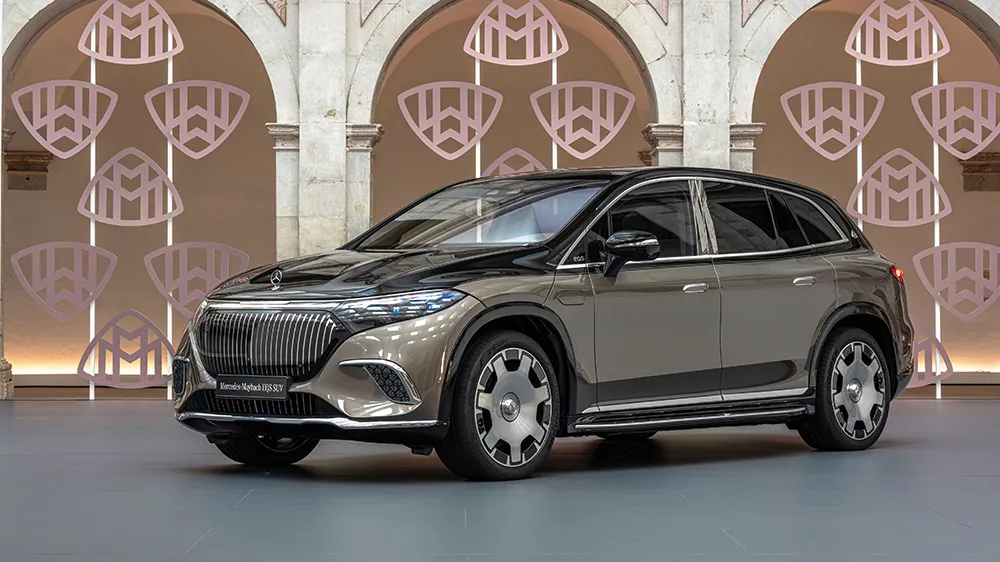
As of March 2026, dealerships have access to a $25,000 incentive on the 2026 Mercedes-Maybach EQS through what the company calls a Mercedes Incentive Bonus, giving dealers room to discount the car significantly to move inventory that isn’t attracting enough buyers on its own. The Maybach EQS already occupies rare territory on price, starting around $90,000 before options, and it was positioned as the face of ultra-luxury electric motoring. A discount this large instead suggests Mercedes is struggling to convince buyers the electric version of its flagship sedan is worth that price tag.
This isn’t even the first time Mercedes has leaned on incentives to move the car. The 2025 model year Maybach EQS carried dealer cash incentives as high as $50,000 — a discount that’s almost unheard of in the ultra-luxury segment, especially for a brand built for decades around exclusivity and full-price positioning. Now those discounts are back again, a sign that the market for six-figure electric luxury cars may be considerably weaker than automakers anticipated.
The G-Wagen’s Electric Version Needs Help Too
The Maybach isn’t the only Mercedes EV getting financial support. The electric G-Class, badged the 2026 Mercedes G 580 with EQ Technology, is now eligible for a $10,000 dealer incentive, double the $5,000 discount offered just a few months earlier. Doubling the incentive that quickly suggests dealers need real help convincing buyers to consider the electric off-roader over its gas-powered sibling.
Even a $10,000 discount barely registers against a vehicle that costs around $164,000. The sales numbers make the disparity obvious: during the first four months of 2025, Mercedes sold only 1,450 electric G 580 models worldwide, compared to roughly 9,700 traditional gas-powered G-Class SUVs in the same window. Buyers are still overwhelmingly choosing the combustion-powered version of the legendary off-roader.
Why The Luxury EV Bet Isn’t Paying Off
Mercedes isn’t alone in this problem. Over the past several years, high-end automakers including Porsche, Audi, Ferrari, and Lamborghini all laid out aggressive electric plans, betting that wealthy buyers would follow the broader EV trend into their most expensive models. Reality has looked different. While the overall EV market keeps growing, most of that growth is happening at the lower end of the price spectrum, driven by buyers looking to cut fuel costs without spending six figures. Audi recently discontinued the Q8 E-tron and shut down its Brussels plant, citing declining global orders for luxury EVs, and other brands have quietly slowed their own electric timelines.
Part of the problem is simple physics. Massive luxury vehicles need larger battery packs to deliver competitive range and performance, and larger packs push production costs, and final prices, well into six figures. The electric G-Class illustrates the tradeoff clearly: buyers pay more than $14,000 extra over some gas-powered versions while getting dramatically less range, with the traditional G-Class covering roughly 500 miles per tank against about 239 miles for the electric version. Paying more for less range is a tough sell no matter how exclusive the badge is.
Differentiation is another issue working against luxury EVs specifically. Acceleration, once the hallmark that justified paying more for a performance vehicle, is now common across the entire EV market, and even mainstream electric SUVs deliver instant torque and quick launches. When a much cheaper EV can match a six-figure luxury EV’s real-world capability, the badge premium gets harder to justify.
Economic Pressure Is Reshaping What Buyers Want
Broader economic pressure is compounding the problem. As living costs keep climbing, even buyers who can afford six-figure vehicles are getting more cautious about spending heavily on technology that continues evolving quickly. Interest is shifting toward smaller, more affordable EVs, and automakers are racing to build models priced under $40,000 to compete with the wave of lower-cost EVs coming out of China that have reset pricing expectations across the industry. Meanwhile, luxury electric models are struggling to find buyers willing to pay a premium for technology that could feel dated within a few years.
Mercedes’ aggressive discounting might move a few more Maybach EQS and G 580 units off dealer lots in the short term, but it also exposes a deeper strategic miscalculation. Luxury brands built their electric roadmaps assuming wealthy buyers would adopt high-end EVs eagerly. Instead, the market is signaling a preference for affordability and practicality over status and size. If even the Maybach badge and the legendary G-Wagen need five-figure incentives to find buyers, it raises a real question about how viable ultra-premium electric vehicles are in their current form — and automakers may need to rethink that strategy before these discounts get even bigger.
About the Author