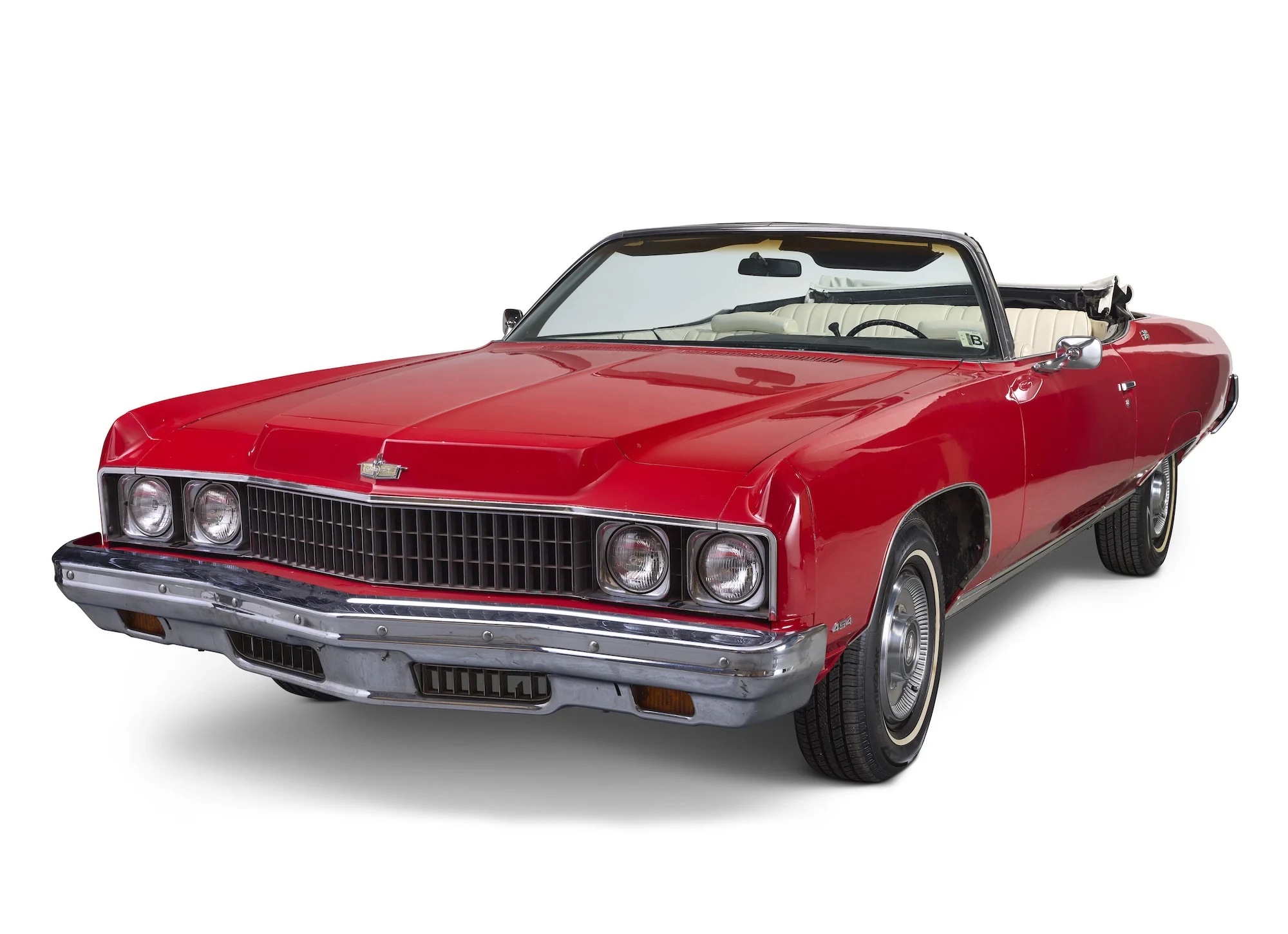
One of the most recognizable cars in American counterculture is heading to auction, and the backstory behind it is just as wild as the writer who owned it. Hunter S. Thompson’s personal 1973 Chevrolet Caprice Classic convertible — the car he called the “Red Shark” — is officially up for sale, carrying with it a strange mix of literary history, Hollywood production lore, and the rebellious streak that made Thompson a legend.
A Gift Born Out of Legal Trouble
The Red Shark’s origin story sounds like it came straight out of Thompson’s own writing. In 1990, Thompson was arrested at his Woody Creek, Colorado home and charged with possession of drugs and explosives, a case that quickly escalated into serious legal trouble for the already controversial journalist.
Two unlikely supporters stepped in during the ordeal: Jim and Artie Mitchell, the well-known San Francisco adult theater owners, who restored a 1970s Chevrolet Caprice convertible and drove it to Colorado in a convoy timed to coincide with Thompson’s preliminary hearing. The car was deliberately built to resemble the fictional vehicle driven by Thompson’s alter ego, Raoul Duke, in Fear and Loathing in Las Vegas. The moment it arrived, the Caprice became the real-world version of the “Great Red Shark.” The legal drama eventually faded when prosecutors dropped the charges over witness testimony issues, and the Red Shark stayed parked at Thompson’s home for the next 15 years.
A Genuine American Land Yacht
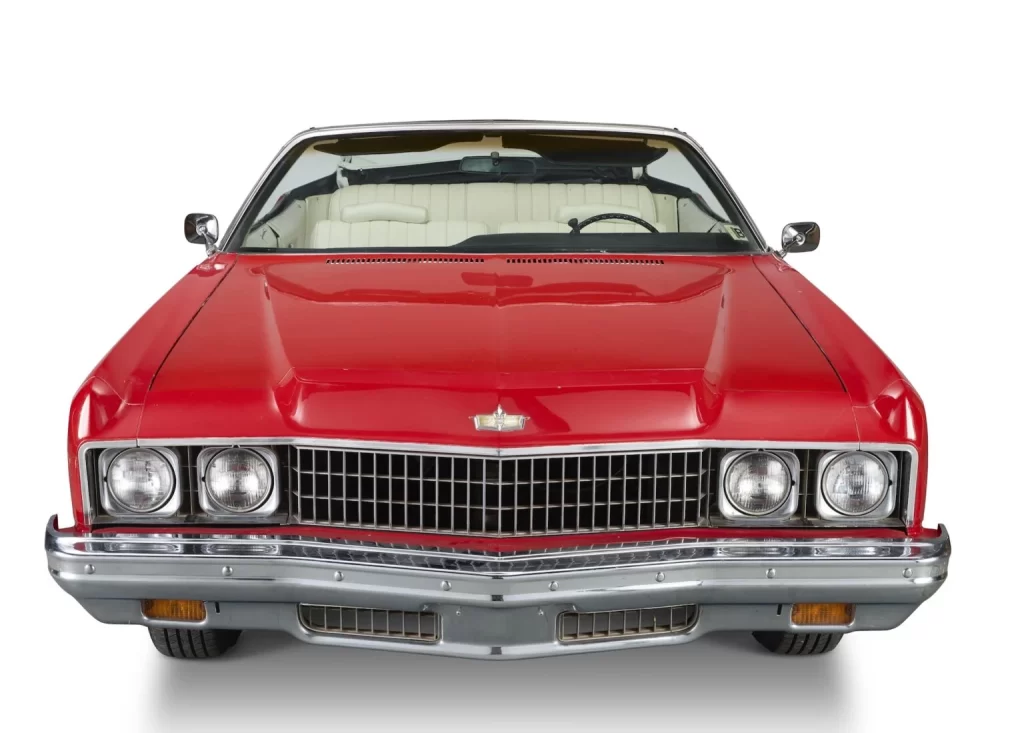
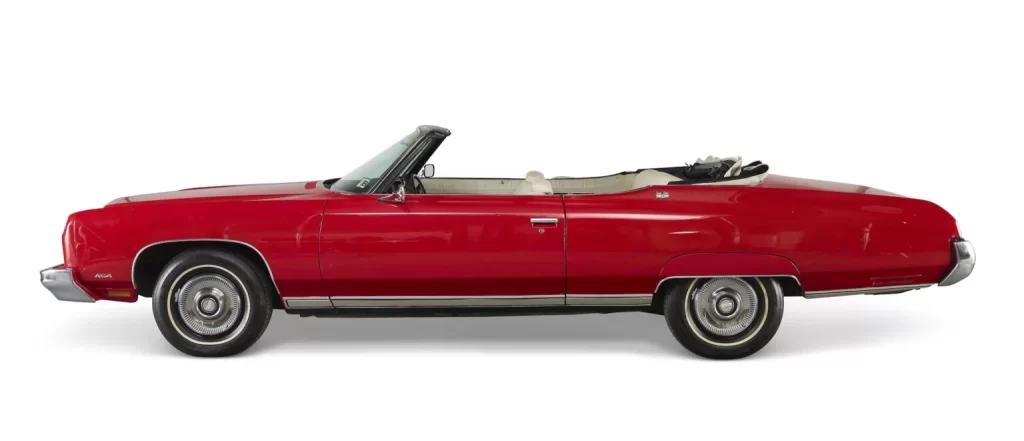
Mechanically, the car represents the peak of Chevrolet’s second-generation Caprice, built between 1971 and 1976 during the height of the American land-yacht era. The 1973 model year specifically marked the point where Chevrolet renamed the line Caprice Classic and moved the convertible body style over from the Impala lineup for the first time.
Thompson’s example could be equipped with a 454-cubic-inch big-block V8 making 245 horsepower and 468 lb-ft of torque — numbers that undersell the experience, since cars from this era were built around effortless highway cruising rather than raw output. With a 121.5-inch wheelbase and dramatic fuselage-style bodywork, it was among the largest passenger cars Chevrolet had ever built, which made it exactly the kind of oversized American statement piece that suited Thompson’s gonzo persona.
How Hollywood Turned It Into a Film Icon
The Red Shark picked up a second act when director Terry Gilliam adapted Fear and Loathing in Las Vegas for film in 1998, casting Johnny Depp as Raoul Duke and Benicio del Toro as Dr. Gonzo. Depp took the role seriously enough to spend months living with Thompson at his Owl Farm property to study his mannerisms, which meant Depp became intimately familiar with the actual Caprice long before cameras rolled.
When production began, Depp personally drove the Caprice from Colorado to Los Angeles, starting the trip at 3 a.m. in freezing weather with the convertible top stuck open because its motor had failed. Thompson sent him off with flashlights, a cooler of supplies, and a tape recorder loaded with music referenced in the novel — a road trip that reportedly looked as surreal to passing drivers as it sounds on paper. While a red Chevrolet Impala handled most exterior shots during filming, Thompson’s actual Caprice was used extensively for interior scenes, including the movie’s famous opening drive toward Las Vegas.
Part of Thompson’s Personal Mythology
The Red Shark’s presence in Thompson’s life went well beyond the film. It appeared on the back cover of his 1994 book Better Than Sex: Confessions of a Political Junkie, and returned a decade later on the cover of his 2004 collection Hey Rube: Blood Sport, the Bush Doctrine, and the Downward Spiral of Dumbness.
Thompson also modified the car to fit his lifestyle, including installing a polished walnut drinks tray salvaged from an old Rolls-Royce beside the manual shifter, reportedly sized to hold a glass of scotch, a glass of ice, and a bottle of beer at once. According to his widow, Anita, the Red Shark holds an even more personal distinction: it’s where Thompson proposed to her, transforming the car from movie memorabilia into something considerably more meaningful to the family.
From Museum Piece To The Auction Block
After Thompson’s death in 2005, the car largely stayed out of public view until 2018, when it was displayed for the first time at the Cannabition Cannabis Museum in Las Vegas, giving fans their first close look at the machine behind so much of Thompson’s mythology.
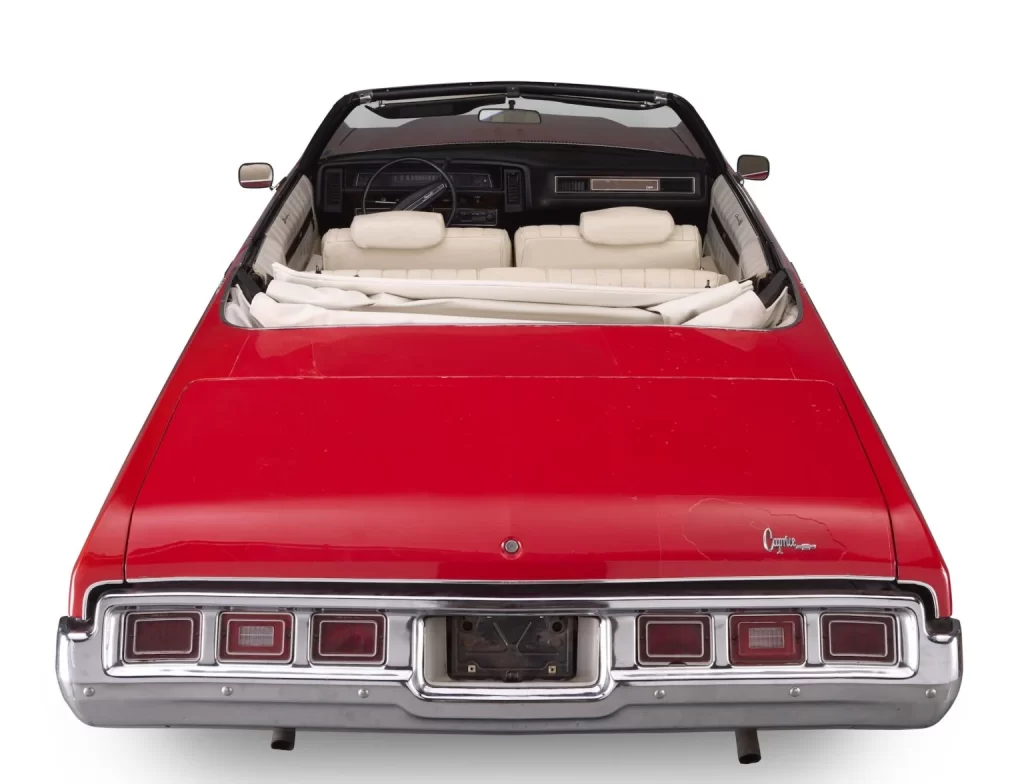
Now it’s headed to Christie’s, with an estimated value between $100,000 and $150,000 — already serious money for a 1973 Caprice, but vehicles tied this closely to a cultural icon frequently sell well past their pre-auction estimates once bidding actually starts.
On paper, a 1973 Caprice convertible is simply a well-preserved example of America’s big-block cruiser era. In practice, the Red Shark sits at the rare intersection of literature, film history, and car culture, a reminder that for a writer like Thompson, the car itself was never just transportation — it was part of the story. The real question now isn’t whether it sells, but who’s willing to take on one of the wildest cars in American storytelling, and how much they’re prepared to pay for a piece of that history.
About the Author