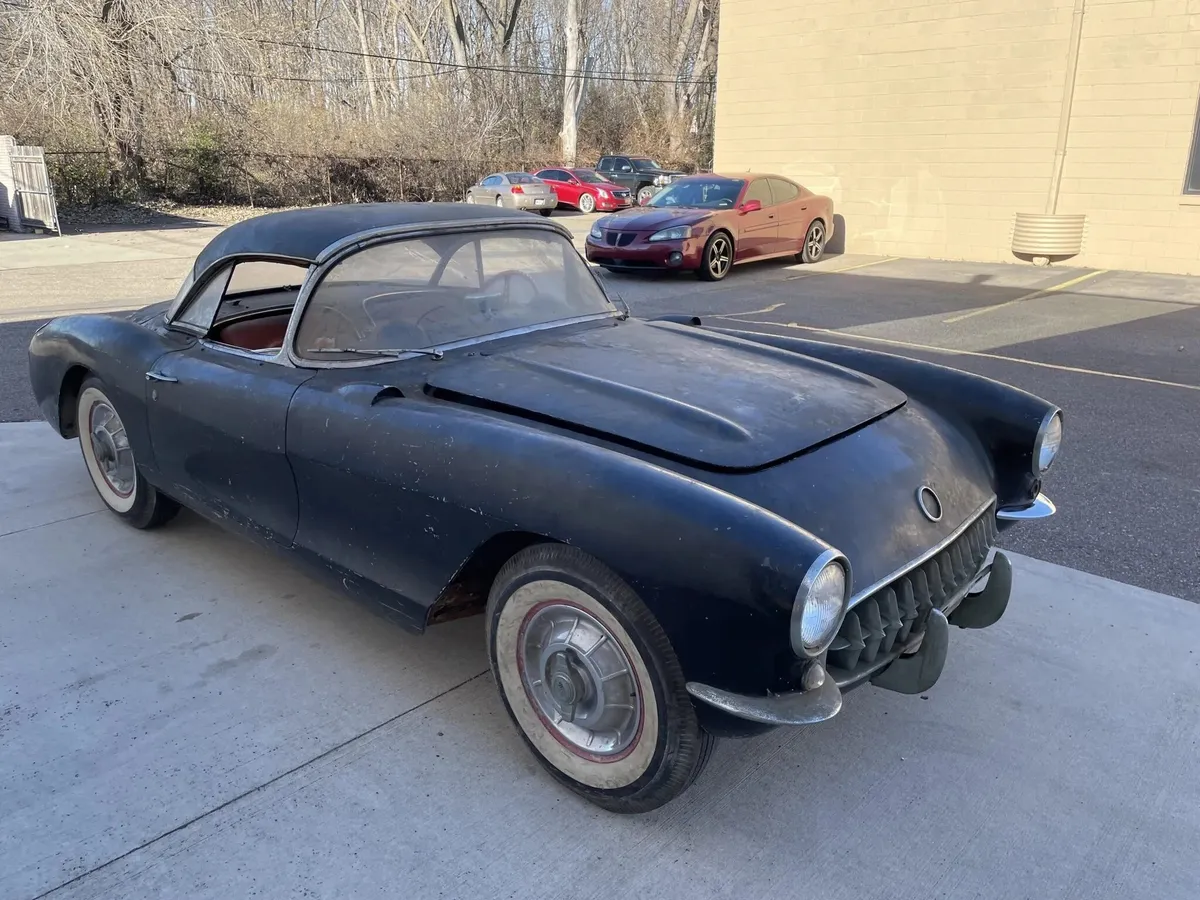
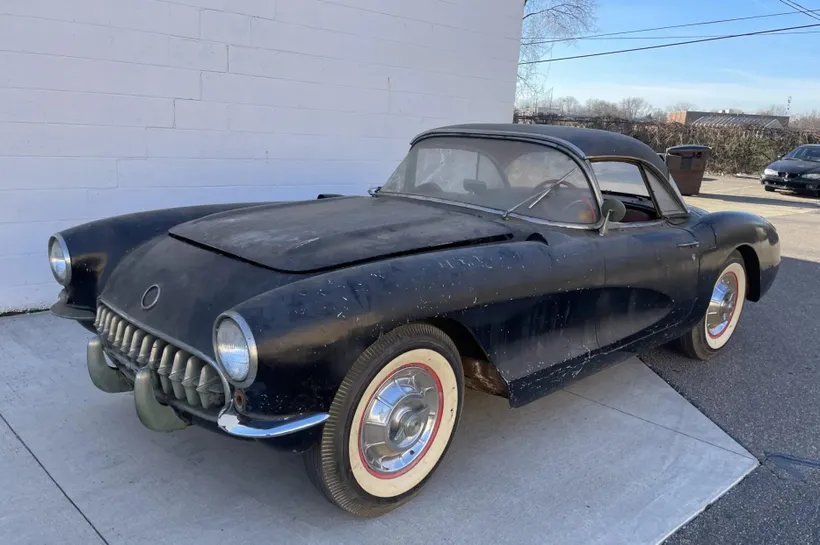
A 1957 Chevrolet Corvette that spent more than two decades sitting untouched has resurfaced on the market, and the $42,000 asking price alone is enough to spark debate among collectors. Listed as a non-running project in Raleigh, North Carolina, the black-over-red convertible represents both a genuine opportunity and a potential money pit depending on how the restoration unfolds.
A Corvette That Vanished For 22 Years
The car was purchased new in 1957 and spent the last 22 years in storage before reappearing for sale. According to the listing, it remains a non-running project, meaning whoever buys it is committing to a full mechanical revival before it turns a wheel again.
Despite the long hibernation, several details still stand out. The Corvette wears its original black-over-red color combination, one of the most desirable pairings among C1 collectors, and it includes both a removable body-color hardtop and a black soft top, giving it the dual-personality look that defined early Corvette styling. It rides on red-painted 15-inch steel wheels with whitewall tires, another era-correct detail buyers look for when evaluating mid-1950s Corvettes.
What’s Actually Missing Under The Hood
The car retains its original 283-cubic-inch V8, but it’s currently incomplete: the listing notes the engine is missing a carburetor along with several components from both the cooling and ignition systems. That means the restoration involves far more than basic servicing — sourcing correct period parts, verifying the condition of the internals, and rebuilding systems that have sat dormant for over 20 years.
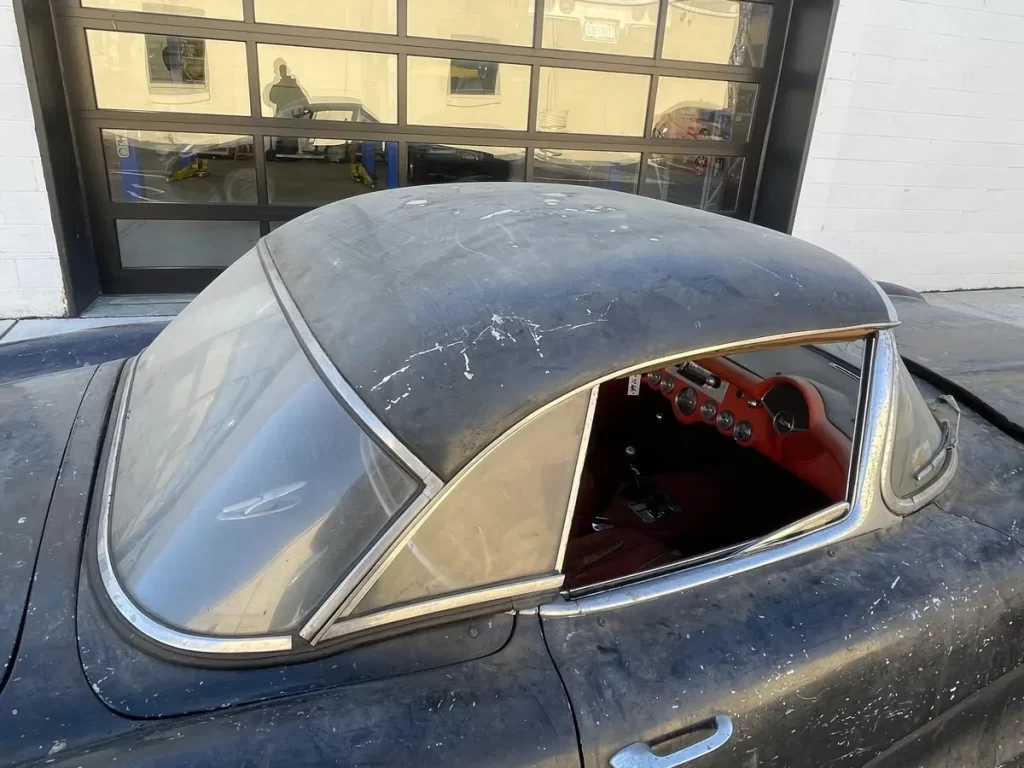
The transmission adds another complication. Instead of the original unit, the car currently has a replacement four-speed manual, which may appeal to someone building a more engaging driver but works against the car in a concours-style, numbers-matching restoration where originality drives value.
The Period-Correct Details Still Worth Something
Even in project condition, the car carries several factory options that help preserve its character, including a factory heater, windshield washers, lap belts, and a push-button AM radio — small details that restoration-focused collectors weigh heavily when judging authenticity. Traction bars are also present, hinting that a previous owner cared more about driving performance than showroom originality at some point in the car’s history.
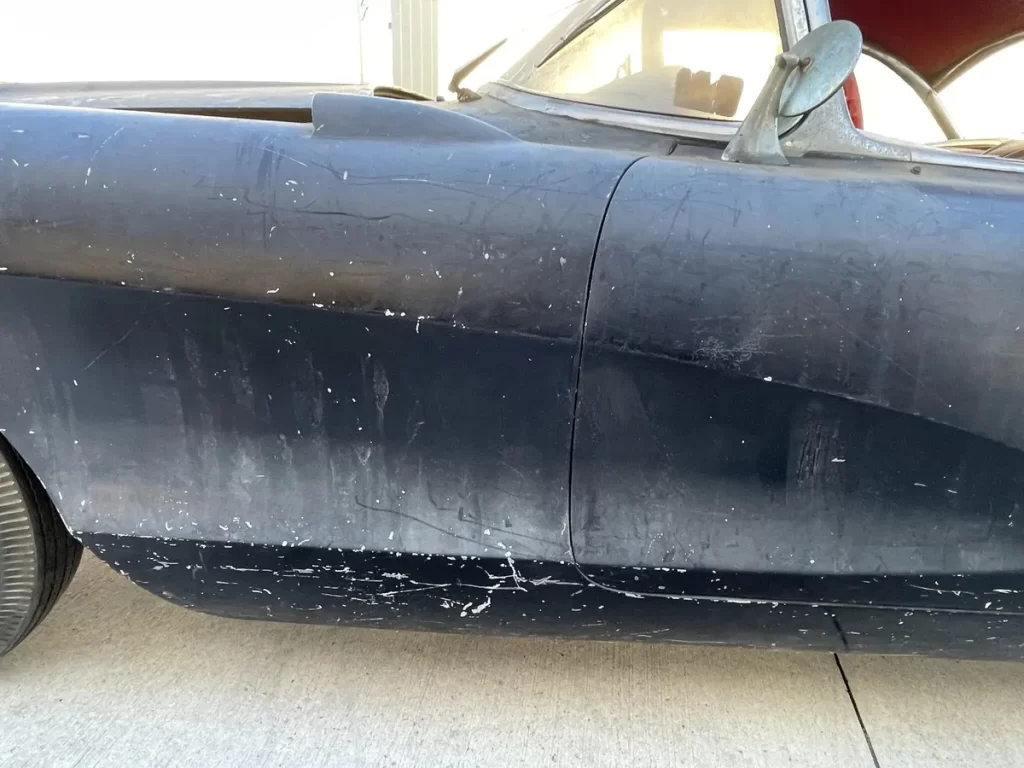
That mix of stock survivor details and non-original modifications is exactly what makes a project like this both intriguing and unpredictable to price.
Why The Math Gets Complicated Fast
A $42,000 opening bid for a non-running car might look steep given the mechanical work required, but 1957 Corvette projects routinely draw serious bidding from buyers who see long-term upside. The real number to watch isn’t the asking price — it’s the restoration budget behind it. Reviving a 1950s Corvette properly can climb well into six figures depending on the condition of the body, frame, drivetrain, and interior, and even small details like correct fasteners and trim pieces can add thousands beyond initial estimates.
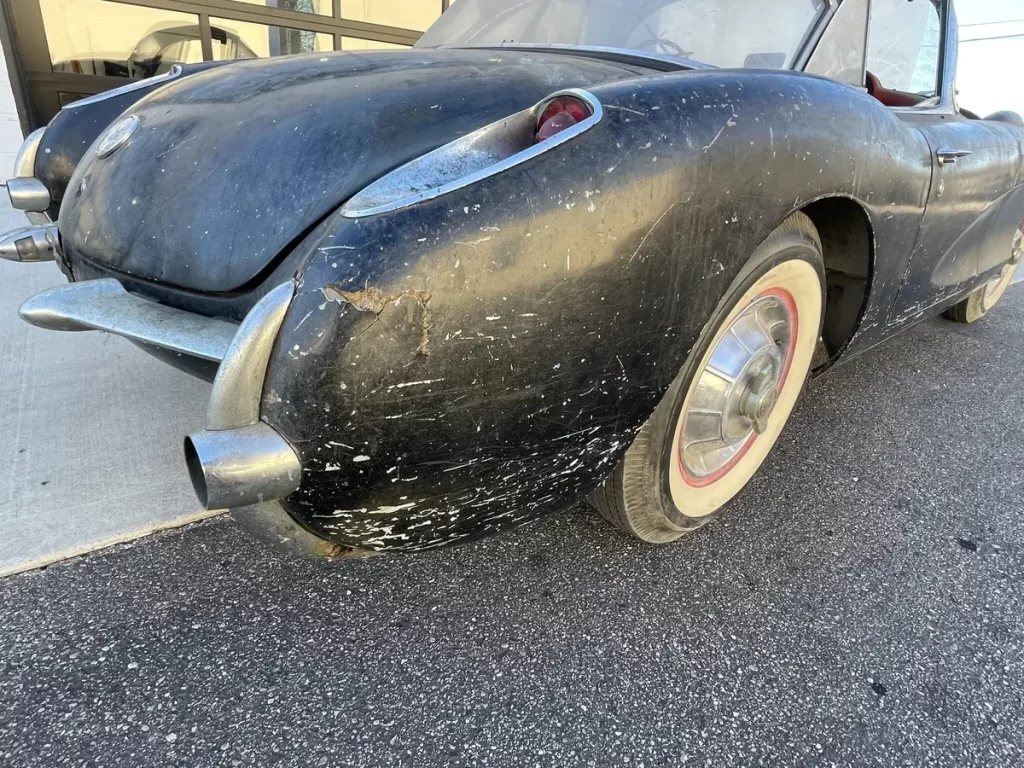
That math splits potential buyers into two camps: purists who want the car returned to exact factory specification, and builders who see the already-swapped transmission as an opening to build a stronger driver rather than chase concours perfection. Neither path is cheap, and both carry the same underlying risk — that the finished car costs more than it’s ultimately worth on the open market.
Why 1957 Specifically Draws This Much Attention
The 1957 model year sits at an important point in Corvette history, the moment Chevrolet turned the C1 platform from a stylish roadster into a genuine performance machine. The 283 V8 became a cornerstone of that shift, and the era’s expanding manual-transmission and performance options helped establish the identity the Corvette still carries today. That history is a major reason surviving examples keep drawing collector attention, long-stored project or not.
Cars like this one also reflect a larger pattern in the classic market right now: vehicles that spent decades forgotten in garages and storage units keep resurfacing as owners and estates reassess what they’re sitting on. That resurgence delights enthusiasts chasing forgotten history, but rising project prices are also making entry into the hobby noticeably harder for younger buyers just getting started.
Demand for cars like this hasn’t slowed regardless. For a lot of collectors, the chance to resurrect a genuine piece of American performance history is worth the financial gamble on its own. The real question hanging over this particular Corvette isn’t whether someone will buy it — it’s who takes on the challenge, and how far they’re willing to go to finish what a previous owner walked away from 22 years ago.
About the Author