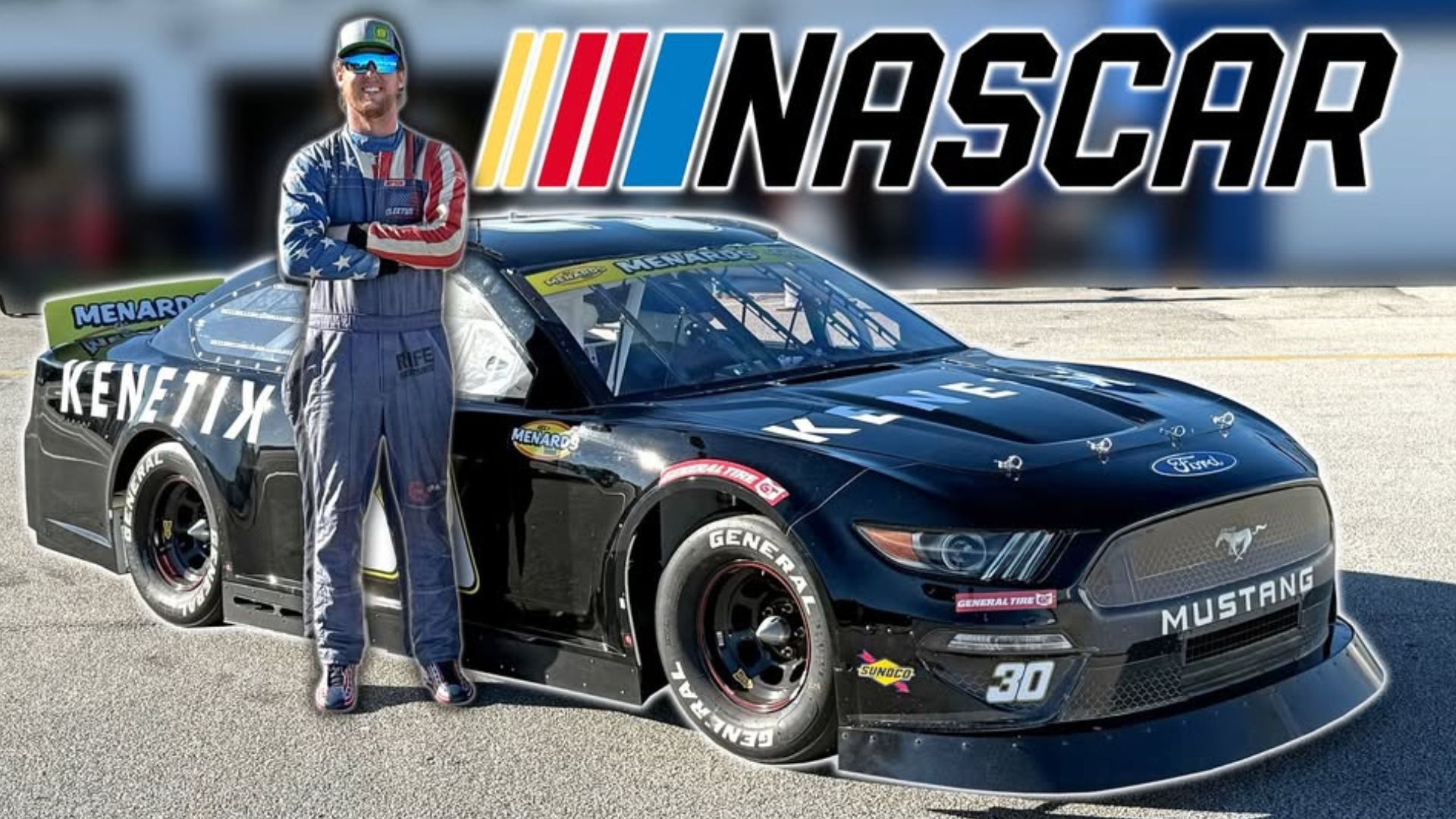
Image via Cleetus McFarland/Facebook
NASCAR is facing criticism from inside its own garage after approving Garrett Mitchell, the internet personality known as Cleetus McFarland, to compete in the O’Reilly Auto Parts Series through a new partnership with Richard Childress Racing. The deal allows the 30-year-old to run six races across the next two seasons in the No. 33 Chevrolet, and while two prominent drivers have already questioned Mitchell’s readiness publicly, the newest pushback is coming from someone who isn’t a driver at all: Bubba Wallace’s Cup Series spotter, Freddie Kraft.
A Spotter’s Case Against The Process, Not The Driver
Kraft publicly challenged the decision after the RCR deal was announced, pointing to Mitchell’s limited track record in NASCAR-sanctioned competition and calling attention to incidents from some of Mitchell’s earlier racing appearances. What makes Kraft’s criticism distinct from other pushback McFarland has received is where he’s aiming it: squarely at NASCAR’s approval process itself, not at Mitchell for taking the opportunity. Kraft made clear he doesn’t fault Mitchell personally, framing his concern instead as a question of whether NASCAR’s criteria for approving drivers into higher series weighs competitive ability appropriately against a driver’s outside popularity.
This isn’t the first time Kraft has raised the issue, either. He voiced similar concerns about Mitchell roughly a month before this new RCR partnership was even announced, meaning this is now the second time a working NASCAR insider has flagged the same approval question in a matter of weeks — a pattern that carries more weight than a single offhand comment.
The Résumé Behind The Debate
Mitchell built his following through YouTube, where his Cleetus McFarland brand grew into a major automotive entertainment and motorsports channel before he transitioned into competitive racing. His actual stock car résumé includes six ARCA Menards Series races with Rette Jones Racing, marking the start of his professional career behind the wheel. The O’Reilly Auto Parts Series sits above ARCA on NASCAR’s competitive ladder, and jumping there after only a handful of ARCA starts is exactly the leap that’s fueling scrutiny from people who see track time as non-negotiable preparation before that level of competition.
Adding to the spotlight, Mitchell will share Richard Childress Racing’s lineup with Austin Hill and Jesse Love, both established drivers with significant national-series experience. That contrast — a driver with a handful of ARCA starts sharing a program with two proven national-series competitors — is part of why the move drew attention as soon as it was announced.
Why This Debate Keeps Resurfacing
Kraft’s core argument is that NASCAR’s decision-making around who gets fast-tracked into higher series deserves scrutiny independent of any individual driver’s talent or intentions. Mitchell didn’t come up through NASCAR’s traditional developmental pipeline; he built a fan base through digital media first and moved into racing afterward, which is precisely the kind of path that draws both enthusiasm from teams looking for new audiences and skepticism from insiders who built their careers the traditional way.
For NASCAR and teams like Richard Childress Racing, a driver with a large built-in audience represents a genuine opportunity to introduce the sport to viewers who might never otherwise watch a race, and that visibility is exactly why Mitchell’s entry has drawn attention from supporters and critics in roughly equal measure. Kraft’s criticism doesn’t dispute that marketing value; it questions whether that value is being weighed too heavily against the on-track readiness NASCAR has historically demanded before granting access to its national series.
What Happens Next
Despite the criticism, Mitchell’s schedule hasn’t changed. He’s still set to debut at Rockingham in April as part of the six-race, two-season agreement with Richard Childress Racing, and NASCAR has given no indication it plans to revisit its approval decision. That leaves the entire debate resting on the same thing it always comes down to in cases like this: whether Mitchell’s on-track performance ends up matching the attention surrounding how he got there in the first place.
About the Author