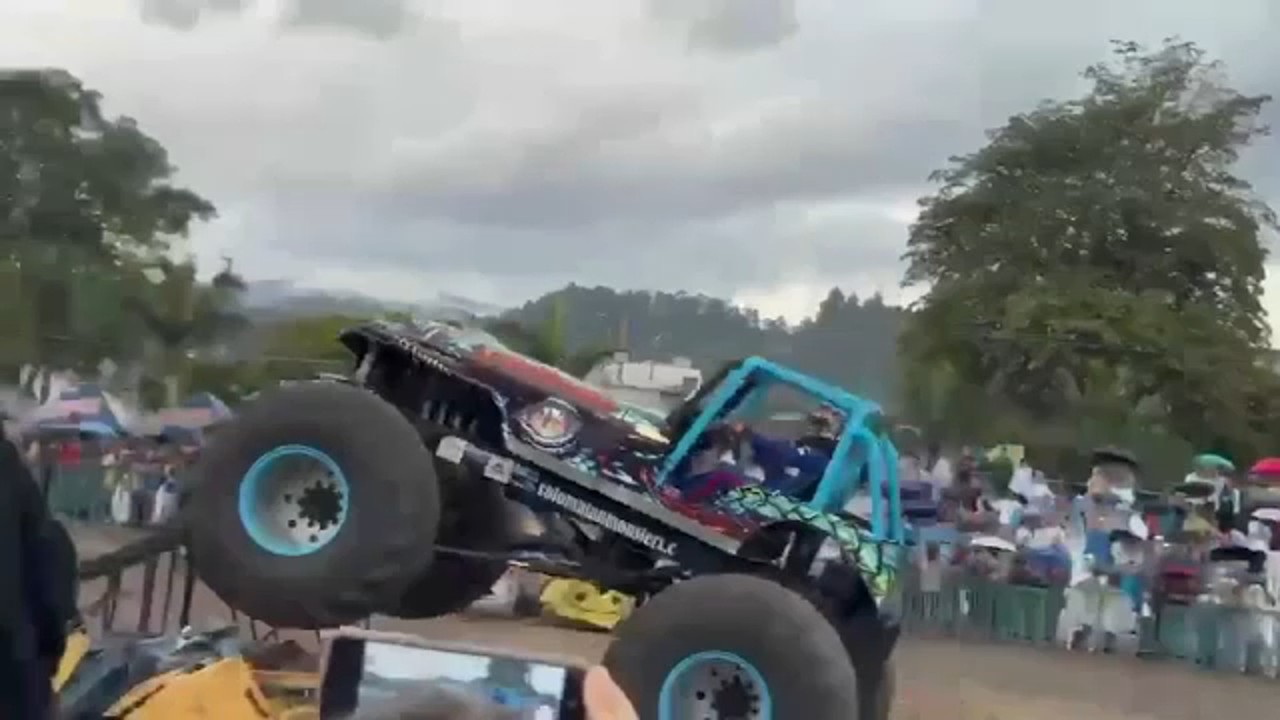
What was supposed to be a high-energy motorsport show turned into a deadly disaster in seconds. A monster truck event in Popayán, Colombia, ended in chaos after a driver lost control mid-performance and struck a crowd of spectators, killing three people and injuring around 40 others. This isn’t just another accident at a live event — it’s a failure that raises serious questions about safety, oversight, and what really goes on behind the scenes at these high-risk shows.
What Happened in Popayán
The incident unfolded Sunday during an outdoor event known as Popayán Monster Truck 2026. The show featured multiple disciplines, including BMX and motocross, built around the kind of spectacle that draws large crowds. Fans were lined up behind barriers watching the monster truck perform stunts designed to impress. Then something went wrong. Video from the scene shows the truck suddenly surging forward during the performance, and instead of stopping or maintaining control, it moved into the spectator area. Authorities confirmed that at least three people were killed in the crash, with dozens more injured, many seriously enough to require immediate transport to nearby hospitals. Emergency crews quickly flooded the scene, with firefighters, ambulances, and medical teams working to manage the aftermath.
A Detail That Could Change the Investigation
Early information points to a possible mechanical failure. Local police indicated the truck may have accelerated uncontrollably after losing braking capability, and that’s not a minor issue — in a controlled stunt environment, brakes are one of the last lines of defense between a performance and a catastrophe. If the brakes failed as suspected, it shifts the focus away from driver error and toward equipment reliability and preparation. A monster truck is a massive, high-powered vehicle designed to crush obstacles and handle extreme forces, and when something goes wrong at speed, there’s very little margin for recovery. Mechanical failures can happen, but the real question is whether this one could have been caught before the truck ever rolled out in front of a crowd.
The Emergency Response
Local officials reacted quickly once the situation unfolded. The city’s mayor described the day as deeply painful, acknowledging the severity of what had happened. Emergency responders were deployed within minutes, with teams working to stabilize victims and transport them to hospitals. But the response after the crash is only part of the story. The real issue is what led to that moment in the first place. Investigators are now working to determine exactly what failed and why, a process that will look at the vehicle, the preparation leading up to the event, and the safety measures that were in place to protect spectators.
Why This Matters Beyond One Event
This kind of incident hits at the core of live motorsport entertainment. Events like this rely on a balance between risk and control — the danger is part of the appeal, but it’s supposed to be managed, contained, and engineered to avoid exactly this kind of outcome. When that balance breaks, the consequences are immediate and severe. For fans, the expectation is simple: you can get close to the action, but not so close that your safety is compromised. Barriers are supposed to mean something, forming the line between controlled chaos and real danger. In this case, that line failed.
It would be easy to treat this as an isolated tragedy, but that misses the bigger picture. Monster truck shows and similar stunt-driven events are built on heavy machinery operating in unpredictable ways, which means safety protocols aren’t optional, they’re everything. When a failure like this happens, it puts pressure on organizers, engineers, and regulators to answer hard questions. Were the vehicles properly inspected? Were safety systems adequate for the type of performance being attempted? Was the event structured in a way that minimized risk to the crowd? Those questions aren’t theoretical anymore. They’re tied directly to lives lost and dozens of people injured.
An Uncomfortable Industry Question
High-energy motorsport shows are designed to push limits: bigger stunts, closer access, louder reactions. That’s what sells tickets. But every step closer to the edge increases the potential consequences when something goes wrong, a tension that’s always there even if it’s not openly discussed. Events like Popayán Monster Truck 2026 are marketed as thrilling experiences, and they are, but behind that spectacle is a level of risk that demands serious accountability. When something fails, it can’t be brushed off as part of the show.
Authorities have launched a formal investigation to determine whether the crash could have been prevented, likely involving a detailed examination of the truck itself, including its braking system and any modifications made for the performance. It will also look at the event setup, including barrier placement, crowd distance, and overall safety planning. If investigators find that something was overlooked or ignored, the consequences won’t stop at this one event — it could impact how similar shows are run moving forward.
Three people lost their lives at an event they attended for entertainment. Dozens more walked away injured from something that should have been controlled. That’s not just a tragic outcome, it’s a failure that demands answers. For motorsport fans, the appeal of these events isn’t going away, but neither is the expectation that organizers take every possible step to keep spectators safe. The question now is simple, even if the answer isn’t: was this an unavoidable mechanical failure, or was it a preventable breakdown in safety? Depending on that answer, the fallout from this crash could reach far beyond Popayán.
About the Author