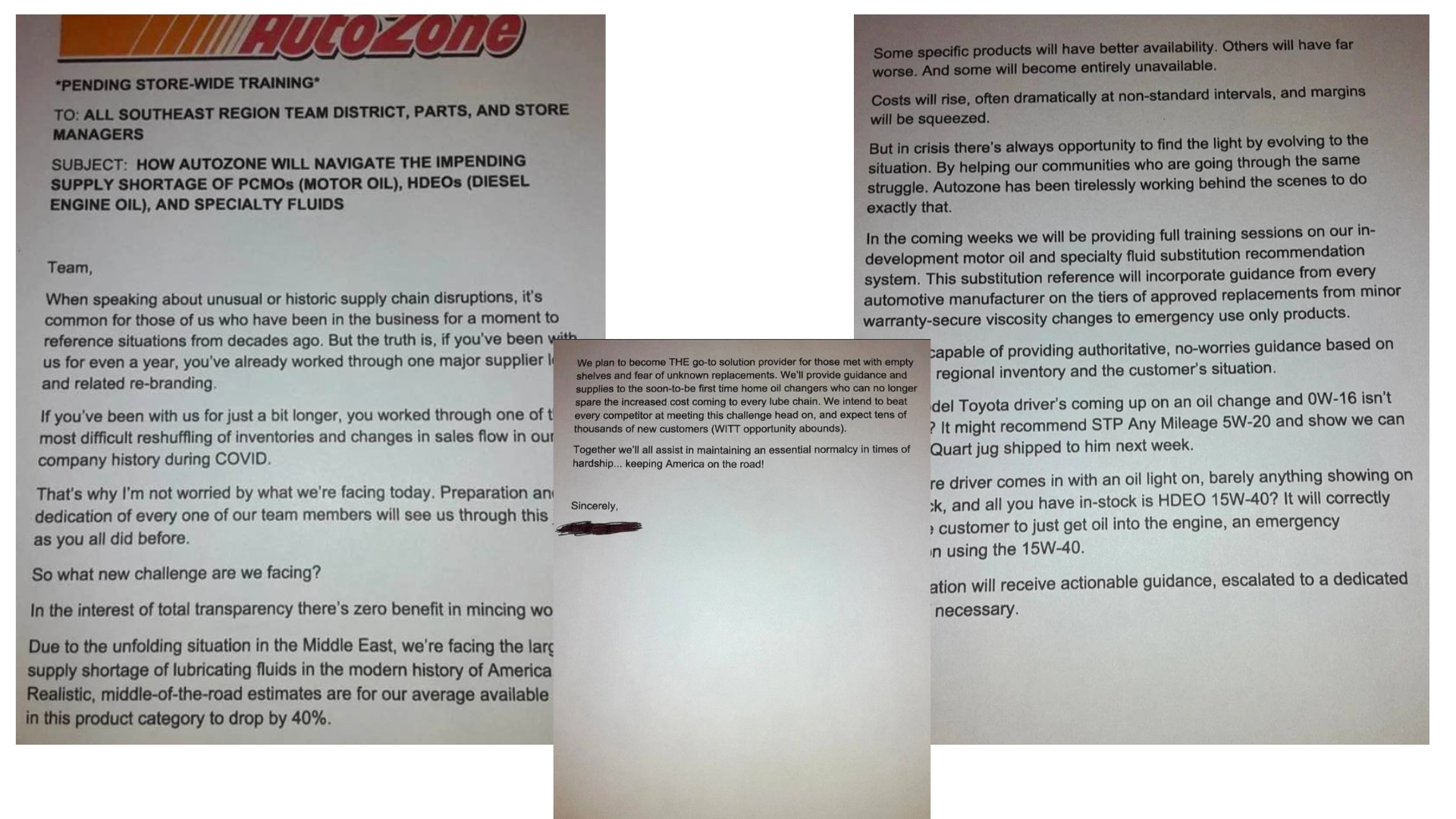
A leaked document allegedly tied to AutoZone is spreading fast online after warning employees about what it describes as a looming supply crisis involving motor oil, diesel oil, and specialty automotive fluids.
More Stories Like This
- Inside the International Luxury Car Theft Pipeline That Sent Stolen Lamborghinis and Rolls-Royces to Nigeria
- Stolen Dodge Ram Found at Bottom of Lake — Fishing Sonar Leads to Surprise Recovery
- ‘Street Outlaws’ Star Daddy Dave Arrested on Stalking, Criminal Tampering Charges
If authentic, the memo paints a far more serious picture than most drivers probably realize. It references an “impending supply shortage” tied to instability in the Middle East and claims average available supply in certain lubricant categories could reportedly drop by as much as 40 percent. It also warns employees to brace for dramatic price increases, disappearing inventory, and widespread substitution of oil grades as shortages worsen – which is the part making drivers nervous.
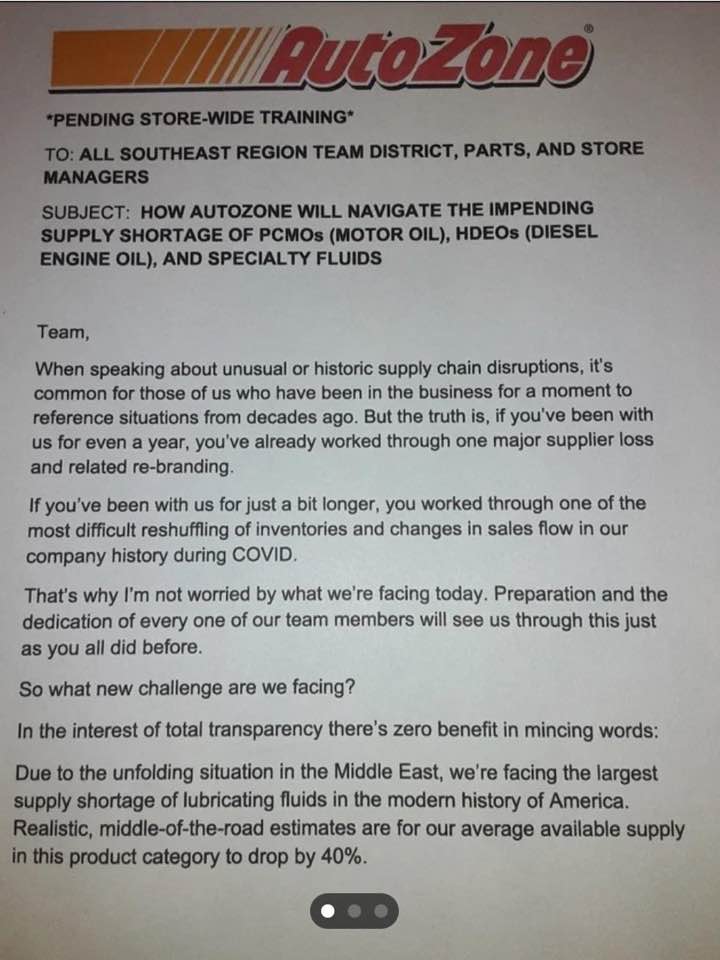
The alleged memo appears aimed at AutoZone managers across the Southeast region, laying out how the company plans to handle potential shortages of passenger-car motor oils, diesel oils, and specialty fluids. The tone is unusually direct.
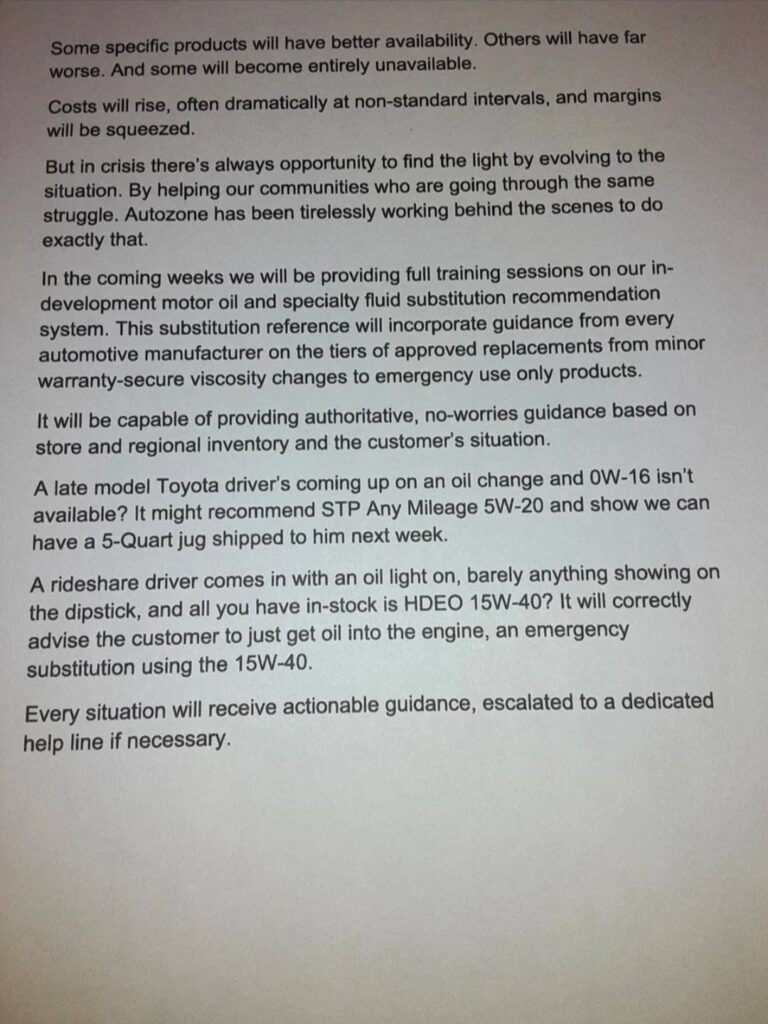
Rather than downplaying anything, the document openly discusses products becoming entirely unavailable in some cases, and references upcoming training sessions to help employees recommend substitute viscosities and emergency alternatives when customers can’t get the exact oil their vehicle normally needs. That changes the story: this isn’t just about higher prices – some products could become genuinely hard to find.
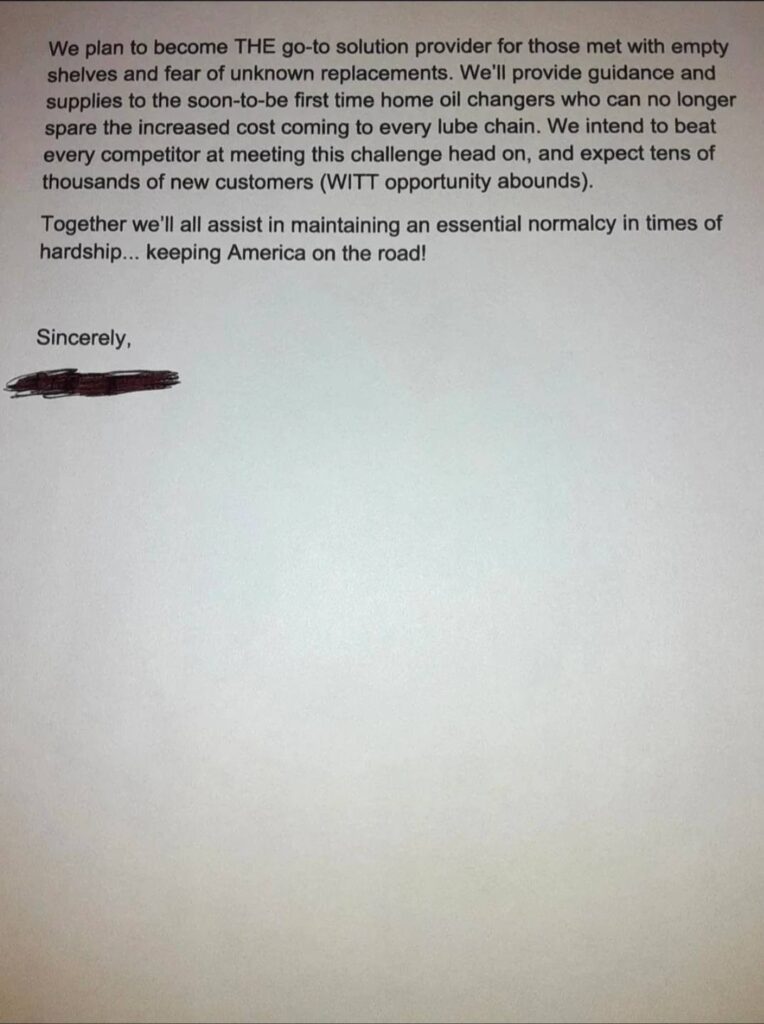
Part of why the memo took off is its direct reference to instability in the Middle East as a major driver of the potential shortages. Motor oil and lubricant supply chains lean heavily on crude refining, chemical processing, additives, transportation, and global energy stability, so when tensions rise in major oil-producing regions, the ripple effects move fast – and the automotive world feels them quickly.
One of the most controversial parts involves the substitute recommendations employees may reportedly be trained to offer during shortages. In one example, a Toyota owner unable to find 0W-16 is steered toward an alternative viscosity; in another, the memo discusses emergency use of heavy-duty diesel oil when a rideshare driver’s car is critically low and no standard oil is available. That language caught enthusiasts instantly. Modern engines are extremely sensitive to oil specs, especially newer vehicles running ultra-thin viscosities for fuel economy and emissions, and plenty of drivers get uncomfortable the moment “substitute” enters the conversation.
The memo also warns that costs could climb sharply and unpredictably if shortages deepen – believable to many, since oil prices already swing during global instability, and once shortages combine with panic buying and distribution bottlenecks, retail prices can spike. People remember the pandemic years, when parts, tires, chips, batteries, and basic maintenance supplies all got hard to source. That memory still sits close to the surface.
As screenshots of the document spread across forums and social media, reactions split into two camps. Some see realistic preparation and credit the company for planning ahead instead of pretending shortages can’t happen; others find the language alarmist and worry it could spark the very panic buying it describes. Both reactions make sense. Motor oil is one of those products nobody thinks about until everyone is suddenly talking about it disappearing.
You Should Read This Next
- Jay Leno Is Giving Away a Corvette on ‘Wheel of Fortune’ Tomorrow — And Car Fans Are Already Talking
- Could a Lift Kit Leave This Silverado Driver Personally Liable After Viral Lamborghini Crash?
- Classic Chevrolet Camaro Explodes Into Flames After Backfire — Fireball Sends Black Smoke Over Highway
- Tesla’s Cheapest Cybertruck Just Got Hit With a Recall Over Wheels That Can Literally Fall Off
- He Traded a $130,000 Audi R8 for Pokémon Cards, and Car Enthusiasts Can’t Stop Arguing About It
The situation also underscores how dependent modern vehicles have become on highly specialized lubricants. Older engines were more forgiving about viscosity and spec changes; many newer ones aren’t, with turbocharged engines, direct injection, hybrid drivetrains, and advanced emissions gear all relying on specific lubricant chemistry. If shortages truly hit certain grades or formulations, drivers could face hard choices – delaying maintenance, paying inflated prices, or using alternatives they’d normally never touch – and even temporary shortages could mean real headaches for shops, fleets, and everyday commuters, especially rideshare drivers and high-mileage users burning through oil changes.
Whether the memo proves fully authentic or not, the reason it exploded online is simple: it taps a growing fear that modern supply chains are far more fragile than most people want to admit. The pandemic already exposed that weakness, when everything from microchips to brake parts got hard to source once disruptions stacked up. Now, with geopolitical tensions rising again, drivers are eyeing another critical category nervously – because oil isn’t optional. Cars, trucks, fleets, delivery vehicles, rideshare operators, construction equipment, and commercial transport all depend on constant lubricant availability, and even small disruptions can cascade fast.
For now, there doesn’t appear to be official public confirmation from AutoZone about the leaked document, which hasn’t slowed the conversation at all. Drivers are already debating whether to stockpile oil, whether substitute viscosities are truly safe, and whether the industry could realistically face another supply crunch tied to global instability. That conversation alone says a lot about how uneasy people still feel after the last few years – because once drivers start worrying that basic motor oil might get hard to find, it’s clear just how shaky confidence in the supply chain still is.
Continue Reading: How a Tiny Corvette Dealership Giveaway Turned the 2026 ZR1 Into One of America’s Hottest Performance Car Obsessions
About the Author