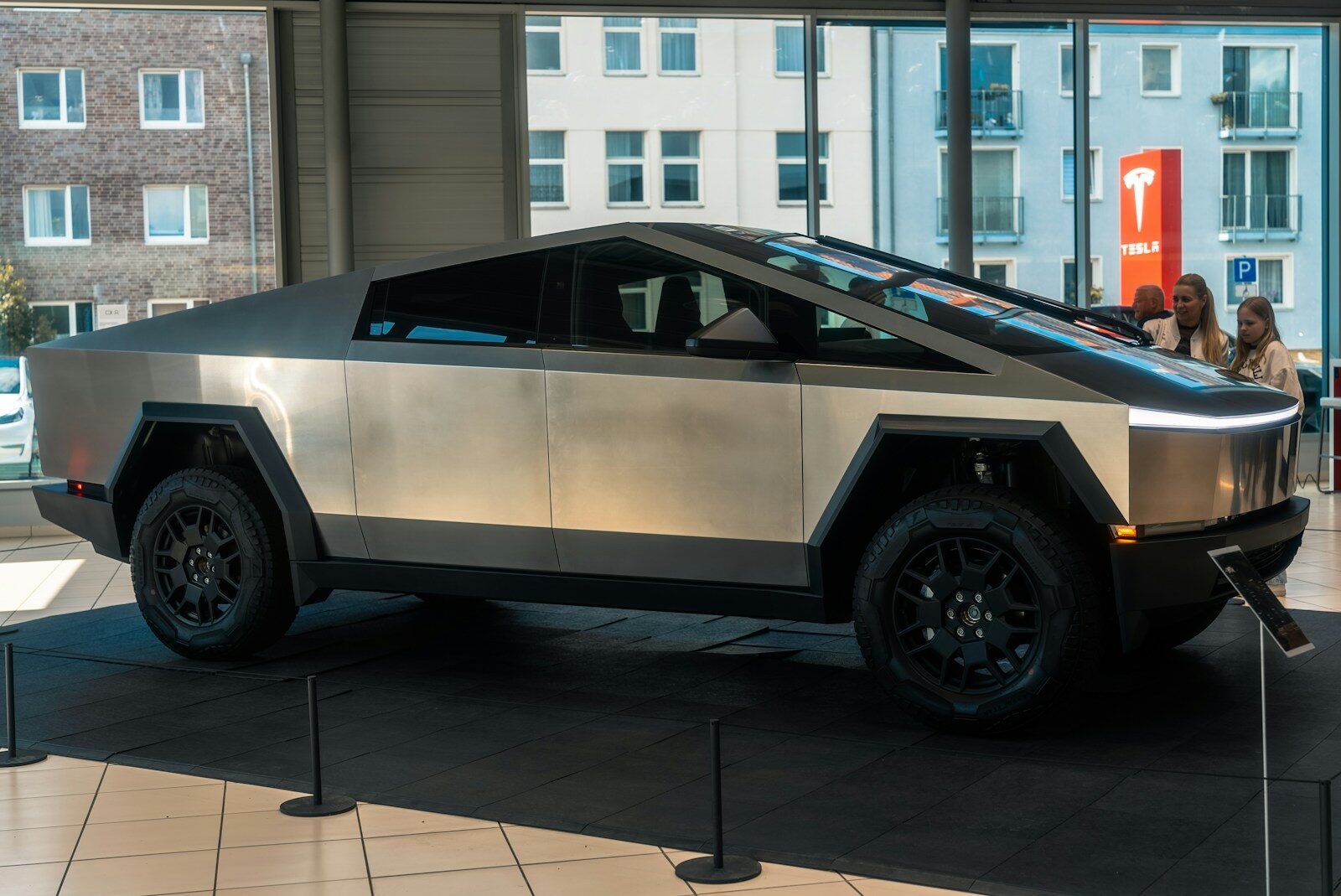
Tesla’s short-lived budget Cybertruck is facing a serious safety problem after the automaker issued a recall tied to wheels potentially separating from the truck while driving. For any vehicle, that’s a serious issue. For a 6,000-plus-pound electric truck already surrounded by scrutiny and controversy, it’s exactly the kind of headline Tesla didn’t want.
What the Recall Covers
The recall affects every rear-wheel-drive Cybertruck equipped with the standard 18-inch wheels. In total, only 173 trucks are involved, making this one of the smallest recalls Tesla has issued in years, but the scale is almost beside the point. The issue itself is what grabs attention, because wheel separation is about as dangerous as it gets on the road. According to Tesla, the problem starts with cracking around the brake rotor stud holes under load — road impacts and cornering forces can create stress that eventually causes a wheel stud to separate from the hub assembly, and if that happens, the wheel can come off entirely while the vehicle is moving.
Tesla says it hasn’t received reports of crashes or injuries connected to the defect, though the company confirmed there have already been three related warranty claims, a detail that matters since warranty claims are often the first real-world signal that a problem seen during testing is making its way onto public roads. The affected trucks were built between March 21, 2024, and November 25, 2025. Oddly, Tesla also says actual production of rear-wheel-drive Cybertrucks with the 18-inch wheel package didn’t begin until August 28, 2025, and reportedly ended less than three months later on November 5 because demand for the cheaper version was limited, a remarkably short production run even by Tesla standards. The rear-wheel-drive Cybertruck was supposed to serve as the more affordable entry point into Tesla’s pickup lineup; instead, it now carries the distinction of being recalled because its wheels may detach under stress.
A Defect That Also Spread Through Service Centers
Tesla first spotted signs of trouble back in August of last year during pre-production testing. Engineers identified cracking in the brake rotors, although the wheel studs themselves remained intact during those early evaluations, and at the time the issue apparently didn’t look catastrophic. Then field reports started showing up, and as Tesla continued investigating, the company determined the risk was more serious than initially believed — under real-world driving conditions, repeated stress loads could compromise the connection point around the studs enough to create a separation risk.
The recall isn’t limited strictly to trucks that left the factory with the defective parts, either. Tesla also acknowledged that some service centers were installing the same potentially faulty brake rotors during repairs or maintenance work, meaning certain Cybertrucks that had brake service performed could also be carrying the defective hardware. For owners, that creates another layer of uncertainty — a truck that originally avoided the defect may still have ended up with compromised parts after visiting a Tesla service department. That matters because it cuts directly into consumer confidence: owners expect service repairs to fix problems, not introduce new safety concerns, and when defective parts circulate through service channels, it raises uncomfortable questions about inventory controls and quality assurance inside the repair network.
The Fix and the Bigger Picture
Tesla’s fix involves replacing the front and rear brake rotors, hubs, and lug nuts with updated components designed to be more durable under load. Owners are expected to begin receiving notification letters after June 20, after which they’ll need to bring their trucks into Tesla service centers for repairs. At least on paper, the repair itself sounds straightforward, but the bigger issue is the optics surrounding another Cybertruck recall involving core vehicle hardware. The Cybertruck has already become one of the most controversial launches in modern automotive history, and between production delays, quality concerns, unusual engineering choices, and repeated recalls, the truck has struggled to escape headlines that focus more on problems than performance. This latest recall feeds directly into that narrative.
Critics will immediately jump on the relatively tiny number of affected trucks, but enthusiasts understand the actual size of the recall isn’t the real story. The concern is the type of failure involved — cosmetic flaws are annoying, software bugs can usually be patched, but wheel separation is the kind of defect that instantly draws attention from regulators, safety investigators, and nervous owners alike. There’s also an uncomfortable timeline here: Tesla identified signs of cracking during pre-production testing long before these trucks fully reached customers, and enthusiasts are going to question why the issue made it into customer vehicles at all, a question that becomes even harder to ignore given the affected variant only survived a matter of weeks before production stopped due to weak demand.
Why Durability Matters So Much for Truck Buyers
For Tesla, the Cybertruck was supposed to redefine the pickup segment and showcase the company’s engineering ambitions. Instead, the truck continues generating headlines tied to recalls, defects, and reliability concerns, and that doesn’t just hurt Tesla’s image, it affects public trust in EV trucks as a whole, especially among traditional truck buyers who were already skeptical. Truck buyers care about durability more than almost anything else — they expect their vehicles to survive heavy loads, rough roads, and years of abuse without major mechanical failures, and a recall involving wheels potentially detaching under normal driving conditions hits directly at that core expectation. For Tesla, that creates a bigger challenge than simply replacing a few brake components. The company now has to convince buyers that the Cybertruck is more than a rolling collection of viral moments, recalls, and engineering experiments, because if drivers start questioning whether basic hardware can hold together under load, no amount of futuristic styling or internet hype is going to fix that problem.
About the Author