Rafael Otero Nieves got 84 months. Nigel Criss got 54. Both were sentenced on July 21 by Chief U.S. District Judge Matthew W. Brann in the Middle District of Pennsylvania for interstate transportation of stolen motor vehicles, and both, according to the court, personally moved more than two dozen cars each.
The headline detail everybody fixates on is the street takeovers. That’s the wrong detail. The one that should keep dealer principals awake is buried in the original indictment: the crew traveled to dealerships carrying key programmers.
Eight cars, one lot, one night
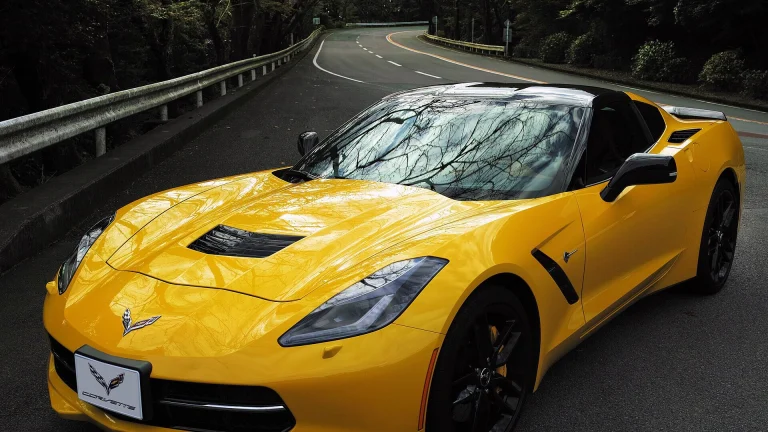
Here’s the anchor event. On October 3, 2023, seven of the ten charged co-conspirators drove to a dealership in Selinsgrove, Pennsylvania, and left with two 2017 Cadillac CTS-Vs, a 2016 CTS-V, two 2019 CTS-Vs, a 2018 Camaro, a 2019 Camaro, and a 2019 Corvette. Eight cars. One stop.
Sit with the logistics. Eight vehicles means eight drivers or a shuttle operation, and every one of those cars was a push-button, transponder-secured GM product that will not crank without a fob the body control module recognizes. Nobody hot-wired anything. Nobody shattered a steering column. The crew brought a device that talks to the car’s own security network through the diagnostic port and convinces it to accept a new key. Then they drove out the entrance.
Related Articles
- 10 Best Amazon Deals for Dog Owners Who Hit the Trail
- 10 Best Racing Helmet Deals on Amazon Right Now
That’s the whole trick, and it isn’t exotic. Key programmers are legitimate tools. Locksmiths need them. Independent shops need them when a customer loses the only fob. Right-to-repair rules exist specifically so the diagnostic port stays open to non-dealer technicians. The same access that lets your local shop cut you a spare is the access that empties a lot in twenty minutes.
The regulation that assumed the lock would hold
Here’s the part almost nobody outside the compliance world knows, and it’s the sharpest irony in this case.
Federal law requires certain high-theft passenger car lines to be parts-marked — 49 CFR Part 541 makes manufacturers stamp the VIN or a derivative onto major components like doors, hoods, fenders, and engine and transmission cases. The whole point is so investigators can trace a bumper or a quarter panel back to a stolen car after the shell has been picked apart.
But manufacturers can petition their way out of it. Under 49 CFR Part 543, a carmaker can get a line exempted from parts marking if it installs a qualifying anti-theft immobilizer as standard equipment across the whole line. NHTSA has granted these routinely for decades. The logic in 1985 was sound: an immobilizer stops the car from moving at all, which beats being able to identify the pieces after it’s gone.
The logic held right up until a $600 handheld device could negotiate with the immobilizer. Now the regulatory tradeoff runs backward on a lot of modern inventory — the electronic lock that justified skipping the physical serialization is the exact thing being defeated, and the serialization that would have helped trace the wreckage was traded away. That’s not a knock on any one automaker. It’s a standard written for a threat model that aged out.
What a takeover does to a 640-horsepower sedan
The federal filings say these cars were shown off at meetups and driven, in the government’s words, in “a reckless and dangerous manner, such as drifting and ‘burning out’ the vehicles.” From a mechanical standpoint, that is a very specific and very expensive kind of abuse.
A CTS-V of this generation runs a supercharged 6.2 with an electronic limited-slip differential and magnetorheological dampers. Sustained burnouts don’t hurt the engine much — they murder everything downstream. Differential fluid in a rear diff being asked to hold a locked, spinning rear axle for thirty seconds at a time will exceed its thermal limit fast, and once the fluid cooks, the eLSD clutch pack starts glazing. Half shafts and the rear cradle bushings take shock loading they were never cycled for. Automatic transmission fluid climbs past its design window with the torque converter slipping under load and no airflow through the cooler because the car isn’t moving. Tires delaminate from the inside as the belts separate.
And that’s before the drifting, which adds impact loading to the wheel bearings and, on a lowered or curb-clipped car, bent control arms nobody logs.
The practical translation: a recovered street-takeover car can look perfect. Straight panels, clean interior, no airbag deployment. The damage is in the driveline and it doesn’t show up until the second owner is 3,000 miles in and hears the diff whining on decel.
What buyers should actually do
This crew’s inventory ended up somewhere. Some was recovered, some was sold, and a used muscle car with a suspiciously clean carfax and a fresh out-of-state title is exactly what this pipeline produces.
Run the VIN through an NMVTIS report before you buy anything. It’s the federal title database run by the Justice Department, it aggregates brand data from state DMVs, insurers, and salvage yards, and it’s specifically designed to catch title washing and cloning that commercial history reports miss. It costs a few dollars. It’s the single highest-value ten minutes in a private-party purchase.
Related Articles
- 10 Most Popular Automotive Products on Amazon Right Now
- 10 Cargo Rack Deals for Hauling More Gear to the Trail
Beyond that: physically inspect the parts-marking labels if the line has them, because a mismatch between a door label and the dash VIN ends the conversation immediately. Pull the diff cover or at least smell the fluid on any V-car being sold by someone who isn’t the titled owner. And treat “only one key” as a five-alarm signal, not a bargaining chip.
For owners and dealers
If you own something on the target list — late-model V-cars, Camaros, Corvettes, Hellcats, anything with a badge that photographs well — an OBD port lock is a $40 speed bump that meaningfully raises the effort required. A hidden aftermarket kill switch wired to the fuel pump or starter circuit is better, because it isn’t on the diagnostic network at all and the tool can’t negotiate with a physically open circuit.
For dealers, the lesson from Selinsgrove is that lot security built around key control is incomplete when the thief brings his own key. Blocking cars, wheel locks on the halo inventory, and disabling battery access overnight are unglamorous but they work against a crew that needs to move eight cars fast.
Ten people were charged. Jumaane Wright died before sentencing. Shamar Morris got 12 months, Raymond Steward six, Tyler Hoagland 18. Four are still awaiting sentencing. The gap between six months and 84 came down to volume and who was giving orders — which tells you the federal system treats the guy holding the programmer very differently than the guy holding the phone camera.
About the Author