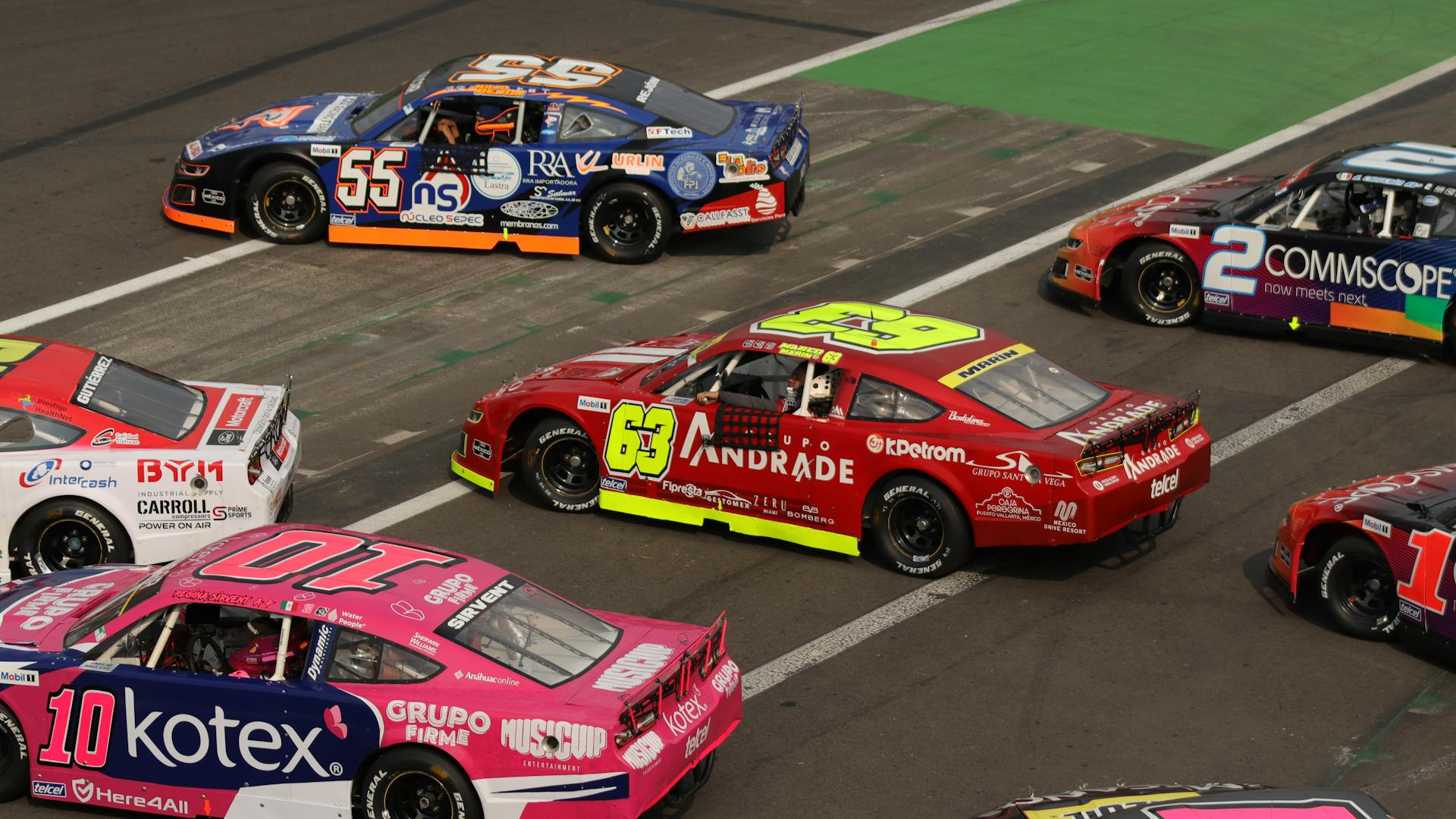
Photo by Diego Martinez on Pexels
Gary Myers died on September 10 at 76, and the tidy version of his career — 38 wins at Bowman Gray Stadium, a Modified tour title, a run at Winston Cup that went nowhere — undersells him badly. Myers was the middle link in a four-generation Winston-Salem racing family, and the middle link is where the load goes. His father and his uncle both died in race cars in the 1950s. His two sons now own a large share of the all-time record book at the same quarter-mile he spent his life circling. Everything between those two facts was his to carry.
He carried it by staying put. That is the genuinely unusual part, and it is the part worth explaining.
Thirty-eight wins inside a football stadium
Bowman Gray Stadium is a quarter-mile flat oval poured around a high school football field in Winston-Salem, North Carolina. The practical consequence is that the inside wall, the outside fence and the car you are trying to pass are all about the same distance away at all times, which is to say roughly one car length. There is no banking to lean on and no straightaway long enough to sort a field out by horsepower. Positions change through contact or through patience, and the grandstand has a well-documented preference for the first option. The place has been calling itself the Madhouse since long before anyone thought to trademark it. Backfire Racing has broken down why that geometry is its own engineering problem in how teams set up cars differently for NASCAR short tracks.
Myers won 38 features there, good for a spot inside the track’s all-time top ten. The machine he did it in deserves a proper explanation, because “Modified” has drifted into being a vague word. A Southern Modified is a purpose-built tube-frame race car with open front wheels, a full-bodied rear section, wide-five hub and wheel assemblies, and a naturally aspirated small-block producing serious power in a chassis that generates essentially no aerodynamic downforce. On a quarter-mile, that package is a traction problem wearing a bodywork costume. Rear grip goes away by lap eight and only comes back if the driver stops asking for it. This is why short-track veterans talk about throttle discipline where other racing series talk about bravery.
Modifieds are also far more expensive than casual fans assume. There is no crate-motor shortcut and no spec chassis to buy off a shelf. A front-running car means a bespoke frame, a real engine program, a hauler, a crew, and a consumables budget for tires and sheet metal that assumes you will be repairing the car most weeks, because at Bowman Gray you will be. That economic reality is the thread running through the rest of Myers’ life, and it explains the decision that actually mattered.
The Winston Cup detour and the arithmetic of the independent
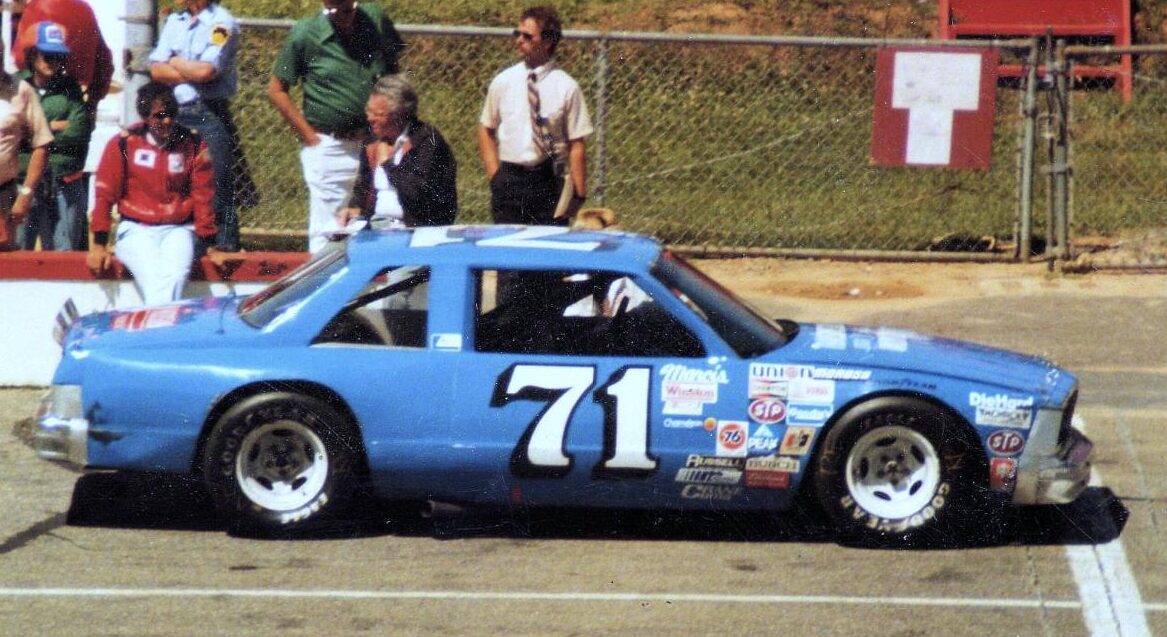
Myers ran the NASCAR Winston Cup Series in the 1970s as an independent, which meant he arrived with his own car, his own money and whatever associate sponsorship a Modified racer out of Stokes County could scrape together. He never won and never finished inside the top ten.
That is not a knock on his driving. It is a description of a business model that could not work. The independent’s economics in that era were brutally simple: buy used equipment from the front-running teams, qualify, run enough laps to collect purse money, and repeat the following week with whatever was left. The factory-supported operations were running fresh engines and a development budget; the independents were running last year’s cars and a credit line. Independents were not filler, either — they were the reason Cup fields reached a full complement of cars at all. They were also the first thing to disappear once sponsorship money professionalized the series.
Myers did the math and went home. Plenty of drivers of his generation did not, and spent two decades chasing a ride that the sport had already stopped issuing.
The line on his résumé that actually changed something
In late 1988, after a rained-out race at Myrtle Beach Speedway, a group of Modified car owners and drivers did something racers almost never do: they started their own sanctioning body. Southern Modified Auto Racing Teams — SMART — ran its first event on April 9, 1989 at Langley Speedway in Hampton, Virginia, with Robert Jeffreys taking the inaugural win. Myers was part of that founding effort, and in 1996 he won the tour championship.
It is worth sitting with what that means. A sanctioning body owns the rulebook, the schedule, the purse structure and the negotiating position with every track on the calendar. Nearly everything a racer complains about on a Saturday night lives inside those four things. Late model stock cars were taking over the Southeast at the time, and Modified teams were watching car counts and payouts shrink at facilities that had been theirs for forty years. Instead of lobbying somebody else’s rulebook, they wrote their own.
It worked well enough that NASCAR bought it. When the American Speed Association collapsed in late 2004, NASCAR absorbed the series and rebranded it the NASCAR Whelen Southern Modified Tour for 2005. In 2017 NASCAR folded the Southern tour into the Northern-based Whelen Modified Tour, and the Southern series stopped existing as its own entity — a consolidation that tidied up a schedule and left an entire region of race teams without a home tour. The SMART name has since been revived as an independent series, now running under a Pace-O-Matic title deal, with a 2026 season heading into its playoffs this fall.
Teams build it, the national body absorbs it, the national body discards it, the teams rebuild it. That round trip is the single most useful thing to take away from Gary Myers’ career, and it is not a nostalgia story. Grassroots racing does not survive on sentiment or on gate receipts. It survives when someone local controls the sanctioning, because sanctioning is the only leverage a group of race teams will ever have. The current wave of independently sanctioned series launching outside the established ladder is the same instinct, several decades later. Lawmakers have been working the problem from the other end, with North Carolina passing legislation to shield existing tracks from nuisance complaints as suburbs creep toward facilities that were built in cow pastures.
The inheritance nobody volunteers for
Myers was born in March 1950 in Walnut Cove, North Carolina, into a family that was already famous and already grieving. His father, Billy Myers, was known as Mr. Bowman Gray: three track championships in the 1950s, the 1955 NASCAR Sportsman national title, two Grand National wins and a sixth-place points finish in 1956. His uncle Bobby Myers won the 1952 Bowman Gray Modified championship and earned the nickname Master of the Madhouse.
Neither man reached his mid-thirties. Bobby was killed on September 2, 1957 in the Southern 500 at Darlington when a car came to a stop on the backstretch and he hit it at speed; he was 30. Billy died on April 12, 1958, suffering a heart attack behind the wheel during a Modified race at Bowman Gray and going into the fence. He was 33, and Gary was eight. NASCAR still presents the Myers Brothers Award at its season-ending banquet, named for two drivers whose racing careers ended within seven months of each other.
Gary’s answer to that inheritance was to keep racing at the track that took his father, and then to put both of his sons into the same cars at the same place. In the abstract, that is hard to defend. In practice it is how every trade family in America operates, and it is also the mechanism by which institutional knowledge survives in a sport that does not write anything down. Bowman Gray has never allowed anyone to forget the cost of the arrangement; the stadium lost a competitor in a crash there as recently as 2025.
What he handed over
Burt Myers, born in 1975, broke his great-uncle’s record as the youngest Bowman Gray track champion when he took the 1999 title at 23. He has since collected a dozen track championships, and on August 17 of this year he won his 108th combined race at the stadium — 107 Modified features and one Sportsman win — breaking a tie with Tim Brown for the most wins in the track’s history. Jason Myers, born in 1978, has 42. Add Gary’s 38 and the family had already cleared 180 wins at a single race track before this season began. Gary owned the No. 4 that Jason drove; he finished his career as a car owner at least as much as a driver, which is the less glamorous half of the job and the half that keeps a team alive.
The timing of his death carries an unkind symmetry. NASCAR ran its Clash exhibition at Bowman Gray in 2025 and 2026, the Cup Series’ first appearances at the track since 1971, before moving the race back to Daytona for 2027. Then, on August 22, NASCAR announced that the Craftsman Truck Series will race at Bowman Gray on Friday, August 20, 2027 — the first points-paying national series event at the quarter-mile in 56 years. Clay Campbell, president of Martinsville Speedway and NASCAR’s vice president for the Mid-Atlantic, called it an exciting moment for the facility. Officials have already conceded the obvious logistical hurdle: a 36-truck field does not fit on a quarter-mile, so the entry list will have to shrink.
The sport, in other words, is coming back to the place Gary Myers never left, and it is coming back for exactly the reasons he stayed — proximity, contact, and a grandstand close enough to argue with the drivers. The local racing that kept the stadium’s lights on during the decades NASCAR was not interested, from weekly Modified shows to Legends fields packing the quarter-mile, was never waiting for permission. Neither were the short-track operators still investing real money in pavement and marquee events at bullrings elsewhere in the country.
If you want to measure what a career like this is actually worth, skip the win column. Thirty-eight features will eventually be a line in a record book that fewer people open every year. The tour Myers helped start is running races this month, under a name its teams have now had to defend twice. That is the better monument, and it is the one that required him to be more than fast.
Lead image: Diego Martinez on Pexels
About the Author