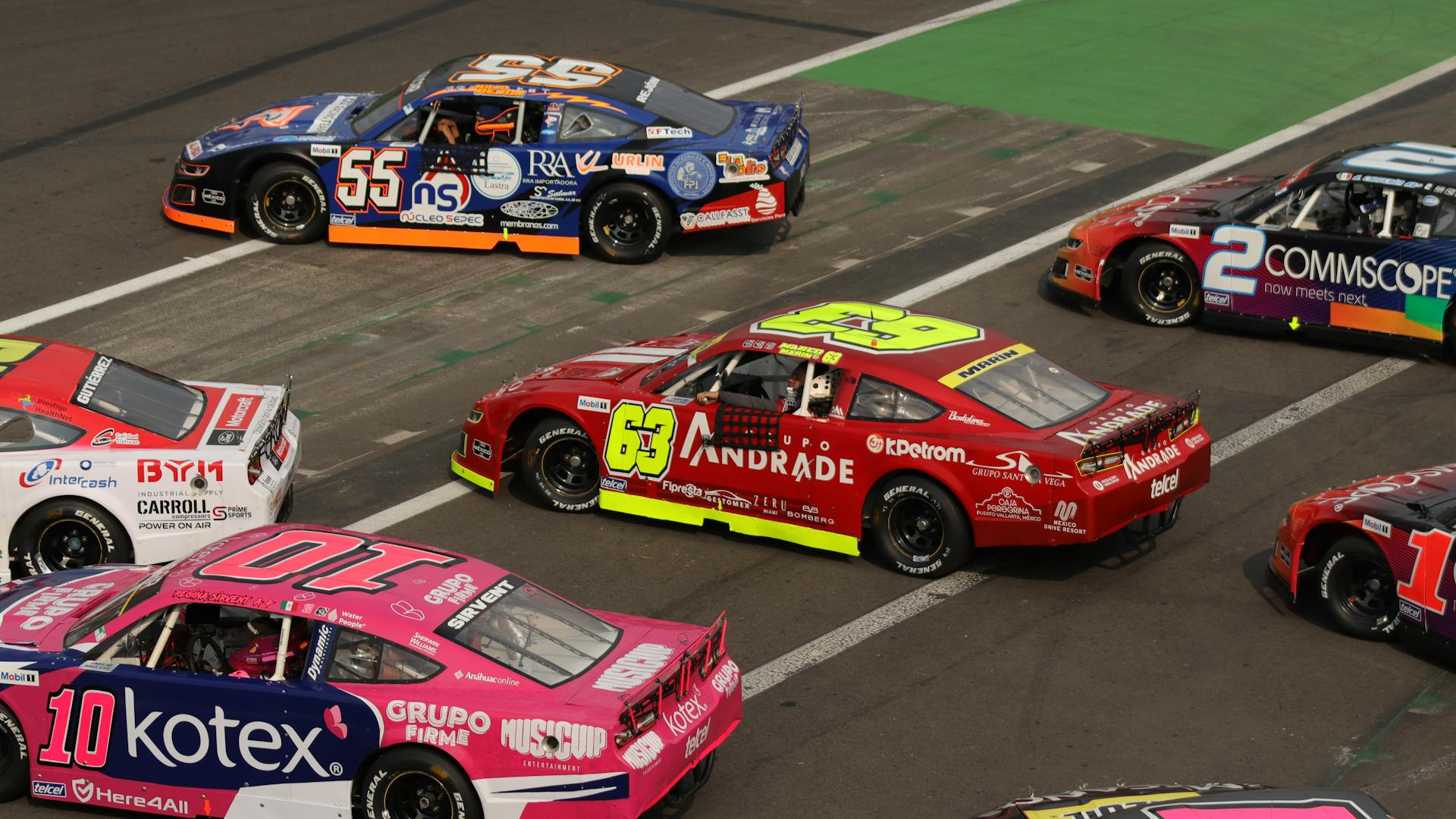
Photo by Diego Martinez on Pexels
NASCAR closed the book on 2027 Daytona 500 Week this week, and the real headline isn’t a new date. It’s an old one coming home. The Wheatley Vodka Clash, NASCAR’s rebranded preseason exhibition (you may still know it as the Busch Clash), will open Speedweeks Presented by AdventHealth at Daytona International Speedway on Saturday night, Feb. 13, 2027, exactly eight days ahead of the 69th running of the Daytona 500 on Sunday, Feb. 21. After six years of shipping its season-opening novelty race to a temporary bullring built inside a football stadium’s parking lot and then a quarter-mile bandbox in North Carolina, NASCAR is finally parking the Clash back on the 2.5-mile oval where it was born.
Here’s the full Speedweeks lineup NASCAR and Daytona International Speedway confirmed:
- Saturday, Feb. 13 — Wheatley Vodka Clash
- Wednesday, Feb. 17 — Daytona 500 Qualifying Presented by Busch Light
- Thursday, Feb. 18 — Duel at Daytona
- Friday, Feb. 19 — NASCAR Craftsman Truck Series race
- Saturday, Feb. 20 — NASCAR O’Reilly Auto Parts Series and ARCA Menards Series races
- Sunday, Feb. 21 — NASCAR Cup Series Daytona 500
Daytona’s summer date is locked in too, with the O’Reilly Auto Parts Series running Friday, Aug. 27, 2027, ahead of the Cup Series’ Coke Zero Sugar 400 on Saturday, Aug. 28. Format and eligibility rules for the Clash itself haven’t been released yet, which tracks with recent history — the invite list has shifted almost every year the race has existed, depending on whether NASCAR wanted to reward the previous year’s qualifying speed, guarantee manufacturer slots, or run some hybrid of both.
The naming rights tell their own story. Wheatley American Vodka is now the Official Vodka of NASCAR under a new multiyear deal with NASCAR and Daytona International Speedway, taking over title sponsorship of an exhibition race that spent decades under Anheuser-Busch’s banner. Notice, though, that Busch Light didn’t disappear from Speedweeks — it kept its name on Daytona 500 Qualifying. That’s a tidy example of how these non-points exhibition and support events get sliced up for sponsors: a clean, standalone broadcast package with no championship implications is easier to wrap a new brand around than trying to rename a points-paying Cup race, so incumbent sponsors often get shuffled to an adjacent event rather than bought out entirely.
The Clash’s résumé explains why NASCAR was eager to stop moving it around. It debuted in 1979 as a 20-lap, 50-mile sprint limited to the previous season’s fastest qualifiers, and Buddy Baker won that first edition against a field of just nine cars. It stayed rooted at Daytona for decades before NASCAR got restless: the 2021 edition moved onto Daytona’s road-course layout, then from 2022 through 2024 the series built a temporary quarter-mile oval inside the Los Angeles Memorial Coliseum for a three-year run chasing a West Coast audience. The last two runnings landed at Bowman Gray Stadium in Winston-Salem, North Carolina — the same short track that hosted 51 Legends cars for the Kyle Busch Invitational this summer. Ryan Preece won the 2026 Clash there, though the race was postponed twice by heavy snowfall and ultimately ran three days after its original date — a fittingly chaotic sendoff for an event that had already sampled three completely different track configurations in three years. Preece has separately been one of the more vocal drivers pushing NASCAR on safety reforms, for what it’s worth.
That venue-hopping was never just a logistics inconvenience; it was a genuine engineering headache. A superspeedway car built for Daytona’s 31-degree banking runs a completely different aero and gearing package than anything suited to a quarter-mile bullring like Bowman Gray, which rewards short, stiff-sprung cars with tons of mechanical grip instead of drafting aero. Building or converting a separate short-track-spec car for a one-off exhibition, hauling it across the country, and then pivoting the shop back to superspeedway prep for the actual Daytona 500 the same week fans were still talking about the Clash is exactly the kind of parallel build that eats into a small team’s offseason budget. Moving the Clash back onto Daytona’s oval means teams can lean on the same draft-package know-how they already need for the 500, which is a real cost and scheduling break for shops that don’t have a dedicated short-track development program.
There’s a fan-facing upside too. Under the old, disjointed cadence, the Clash sat off-site and weeks removed from the 500, which made it a tough sell for anyone budgeting a single Daytona Beach trip. An eight-day window between the Clash and the 500 turns Speedweeks back into one continuous vacation window instead of two separate ones, and Daytona International Speedway is already selling both weekends through its own box office. Comedian Bert Kreischer’s “Full Throttle Festival” is also returning to Daytona Beach on Feb. 20, giving fans a music-and-comedy tie-in the night before the 500 itself.
The 69th Daytona 500 date is worth circling for another reason: it’s the race Jimmie Johnson set as his final NASCAR Cup Series start. With the schedule now official, Johnson’s team, sponsors, and the fans planning to send him off all have a hard date to build around instead of a placeholder.
It’s also a reminder that NASCAR’s offseason news cycle never really stops. The sanctioning body has spent this stretch of summer juggling everything from a trade-secrets lawsuit with a jury date landing right before Speedweeks to the usual Speedweeks-adjacent headaches, like the fact that a Daytona 500 pole winner has managed to draw a hefty fine more than once. A schedule announcement might look like the calmest news NASCAR puts out all offseason, but it’s landing in the middle of a genuinely busy stretch for the sport.
What’s still missing is the fun part: who actually gets to race in it. Until NASCAR releases the Clash’s format and eligibility rules, take any “confirmed lineup” chatter with a grain of salt. The only thing locked in right now is the calendar — and for once, that calendar actually makes sense.
About the Author