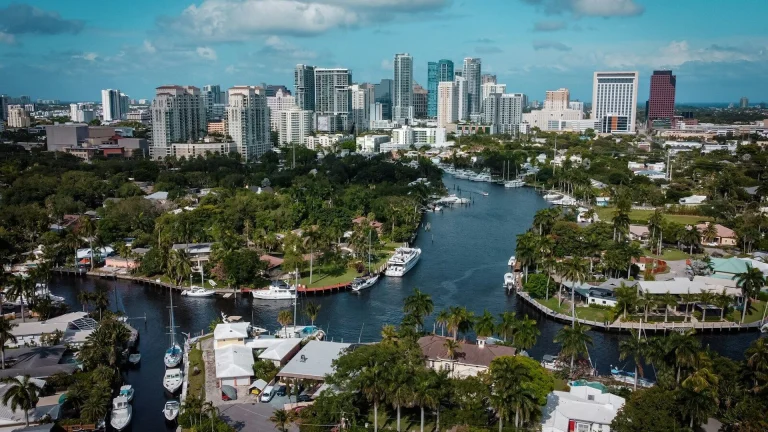
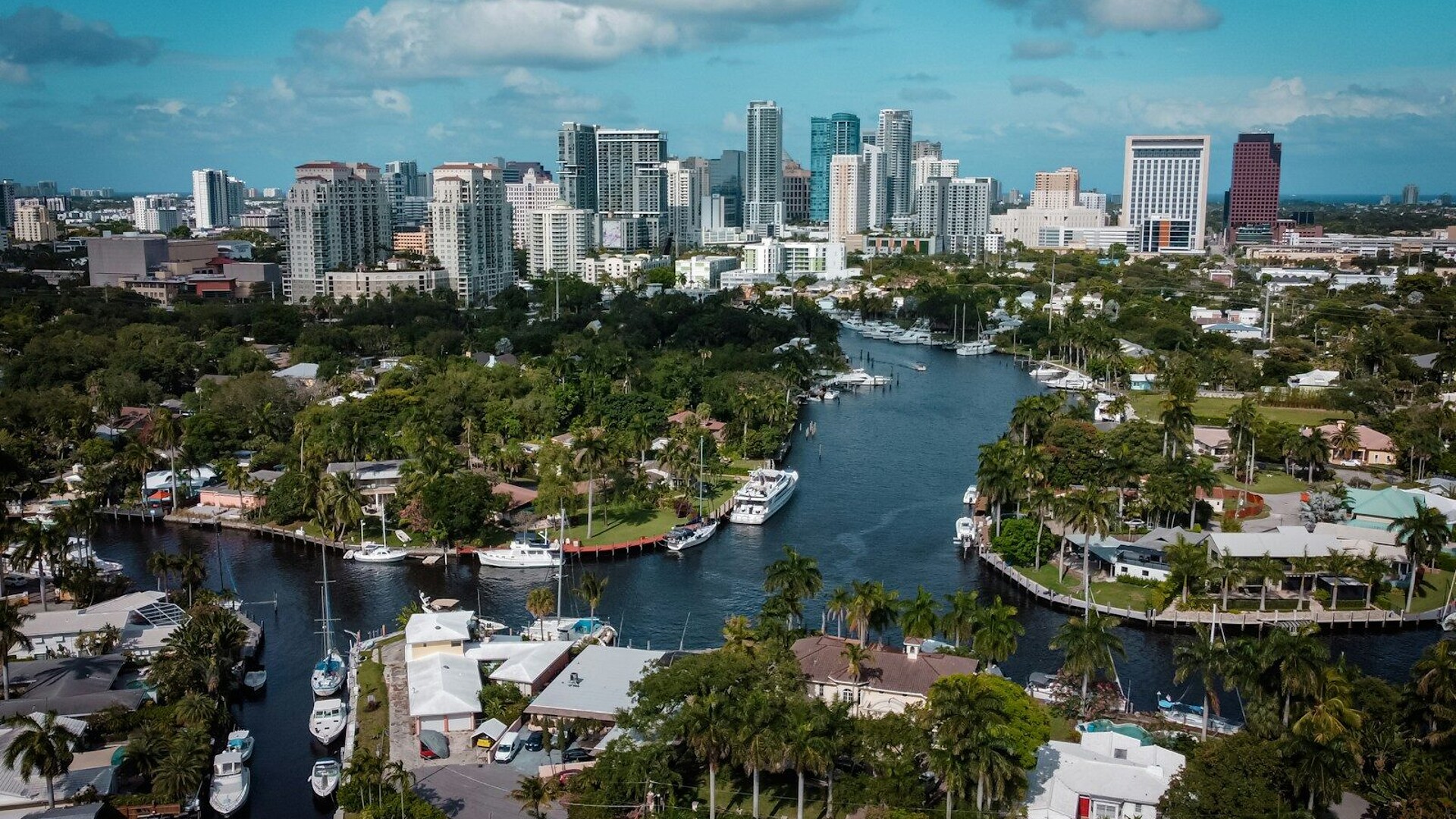
Fort Lauderdale. Photo by Martley U on Unsplash
A driver told Fort Lauderdale police Sunday night that several armed men pistol-whipped him and possibly robbed him, and that he crashed while trying to get away, leaving his car standing on its nose in the trees and power lines of the 1700 block of 7th Avenue.
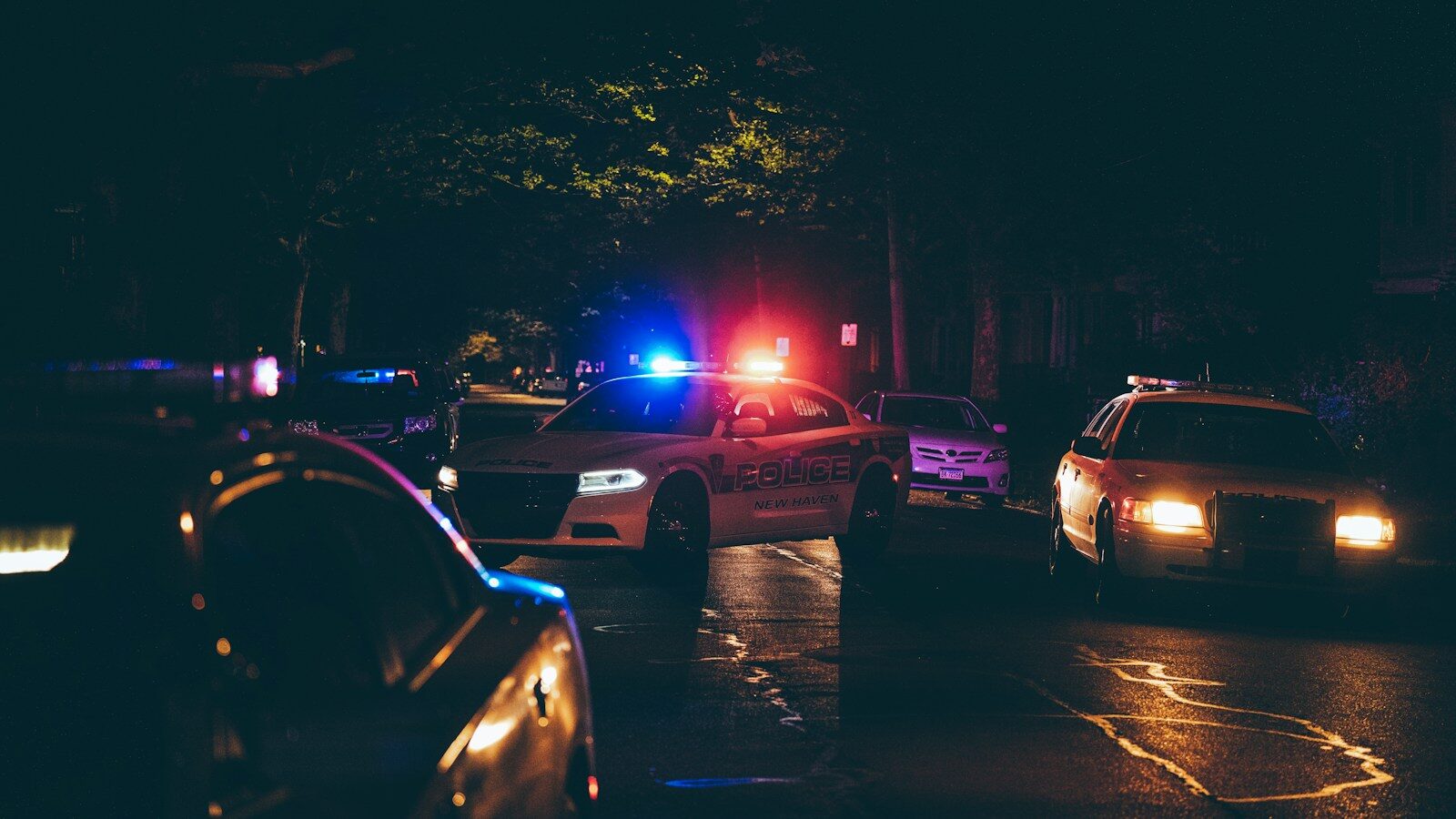
Police said the call came in at about 8:10 p.m. as a single-car crash, and the driver wasn’t hurt. According to NBC 6 South Florida, which first reported the story, officers then went to a house nearby on NE 17th Court. The station’s video shows them outside with shields, announcing themselves as Fort Lauderdale police and ordering the occupants to come out slowly with their hands up. No one was arrested, officers didn’t go inside, and neighbors told the station the house is an Airbnb.
Florida Power & Light and tow crews worked to get the car down, and NBC 6 reported the trees around it would have to be cut down to free it. I couldn’t find a Fort Lauderdale Police Department release or report on the crash as of Monday evening, so the police account here comes through the station. Police haven’t named the driver, said what he was driving, or said whether they’ve confirmed his account.
The documents that do exist are about the house. The City of Fort Lauderdale says it had already fined the property $4,000, put a lien on it when the fine went unpaid, and cited it again two days before the crash. Florida law leaves the city little beyond fines like those, and none of it helps the man whose car ended up in the wires. His bill goes to his own insurance.
Fort Lauderdale Says the House Was Renting Without a Registration
In a statement to NBC 6, the city said the property was previously fined $4,000 for operating without a current vacation rental registration, and that it placed a lien on the property to recover the unpaid fine. On Nov. 20, the city issued another violation for operating without a valid vacation rental certificate. At a special magistrate hearing that hasn’t been scheduled yet, the city plans to ask for $1,000 a day for as long as the property stays out of compliance.
The city’s statement doesn’t connect the house to the attack, and police haven’t said publicly what led officers to its door. What the statement does establish is that the property was on the city’s enforcement radar well before Sunday.
Registering would have cost a fraction of the fine. The city’s vacation rental registration page lists an $880 fee for up to four units on one parcel, first inspection included. Before applying, an owner needs a state vacation rental license from the Department of Business and Professional Regulation, a Broward County business tax receipt, and accounts for state sales tax and the county’s tourist development tax. A code officer inspects the property, occupancy is capped at two people per legal bedroom, and the city issues a Certificate of Compliance. The $4,000 fine was about four and a half times the fee, and the city says it went unpaid. It’s the second Broward County car-crime case on this site since Friday, when a Coral Springs DoorDash driver’s car vanished from an apartment lot in three minutes.
Florida Law Caps What Fort Lauderdale Can Do to a Rental
Fort Lauderdale can’t ban vacation rentals. Section 509.032(7)(b) of Florida law says a local ordinance may not prohibit vacation rentals or regulate how long or how often a property is rented, unless the rule was adopted on or before June 1, 2011. Fort Lauderdale’s vacation rental article came later; the city manager’s Aug. 18, 2015, memo proposed creating it that year. So the city works with registration, inspection and code fines.
Those fines have their own ceilings. Section 162.09 limits a code enforcement fine to $250 a day for a first violation and $500 a day for a repeat. A county or city with at least 50,000 residents can raise those limits to $1,000 a day for a first violation and $5,000 a day for a repeat, but only by an ordinance its governing body passes with a majority plus one of the entire body. The $1,000 a day Fort Lauderdale says it will request is the first-violation ceiling for a city that has adopted the higher caps. The same statute makes a fine a lien in the city’s favor, and bars foreclosing that lien on a property that qualifies as a homestead.
Tallahassee came close to rewriting the rules. In 2024 the Legislature passed SB 280, which would have set statewide limits on local vacation rental registration programs, including what cities could charge and when they could suspend a registration. The Senate’s bill history shows Gov. Ron DeSantis vetoed it on June 27, 2024. Cities like Fort Lauderdale kept their own programs.
Sunday wasn’t the first time a Fort Lauderdale short-term rental ended up in a police report. In September, police said two men broke into an Airbnb near Northwest 19th Avenue and 8th Street trying to rob it, and both were charged with attempted felony murder after the renter inside shot one of them, CBS News Miami reported.
Who Pays for a Car Left Hanging in Power Lines
The driver’s costs don’t wait on an arrest. Florida requires vehicle owners to carry at least $10,000 in personal injury protection and $10,000 in property damage liability, according to the Florida Department of Highway Safety and Motor Vehicles. PIP covers injuries, and he wasn’t hurt. Property damage liability covers what a driver damages that belongs to someone else, which in a crash like this can include utility equipment and trees on someone else’s land. Whether FPL bills for this one isn’t public.
Neither required coverage pays to fix the driver’s own car. That takes optional collision coverage, and he pays the deductible. Florida’s crime victim compensation fund won’t cover the gap for most drivers: under section 960.195, property-loss awards go only to elderly people and disabled adults, capped at $500 a claim and $1,000 over a lifetime, and only when no other reimbursement is available. Getting money from the people he says attacked him would mean someone being identified, charged and convicted first.
No Arrests Yet, and No Hearing Date for the Rental
As of Monday, police hadn’t announced an arrest or said whether the armed men the driver described were ever found. The city said the magistrate hearing on the Nov. 20 violation hasn’t been scheduled because the citation is only days old. If the magistrate grants the $1,000 a day, the fine keeps running until the owner does one of the two things the city’s enforcement page gives cited owners: get a Certificate of Compliance, or take down every listing and stop accepting guests until registration is complete.
Police showed up at that Airbnb with shields. Florida still only lets the city fine it. If you live next to a party rental, what would you want the city allowed to do?
About the Author