Photo: Ford
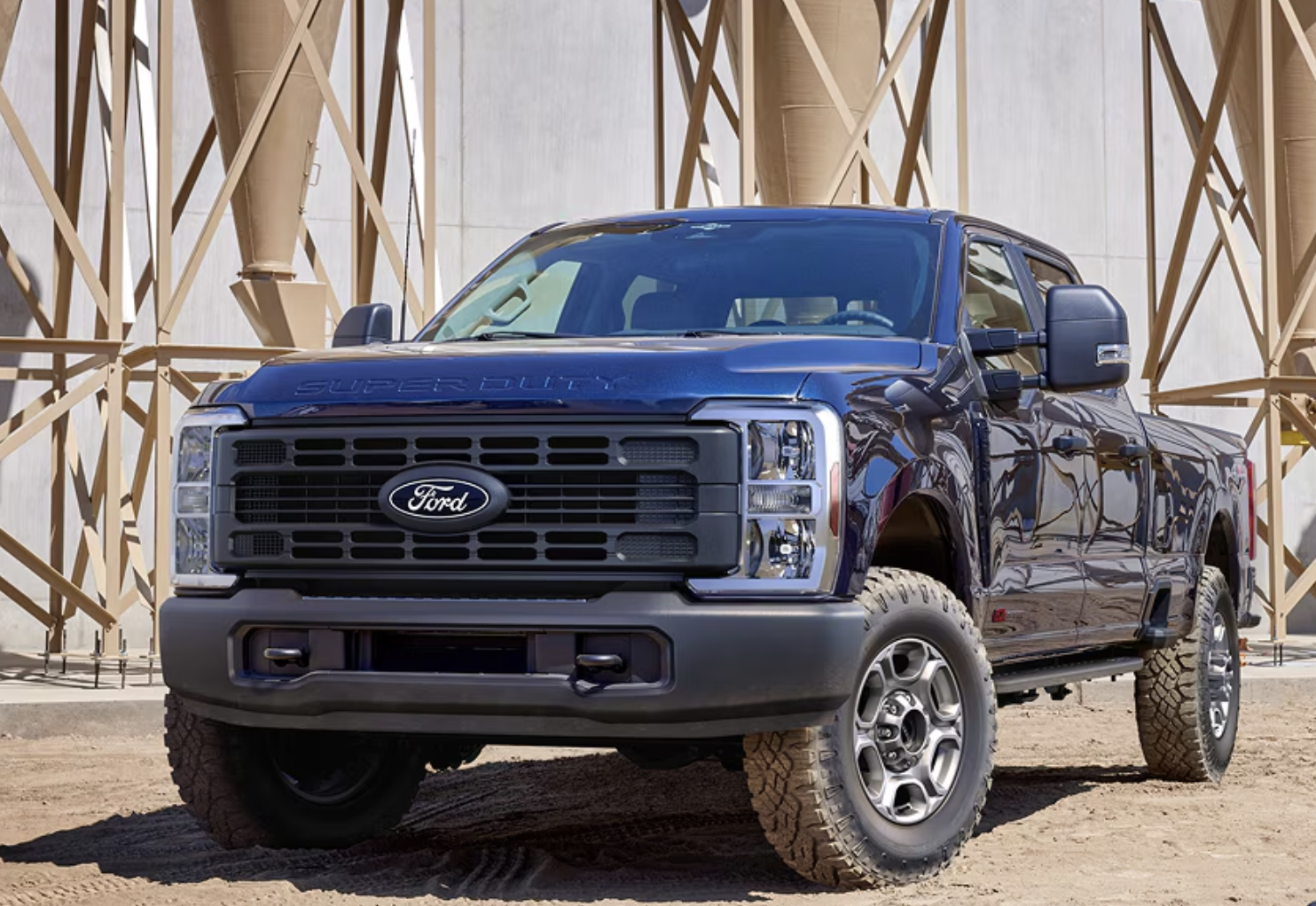
Ford’s Louisville Super Duty line spent most of the past year running on borrowed aluminum. Last month it ran on all of it.
Ford says Super Duty assembly topped 39,000 units in August, the nameplate’s strongest month since March 2006, while F-150 output hit its highest level since August 2024. Those are the headline numbers from the company’s August sales reporting, and they close out a recovery that has been visible in Ford’s own paperwork all year.
Pull up the plant-by-plant tables Ford publishes with every monthly sales release and the climb is obvious. In January 2026, Super Duty output across all plants totaled just 15,329 trucks. February jumped to 31,047. By July it was 35,872, with Kentucky Truck Plant alone accounting for 32,405 of those and Ohio Assembly adding 3,308. Ford built 211,607 Super Duty trucks in the first seven months of the year. July also came in above June at every F-Series plant, which is unusual, because midsummer is normally when changeover downtime eats a week out of the calendar.
The aluminum problem, and why the Super Duty was hit hardest
The bottleneck was never demand. It was sheet metal. Novelis’ Oswego, New York, plant is the largest aluminum rolling mill in the United States and the primary source of the body panels for Ford’s aluminum-bodied trucks. Two fires in the hot mill, in September and November 2025, took the operation down for months. Novelis kept the cold mill and heat treatment lines running and pulled material from its global network, but a hot mill is not something you replace with a purchase order. It finally came back online on June 10, 2026.
Related Articles
- A Camaro, a Bridge, and Nine Charges: What a Tennessee Drag Race Actually Costs When Kids Are in the Back Seat
- A Kansas Car Museum’s Lightning McQueen Exhibit Just Survived an Actual Car Crash
The damage shows up on both sides of the ledger. Novelis’ SEC filings show $327 million in pre-tax fire losses in its fiscal third quarter alone, with rolled product shipments running an estimated 72 kilotonnes below plan. The following quarter brought $630 million more in pre-tax net losses and a 12% shipment decline.
For Ford, the pain landed in the segment that can least afford it. Ford Pro posted $1.718 billion in EBIT on $17.8 billion of revenue in the second quarter, a 9.7% margin, and Ford attributed the $600 million year-over-year drop directly to the aluminum constraint in its second-quarter results. That same release pegs the Novelis year-over-year swing at roughly $1 billion of net EBIT tailwind, weighted heavily to the back half of 2026, and raised full-year Ford Pro guidance to $7.0 billion to $7.5 billion. August’s production number is that forecast starting to show up in metal.
Ford spent money to get here
None of this happened passively. Ford announced in October 2025 that it would add more than 50,000 F-Series trucks to its 2026 build plan, ramping from the first quarter. Dearborn Truck got a third crew of 1,200 people and a target of 45,000 additional F-150s. Kentucky Truck got a $60 million investment, more than 100 additional employees, and a line speed increase of one job per hour, worth better than 5,000 Super Duty trucks a year.
One job per hour sounds trivial until you do the arithmetic. On a plant running two shifts, roughly 240 days a year, an extra unit every hour compounds into thousands of trucks. That is the least glamorous kind of manufacturing win and usually the most durable one.
The third leg of the strategy is still warming up. Ford’s Oakville expansion, part of a roughly $3 billion Super Duty program that includes $2.3 billion for assembly and integrated stamping in Ontario, is supposed to eventually add up to 100,000 units a year, plus about 150 jobs at Windsor Engine Complex building more V8s. Ford’s own production table shows Oakville’s reality right now: six trucks in April, 37 in May, 51 in June, 159 in July. That is pilot-build territory, not volume.
What this means if you’re shopping
Ford’s U.S. sales leadership has put dealer pickup stock at roughly 40 days’ supply against an internal target of 50 to 60 days. Historically the industry treated 75 to 90 days as normal for full-size trucks. So even after the best build month in 20 years, lots are thin.
The practical read: if you want a specific Super Duty configuration, a Tremor package, a particular axle ratio, a chassis cab spec, the selection over the next 60 to 90 days will be materially better than what you’ve been squinting at all year. Deal-hunting is a different question. Ford has been explicit that it is protecting pricing and channel discipline, and thin inventory plus a company that just raised its earnings guidance is not a combination that produces desperate incentives. If you can wait, wait for selection, not for a fire sale.
For fleet buyers, the calculus is different again. Upfitters and body companies have been sitting on empty chassis for the better part of a year. A build wave means the queue at the upfitter is about to get longer, not shorter. Book the second stage now.
The repair bill nobody mentions in the press releases
Here’s the part of the aluminum story that outlives the news cycle. The Super Duty’s aluminum-alloy body is why the Oswego fire hurt so much, and it’s also why a parking-lot dent costs more to fix than it did on a steel-bodied truck.
Ford’s own certification requirements for its collision network spell it out. Aluminum work demands a physically segregated repair area to prevent cross-contamination with steel particles, dedicated aluminum tooling, a 220-volt pulse MIG welder, dust extraction, and rivet equipment for panel joining. That is a five-figure capital outlay before a single technician gets trained, which is exactly why certified shops cluster around metro areas and why rural owners sometimes tow a damaged truck three counties over.
Related Articles
- Universal’s 72-MPH Fast & Furious Drift Coaster Gets Its Opening Date
- Why Robotaxi Hard-Braking Injuries Vanish From Federal Safety Data
Insurance follows the tooling. Longer cycle times and higher parts costs push more moderate hits toward total-loss thresholds than most owners expect. If you’re buying a Super Duty this fall, spend ten minutes finding out where your nearest Ford-certified aluminum shop actually is, and ask your carrier whether your policy specifies OEM parts. Ford’s position statement prohibits aftermarket and salvaged structural components on these repairs. Your policy may not agree.
Context for the 2006 comparison
March 2006 is a telling benchmark. That was the last gasp of the housing boom, when contractors were ordering three-quarter-ton trucks the way people order coffee. The construction collapse that followed took heavy-duty pickup volume with it and it took years to come back.
Ford noted in its 2025 results that Super Duty had its best sales year since 2004, and that was with an aluminum crisis hitting in the fourth quarter. Demand for these trucks isn’t a mystery. Ford’s problem for the past twelve months was purely that it couldn’t build them fast enough.
That constraint is gone. Now we find out how much of the 2026 order bank was real.
Images Via: Ford
About the Author