Photo: Daniel Miksha / Unsplash
Copart built its entire business on convincing buyers that a car with a bent frame or a flooded interior still has value. On September 10, 2026, the company put a much bigger number behind a different idea entirely: that the way dealers buy and sell used inventory from each other is worth even more. Copart announced it will acquire ACV, the publicly traded digital auto marketplace, for $10.50 a share in cash, an implied equity value of roughly $1.9 billion.
That price isn’t a lowball. It works out to about a 45 percent premium over ACV’s closing stock price on August 10, 2026, the last trading day before reports of a possible deal started circulating, and roughly 41 percent over ACV’s 30-day volume-weighted average price through September 9. Both boards signed off unanimously, and Copart says it’s paying entirely with cash on hand with no financing contingency attached, which tells you the balance sheet built on decades of salvage auction fees can absorb a deal this size without blinking.
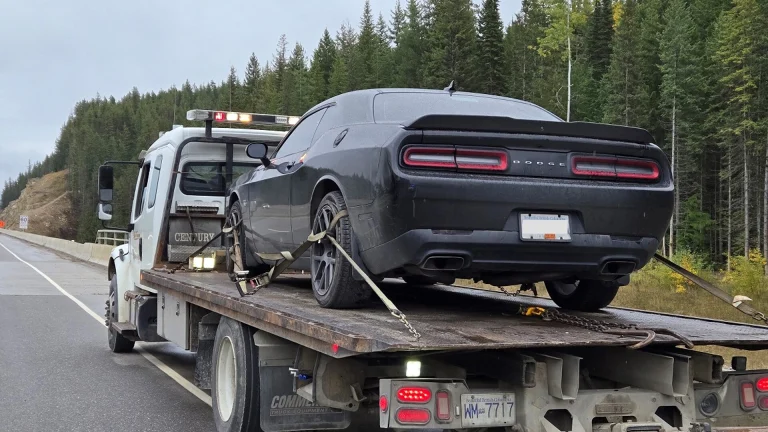
If you’ve never heard of ACV, that’s kind of the point. It doesn’t sell wrecked Hellcats or flood cars like the inventory that turns up on Copart’s lots, the kind of stuff that hid a stolen Demon engine under a wrecked Jeep Grand Cherokee SRT, or turned a McLaren 720S into a pile of scorched scrap someone still tried to sell. ACV lives entirely on the other side of the used-vehicle business: dealer-to-dealer wholesale. Franchise and independent dealers use its platform to buy and sell trade-ins, off-lease returns, and other clean-title inventory without a salvage yard ever entering the picture. Its lineup includes ACV Auctions, ACV Transportation, ACV Capital financing, and inspection and valuation software under the ACV MAX, ClearCar, VIPER, and True360 names, AI-driven condition-grading tools dealers use to price a trade-in in minutes instead of days.
The timing lines up with something worth revisiting: Copart’s stock kept climbing this year even while its core U.S. salvage auction volume growth stalled out. Insurance companies only total so many cars in a given year, and that number doesn’t move much no matter how good Copart’s software gets. Buying ACV hands Copart a second growth lane that isn’t capped by crash rates and total-loss ratios, the far larger pool of dealer trade-ins and off-lease vehicles that Copart has never had a real foothold in.
Copart CEO Jay Adair described the goal as building an “end-to-end vehicle remarketing platform,” and the scale on Copart’s side makes that plausible. The company operates more than 250 locations across 11 countries and moved over 4 million vehicles last year through a network of roughly 1 million registered buyers. ACV brings none of that physical footprint, its business runs on inspectors and software rather than storage yards, but it brings a dealer relationship base and a vehicle-condition data set Copart doesn’t currently have. Combine the two and you get a company that can touch a vehicle from the moment a dealer takes it on trade to the moment an insurer declares it a total loss to the moment it gets exported overseas.
Structurally, this isn’t a typical shareholder-vote merger. Copart is launching a tender offer through a subsidiary, Apple Merger Sub, Inc., to buy ACV shares directly from stockholders. That route only requires a majority of outstanding shares to be tendered rather than a drawn-out proxy vote, and it lets Copart move faster once the Hart-Scott-Rodino antitrust waiting period clears. Any shares not tendered get swept into a follow-on merger afterward at the same $10.50 price, so there’s no advantage to holding out. Because Copart’s salvage auctions and ACV’s dealer wholesale marketplace barely overlap today, the antitrust review here should be more of a formality than a fight, this is one company buying into an adjacent lane, not two rivals merging into one dominant player.
Assuming regulators clear it, Copart expects to close the deal by the end of calendar 2026. ACV won’t get folded into Copart’s org chart right away, it’s set to keep operating as an independent subsidiary under its current CEO, George Chamoun, and existing leadership team. Financially, Copart is telling investors the deal will be roughly neutral to earnings per share in the first full year of ownership and only start adding to EPS in fiscal 2028. That gap between closing and payoff is the honest part of any deal like this: merging two companies’ data systems, sales teams, and dealer relationships takes real time, and Copart isn’t pretending otherwise.
None of this changes what happens if you’re bidding on a project car through Copart tomorrow, ACV’s dealer network stays a business-to-business operation, not a retail marketplace. But it’s worth watching how much of ACV’s condition-grading and AI valuation technology eventually finds its way into Copart’s own salvage listings, where accurate damage disclosure is still handled unevenly enough that a Michigan detective faking salvage title certifications made news just weeks ago. Better inspection data flowing between the dealer wholesale side and the salvage side would benefit anyone who’s ever been burned by a title that didn’t tell the whole story.
Evercore is advising Copart on the deal with Wilson Sonsini Goodrich & Rosati handling legal work; J.P. Morgan is advising ACV and issued the fairness opinion, with Davis Polk & Wardwell serving as counsel. That’s a serious lineup of dealmakers for a $1.9 billion transaction, and it underscores the real story here: the company that turned wrecked cars into a public-market darling just made its biggest bet yet that controlling the used-vehicle pipeline matters more than what’s broken inside any single car on the lot.
Lead image: Daniel Miksha on Unsplash
About the Author