Every year at SEMA, some shop bolts a supercharger onto a half-ton pickup, lowers it three inches, and calls it a street truck. Most of those builds are also a fast way to void a factory warranty, since dealers get nervous the moment they spot aftermarket boost under the hood. Callaway Cars and Waldoch Crafts structured their new Chevrolet Silverado collaboration specifically to avoid that fight, and the paperwork behind it is honestly more interesting than the horsepower number.
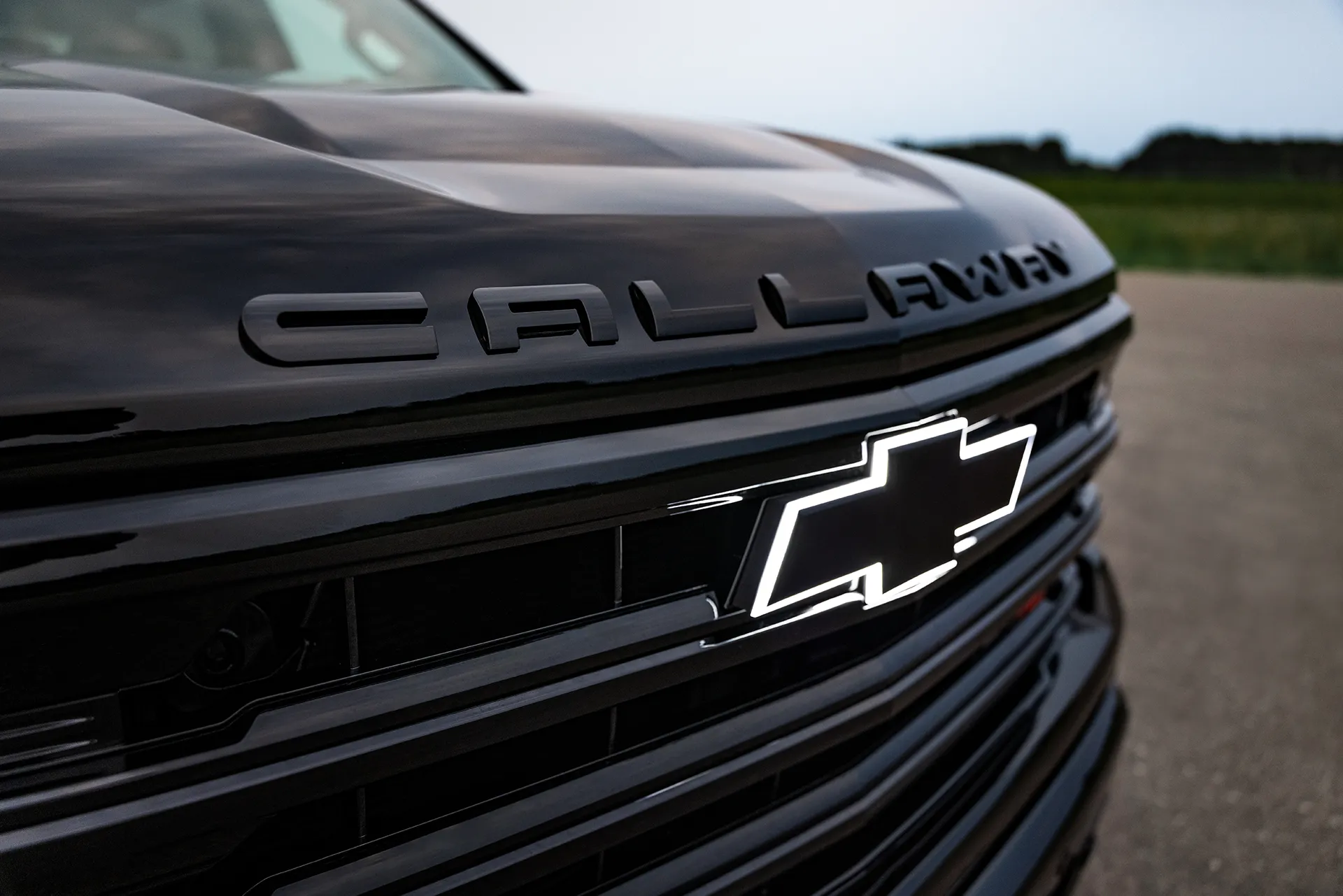
The Waldoch/Callaway Launch Edition starts as a Chevrolet Silverado 1500 and splits the work between two shops that have been doing this legitimately for a long time. Callaway, the Connecticut-based performance house that built its name turbocharging and supercharging Corvettes, supplies the engine package. Waldoch, a Minnesota vehicle upfitter that has been converting trucks and vans for decades, handles the suspension, brakes, wheels and interior work that turn a Silverado into something with its own identity.
Callaway’s SC602 package centers on a GenThree TVS R2650 supercharger, a Roots-type, positive-displacement blower rather than the centrifugal or turbocharged setups more common on tuner cars. The difference matters more on a truck than it does on a sports car. A Roots blower is driven directly off the crankshaft by belt, so it builds boost in lockstep with engine speed instead of waiting on exhaust flow the way a turbocharger does, which means there is no lag and no waiting for RPM to climb before the truck actually moves. That is a better match for towing and low-speed acceleration than a peakier centrifugal setup that prefers to live at higher RPM. Callaway backs the blower with what it calls TripleCooled intercooling, three separate heat exchanger elements designed to keep intake air temperature in check so output does not fade after repeated hard pulls. Together, that is 602 horsepower at 6,000 rpm and 560 lb-ft of torque at 4,500 rpm, up from a stock L87’s 420 horsepower and 460 lb-ft.
The bigger differentiator versus a shop-built blower kit is Callaway’s own engine control calibration, marketed as CalCal, which the company says keeps the truck compliant with 50-state emissions rules rather than the 49-state compromises common among aftermarket power packages. That distinction has gotten more attention now that the EPA has begun formally recognizing SEMA’s own emissions-compliance program for aftermarket parts, which gives buyers an actual paper trail instead of a shop’s word that a part is street-legal. Not every supercharged truck buyer gets that kind of documentation, as some Ram owners weighing similar blower kits are currently finding out the hard way.
Waldoch’s side of the build carries its own certification stack that matters more than it sounds. The company holds Qualified Vehicle Modifier status, General Motors’ own program for upfitters GM trusts to alter its vehicles without triggering warranty disputes, plus NTEA Modified Vehicle Program certification and SEMA membership. Put simply, that is GM and the industry’s two biggest trade groups signing off on Waldoch’s process, which is why the finished truck can still carry Federal Motor Vehicle Safety Standards compliance and a real warranty instead of a “modifications void all coverage” disclaimer in the glovebox.
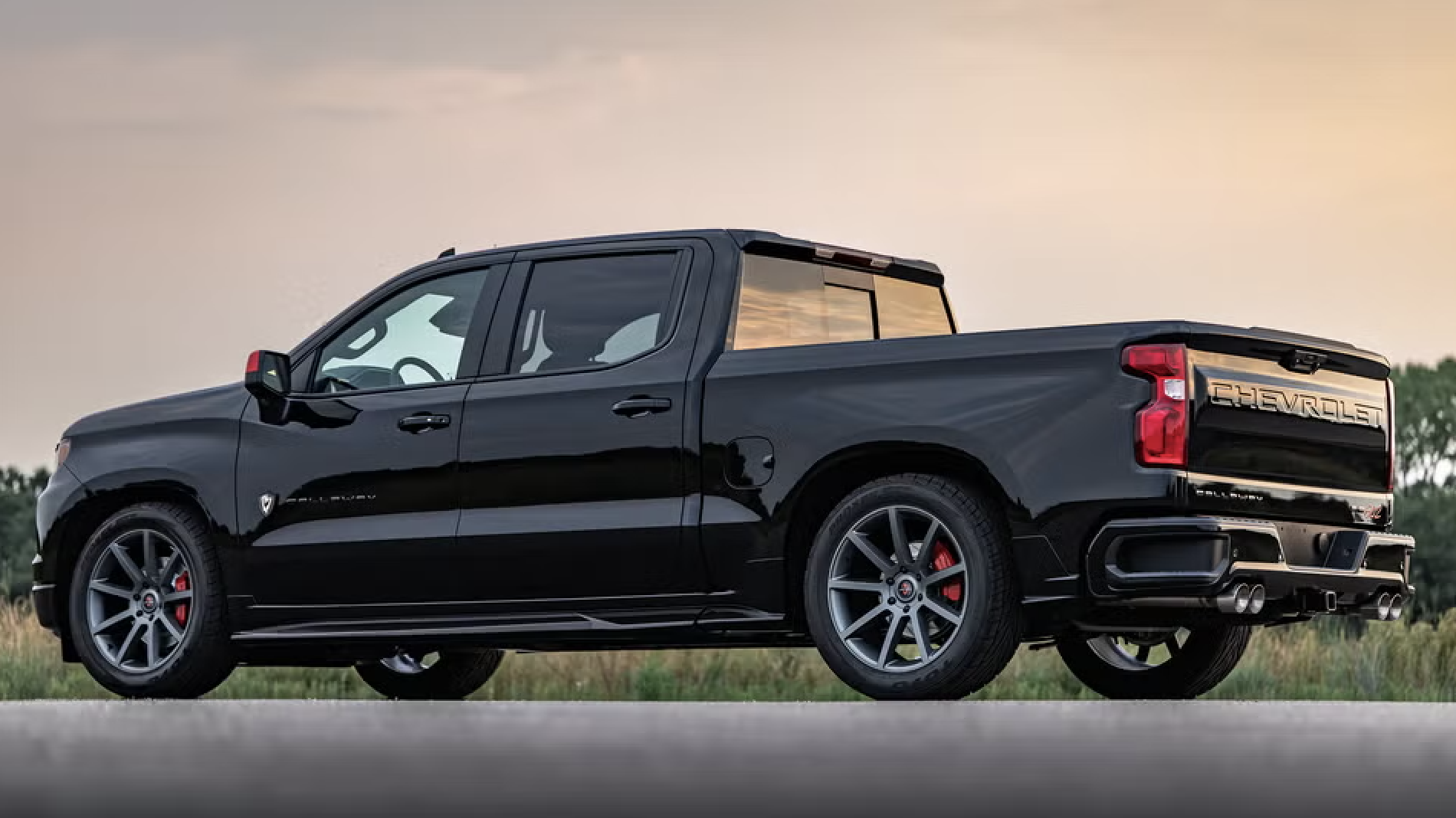
Where most builders reach for a lift kit, Waldoch goes the other direction. The Launch Edition rides on a QA1-based coilover suspension with custom valving and Waldoch’s own alignment specs, dropping the truck’s stance instead of raising it. Braking comes from Callaway’s Big Brake package, six-piston red calipers over 15-inch slotted rotors with stainless braided lines, and the truck rolls on 22×9.5 wheels finished in graphite, wrapped in Toyo Proxes ST III tires sized 305/45R22. Inside, buyers get a custom leather and hydro-graphic interior, lighted Waldoch shield badges, a lit bowtie emblem up front, and a serialized dash placard confirming exactly which numbered build is parked in the driveway.
On the warranty itself, Waldoch backs its work with a 3-year/36,000-mile warranty that stacks on top of GM’s factory coverage rather than replacing it, and Callaway offers an optional extension to 5 years/60,000 miles on the powertrain. That stacking matters legally, too. Under the Magnuson-Moss Warranty Act, GM cannot automatically void a factory warranty just because aftermarket parts are installed; the burden falls on GM to prove the aftermarket part actually caused whatever failed. Certified upfitters like Waldoch make that argument almost never come up in practice, because the paperwork already shows GM signed off on the process.
Worth knowing: this package is built on the same 6.2-liter L87 V8 that is currently drawing federal scrutiny over a separate set of engine failures. A supercharger does not change the underlying metallurgy of that engine one way or another, but it is a reasonable thing to read up on before signing paperwork on any L87-powered truck, boosted or not.
Callaway supercharging a Chevy pickup is not a new experiment, either. A customer testimonial on Callaway’s own site references a 2013 Callaway Silverado still in daily use, and the SC602 hardware underneath the Launch Edition is the same basic package Callaway already sells for the Suburban, Tahoe, Yukon, Yukon XL, Sierra and Escalade. It is the same brand that turned Corvettes into twin-turbo icons decades ago and still trades on that reputation at auction today.
Neither company has published pricing, so the real number comes from a participating dealer rather than an online configurator. Waldoch says the entire package can be financed alongside the truck itself, which avoids the awkward exercise of financing a stock Silverado and a five-figure parts invoice separately. It is also worth calling an insurance agent before ordering one. A standard policy is written against the truck’s factory value, and a modified vehicle can leave an owner short on a total-loss claim unless the policy is written as agreed value or the modifications are specifically scheduled.
The broader trend here is trucks answering each other’s performance moves instead of just competing on towing specs. Shelby went the forced-induction route on the Ford F-150 Raptor R for similar reasons, and Chevrolet’s own Silverado is fighting a genuinely tight full-size truck market against Ford and Ram. A lowered, 602-horsepower Silverado is not going to settle that fight by itself, but it is a much easier sell to a dealer’s finance department, and to a service department, than most aftermarket builds ever manage.
About the Author