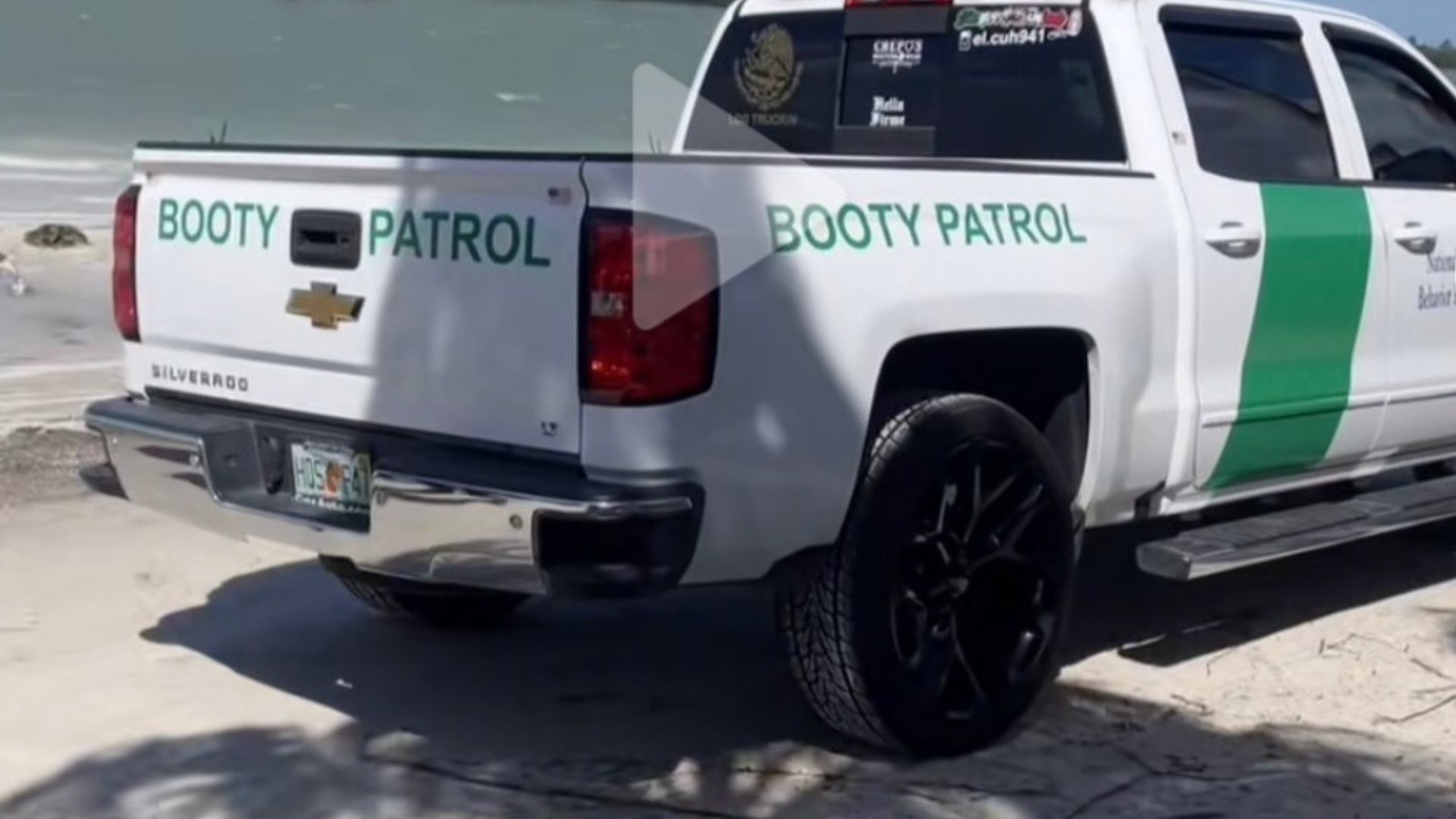
Florida law enforcement stopped a pickup truck featuring a graphic on the rear that had been generating attention from other drivers on the road before the stop itself occurred. The vehicle’s markings, which played on the visual language of law enforcement insignia, put it in the gray area of what’s legally permissible regarding law enforcement impersonation statutes.
The Vehicle and Its Graphics
The truck displayed styling elements — including a badge-style graphic and the words “Booty Patrol” in official-looking typography — that mimicked law enforcement vehicle markings in a way that was intended as humor but sat in legally complicated territory. Several states have statutes specifically addressing the use of law enforcement-style graphics on civilian vehicles, particularly when they could cause other motorists to behave as though a police vehicle was present.
The Stop
Florida officers pulled the vehicle over and addressed the graphic situation with the driver. The interaction became a news item primarily because of the absurdity of the specific graphics at issue — “Booty Patrol” is not a phrase anyone would mistake for genuine law enforcement under serious scrutiny, but its official-looking presentation in a certain context raised enough concern to prompt the stop.
Where the Law Draws Lines
Vehicle graphic regulations vary by state, with some jurisdictions maintaining broad restrictions on any marking that could be construed as mimicking law enforcement presentation. Florida’s specific statutes were the relevant framework here, and the outcome of the stop reflected how local officers interpreted the graphic under those rules.
About the Author