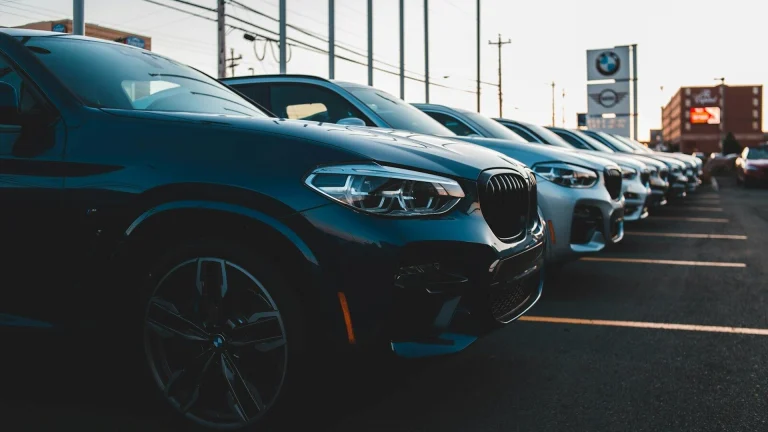
EVOX Productions, the studio photography outfit whose car images show up on more dealer websites and marketplace listings than most shoppers ever realize, filed a copyright lawsuit on July 2 against Stability AI and five other companies. The suit accuses them of pulling more than 100,000 of its photos into datasets used to train AI image generators, without a license and without payment. The case, EVOX Productions LLC v. Stability AI, Inc., et al., was filed in the U.S. District Court for the Central District of California under case number 2:26-cv-07201, and names Stability AI Inc., Stability AI Ltd., Stability AI US Services Corporation, Runway AI Inc., Hugging Face Inc., and DeviantArt Inc. as defendants.
If you’ve never heard of EVOX, you’ve still seen its work. The company shoots and licenses the clean, turntable-style studio photography that populates new car listings across the industry — the same fixed camera angles, diffused lighting, and neutral backdrops that make a given trim level look identical whether you’re browsing a dealer’s site in Ohio or a manufacturer’s build-and-price tool in Oregon. That consistency is the entire business model. It’s also, according to the complaint, exactly what makes the alleged infringement easy to spot.
According to the complaint, Stability AI and Runway pulled EVOX’s images into the massive datasets used to build Stable Diffusion, the text-to-image model Stability AI released and that other companies, including DeviantArt with its own generator built on similar technology, have used commercially. EVOX alleges the resulting AI output doesn’t just learn the general idea of a car photo. It claims the generator reproduces the company’s specific combination of camera angle, lighting, and studio setup closely enough that it reads less like coincidence and more like a copy machine with extra steps.
That distinction matters technically. Stable Diffusion and similar models aren’t trained by memorizing individual pictures; they’re trained by scanning enormous sets of image-text pairs and learning statistical patterns of what a car photo tends to look like. Stability AI has leaned on that process argument as a defense for years: the model learns concepts, not copies. EVOX’s complaint tries to get around that by arguing its case is different. A specific, identifiable studio formula, repeated across a narrow category of images shot the same way thousands of times, makes it far more likely the output is reproducing a recognizable style rather than a generic average. The complaint goes further, stating the infringement “was not the inevitable result of how AI image generation works,” but a deliberate choice — a direct shot at the industry’s favorite legal shield.
Check This Out: Best Dash Cams of 2026: How to Choose the Right One for Your Vehicle
EVOX isn’t the first rightsholder to make this kind of argument, and it won’t be the last. Getty Images has been fighting Stability AI in both UK and U.S. courts since 2023 over similar claims involving its stock photo library, and a group of visual artists sued Stability AI, Midjourney, and DeviantArt that same year over allegedly scraped artwork. What sets the EVOX case apart is the subject matter. Cars are among the most heavily and consistently photographed commercial products in existence, and the photography behind those listings has real licensing value to dealers, marketplaces, and manufacturers. Backfire News has covered how courts wrestle with where copyright protection begins and ends in the automotive world before, including a ruling that found movie cars themselves aren’t protected by copyright law, a reminder that the line between what’s protectable and what isn’t in this industry rarely sits where people assume.
The stakes are bigger than they look at first glance. Copyright law allows statutory damages up to $150,000 per work for willful infringement, and EVOX says at least 100,000 images are involved. Multiply that out and the number stops being realistic; courts almost never award anywhere near the maximum across a batch of works that large. But the math explains why suits like this get filed as a single consolidated case rather than negotiated away quietly, and why AI companies increasingly prefer licensing deals with large content libraries over litigating a dataset claim by claim. Losing control of that argument in front of a jury is a lot more expensive than writing a licensing check up front.
For everyday car shoppers, the more interesting question is what happens if AI-generated images start creeping into inventory listings instead of real photography. A generated image of a car doesn’t show the actual paint chip, the actual mileage-appropriate wear, or the actual color under real light. It shows a statistically plausible car. That’s a real problem for an industry already sensitive about consumer trust, since automakers have had to walk back automation promises before when the technology didn’t match the marketing, as Rivian buyers learned the hard way with self-driving features that never showed up. Studio photography like EVOX’s exists precisely because buyers expect a listing photo to represent a real object, not a generative approximation of one.
Read Next: The 10 Best Outdoor Knives of 2026: Top-Rated Picks for Hunting, Camping, and Survival
This lawsuit also lands in the middle of a broader reckoning over how much control companies get over the technology and content wrapped around modern vehicles. Regulators have leaned on Tesla over Autopilot data and crash reporting, and equipment makers like John Deere have had to give up their grip on proprietary repair software after years of pushback. The EVOX case is really the same fight over control, ownership, and who profits from the underlying work, just playing out in a photo studio instead of a garage.
The case is assigned to Judge Christina A. Snyder, with Magistrate Judge Rozella A. Oliver handling discovery disputes. As of this writing, none of the six defendants have filed a response, and the docket shows only the initial complaint and standard case-opening paperwork. Expect the early fight to center on whether AI training counts as fair use at all, the same unresolved question hanging over every other AI copyright case working through federal courts right now. Until a judge or jury actually settles that question, every company with a large photo library and a lawyer on retainer is watching this one closely.
About the Author