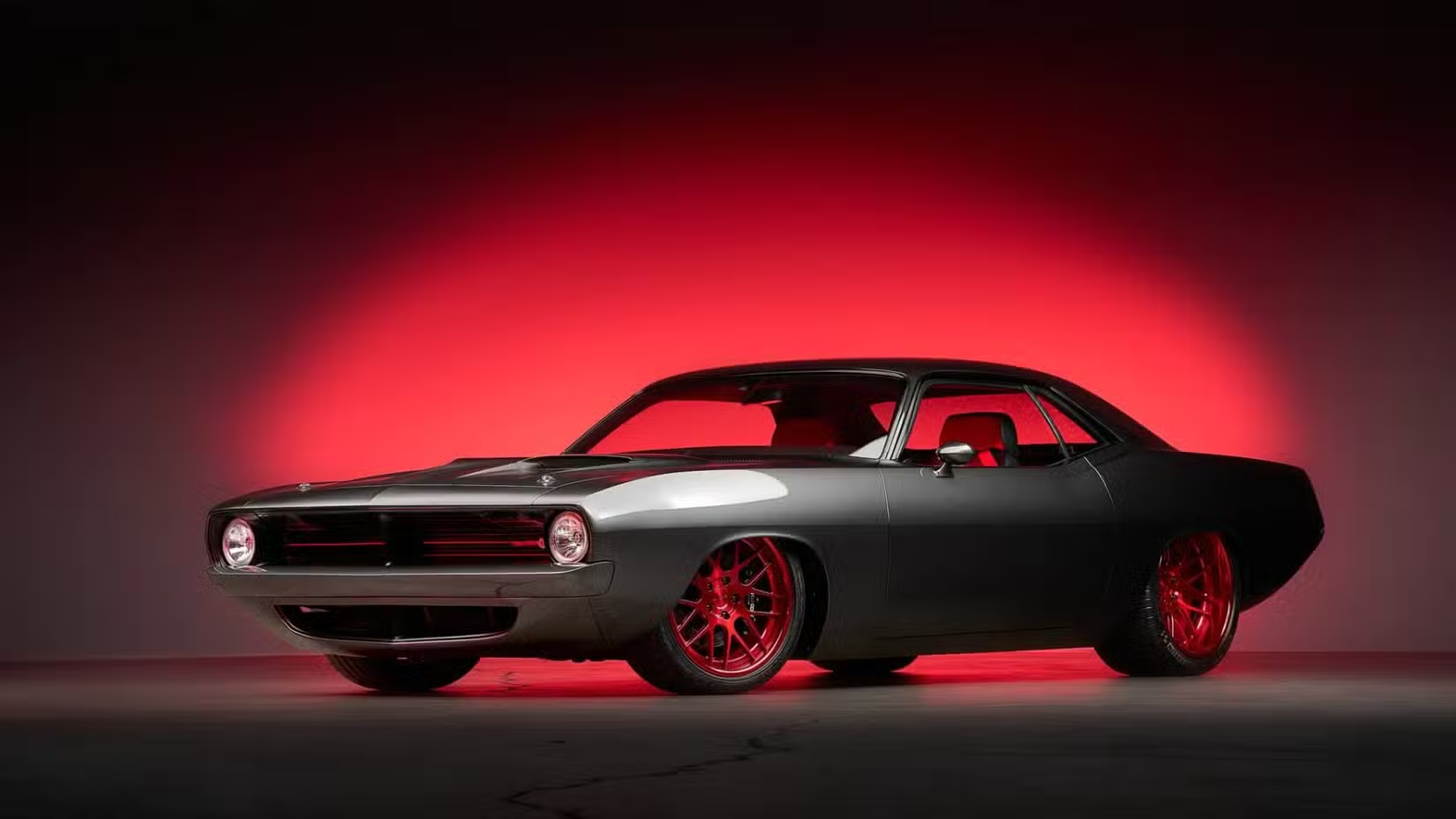
A heavily modified 1972 Plymouth Barracuda known as the “Hellfish” just sold for $330,000, and that number alone says a lot about where the muscle car world is heading. This wasn’t some ultra-rare factory Hemi survivor with matching numbers and a museum-grade restoration — it was a radically re-engineered custom build packing 1,241 horsepower, twin turbochargers, and enough chassis work to make most factory muscle cars look ancient by comparison. The sale price landed squarely in modern Ferrari and Lamborghini territory, which is exactly why the car is sparking such a strong reaction among enthusiasts and collectors, some of whom see it as the peak of modern American muscle and others as proof the collector market has lost its mind entirely.
A Humble Barracuda Became a Four-Digit Horsepower Monster
The Hellfish started life as a relatively modest 1972 Plymouth ‘Cuda originally equipped with a 340-cubic-inch engine. By the time the Roadster Shop in Mundelein, Illinois finished rebuilding it between 2014 and 2015, almost nothing about the car remained ordinary. Under the hood sits a Mopar aluminum-block 7.0-liter Gen III Hemi stroker fitted with twin turbochargers, with power routed through a Bowler-built Tremec T56 Carbon Edition six-speed manual — numbers that sound absurd once you realize the combination produces 1,241 horsepower and 1,027 lb-ft of torque. A modern Dodge Challenger Hellcat already feels borderline ridiculous on the street with its factory supercharged output, and the Hellfish more than doubles that figure in a car whose roofline barely clears hip height. Hot Rod magazine featured the build back in 2015, confirming the staggering power numbers that immediately pushed the car into a different category entirely.
The Roadster Shop Rebuilt Nearly Everything
Cars like this don’t survive with factory suspension and brakes. The Roadster Shop completely transformed the chassis underneath the Barracuda’s steel body using a custom Fast Track setup paired with Hyperco coilovers, Penske double-adjustable shocks, tubular front control arms, and a four-link rear suspension with a Panhard bar. Woodward rack-and-pinion steering replaced the original setup, while massive Wilwood six-piston front brakes were added to help control the power. A lot of high-horsepower builds turn into dyno queens that are terrifying to actually drive, but the Hellfish was built to handle corners, braking, and serious speed in ways a factory 1972 Barracuda never could — this wasn’t just about stuffing the biggest engine possible into an old Mopar shell.
The exterior received the same level of attention. The Roadster Shop shaved off emblems, door handles, and trim while tightening the bumpers closer to the body, adding 1970-style grille and taillight treatments, metallic gray paint, and a satin black hood, along with a custom Hellfish badge in the grille and a demonic fish graphic stretching across the tail panel. Subtlety clearly was never part of the plan. Inside, the cabin received Recaro bucket seats wrapped in black leather, red Schroth Racing harnesses, and a Spek Pro gauge cluster capable of reading up to 180 mph, a detail that feels less like marketing exaggeration and more like a survival requirement given what’s under the hood.
Why the Price Shocked Everyone
The final sale number is what turned this build from a cool custom car into a major collector market story. At $330,000, the Hellfish sold for roughly what a buyer could spend on a new Ferrari Roma or Lamborghini Huracán, an astonishing figure considering the car underneath started as a 1972 Barracuda, a model year that traditionally sits lower in the collector hierarchy than the more desirable 1970 and 1971 E-body cars. A standard 1972 Barracuda doesn’t live in six-figure territory unless it’s an exceptional example — driver-quality cars with tired interiors and aging paint typically trade between $20,000 and $40,000 depending on condition, nicely restored examples can push into the $50,000 to $80,000 range, and truly pristine big-block cars with documented history can go higher still. But buyers here weren’t paying for originality. They were paying for execution, engineering, performance, and reputation — the Roadster Shop name carries serious weight in the custom car world, and the Hellfish became one of its most recognizable builds after the Hot Rod feature exposed it to a massive enthusiast audience. At some point, the Barracuda sheet metal itself became almost secondary.
The Collector Market Is Changing Fast
The Hellfish sale highlights something that’s been building for years inside the American collector car market. Traditional muscle car values still matter, especially for rare factory combinations and highly original examples, but top-tier restomods are now competing directly against exotic cars for serious money. Purists often argue that heavily modified cars destroy originality and historical value, and in the traditional collector world, matching numbers, factory documentation, and originality still dominate conversations about investment-grade muscle cars. But builds like the Hellfish are attracting a different type of buyer entirely, one that wants vintage design without vintage compromises — old-school muscle car looks paired with modern power, handling, braking, and reliability. A factory-correct 1972 Barracuda may carry historical importance, but it can’t deliver 1,241 horsepower with modern suspension and braking performance. The Hellfish can, and that difference is reshaping parts of the collector world whether purists like it or not.
Why This Sale Actually Matters
This wasn’t just another custom car auction result buried inside enthusiast circles. A $330,000 sale for a radically modified 1972 Barracuda sends a message about where high-end American performance culture is headed: modern buyers are increasingly rewarding craftsmanship, engineering, and usable performance over strict originality, and shops capable of building world-class restomods are becoming as influential as the automakers that originally built these cars decades ago. Nobody bought the Hellfish because it was the rarest Barracuda ever built — they bought it because it delivered something no factory Mopar from 1972 could realistically offer: twin-turbo four-digit horsepower, modern chassis engineering, and street presence violent enough to embarrass modern supercars. That’s why this Barracuda sold for Ferrari money, and judging by where the restomod market keeps heading, it probably won’t be the last one.
Continue Reading: $5,000 Time Capsule: Massive Hot Rod Magazine Collection Surfaces After 25-Year Hunt | VW Tiguan Burn Lawsuit Heads to Trial After Driver Claims Heated Seat Left Her With Second-Degree Burns
About the Author