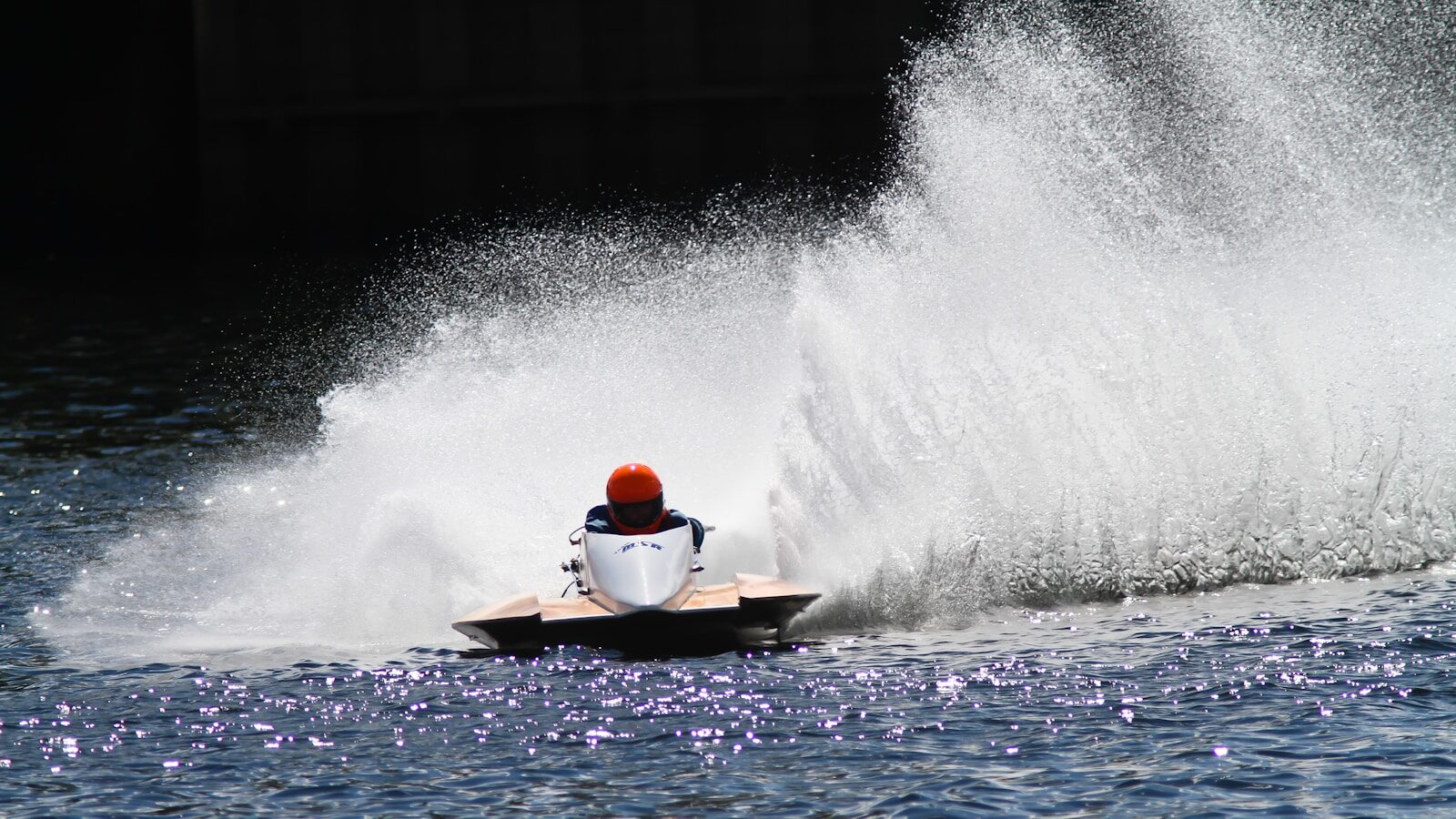
The Lake of the Ozarks Shootout has been billed for years as the largest powerboat event in the world, and on Saturday, Aug. 29, it also produced one of the more spectacular crash videos the sport has generated in a while. A catamaran named the Dirty Duck was running 213 mph when its bow lifted off the water. What followed was several full rotations through the air before the hull slapped back down onto the lake, upright, in a scene captured by Missouri State Highway Patrol Troop F and posted within hours.
Driver Adam Seraphine, 45, was behind the wheel. His throttleman, 39-year-old Rusty Williams, was riding next to him controlling the boat’s power and trim. Seraphine came away with a broken leg and was released from the hospital the following Monday. Williams walked away without a scratch, and later credited the team’s annual escape-plan drills for keeping his head clear the moment the boat went over.
If you’ve never watched offshore powerboat racing, the two-man setup is worth understanding before you watch the video. The driver steers, but the throttleman is the one working the individual engine throttles and trim tabs in real time, constantly adjusting how much of the hull is touching the water. At 200-plus mph, a catamaran isn’t really driving on the surface anymore, it’s skimming on a cushion of air and a few square feet of sponson, and the throttleman’s job is to keep that cushion stable. Get the trim wrong, hit a wake at the wrong angle, or let too much air load up under the bow, and the same aerodynamics that let these boats hit 200 mph will just as happily flip them.
The reason both men climbed out is the same reason racers in all kinds of vehicles survive violent rollovers: a structural safety cell. Modern unlimited-class raceboats are built around a reinforced cockpit tub, with the crew strapped in and, in most of these hulls, equipped with a supplied-air system in case the cabin ends up underwater. It’s the marine version of the roll-cage philosophy that has kept drivers alive in everything from desert race trucks to Stone Cold Steve Austin’s rolled race rig, where the vehicle is allowed to be destroyed as long as the cell around the humans stays intact. On the Dirty Duck, it clearly worked exactly as designed.
It’s also worth explaining what unsanctioned actually means here, because it isn’t a knock on safety. The Shootout doesn’t run under APBA or OPA offshore racing rules, which is part of why teams can show up with everything from stock-hulled cruisers to turbine-powered missiles and get a radar-gun number on the same afternoon. There’s no racing sanctioning body doing pre-run scrutineering. Instead, safety and incident response on the water falls to the Missouri State Highway Patrol, which is why troopers, not race officials, were the ones responding to the Dirty Duck and posting the crash video. For participants, that also changes the insurance conversation: this is a permitted event on public water rather than a sanctioned race with a governing body’s liability umbrella, so teams typically arrange their own marine hull coverage, if an underwriter will write a policy on a boat capable of 200-plus mph at all, alongside waivers specific to the event.
The Shootout itself has a longer and stranger history than the viral clip suggests. It started in 1989 as a low-key, run-what-ya-brung event called the Lake Rescue Shootout, and didn’t formalize into the nonprofit Lake of the Ozarks Shootout, Inc. until 2008. This year’s race was the 38th running. What began as lake locals radar-gunning each other’s boats has turned into a multi-day charity fundraiser that funnels money to regional nonprofits and first responders, which is a little ironic, given that first responders are also the ones who show up when a boat like the Dirty Duck goes airborne.
This also isn’t the first time a civilian-owned go-fast boat has gotten loose at an event like this one. We’ve covered a turbine-powered catamaran that hit 157 mph during a charity poker run on the St. Lawrence River, and the pattern is similar: these events sit in a gray zone between weekend hobby and organized motorsport, run on public water with minimal formal classing, and populated by boats that can cost more than a house and run turbine or big-block power that plenty of insurance agents have never had to price before.
Team captain Slug Hefner said the Dirty Duck is “pretty tough, and they are made to race,” and the crew is already planning to rebuild the hull rather than walk away from it. That kind of durability, and the willingness of teams to keep resurrecting these hulls, is part of why offshore raceboats tend to have such long second lives. We’ve seen 40-year-old raceboats, like the Miami Vice-famous Wellcraft Scarab, resurface decades later still structurally sound enough to cross an auction block.
The takeaway for anyone who trailers a boat instead of racing one at 200 mph is simple enough: the margin between a jaw-dropping pass and a jaw-dropping crash on this kind of water is a few degrees of bow angle, and the only thing standing between a driver and a very bad afternoon is a well-engineered cockpit and a crew that has actually rehearsed getting out of it. The Dirty Duck team walked away with a broken leg and a wrecked hull instead of a funeral, and in this corner of motorsport, that counts as a good outcome.
About the Author