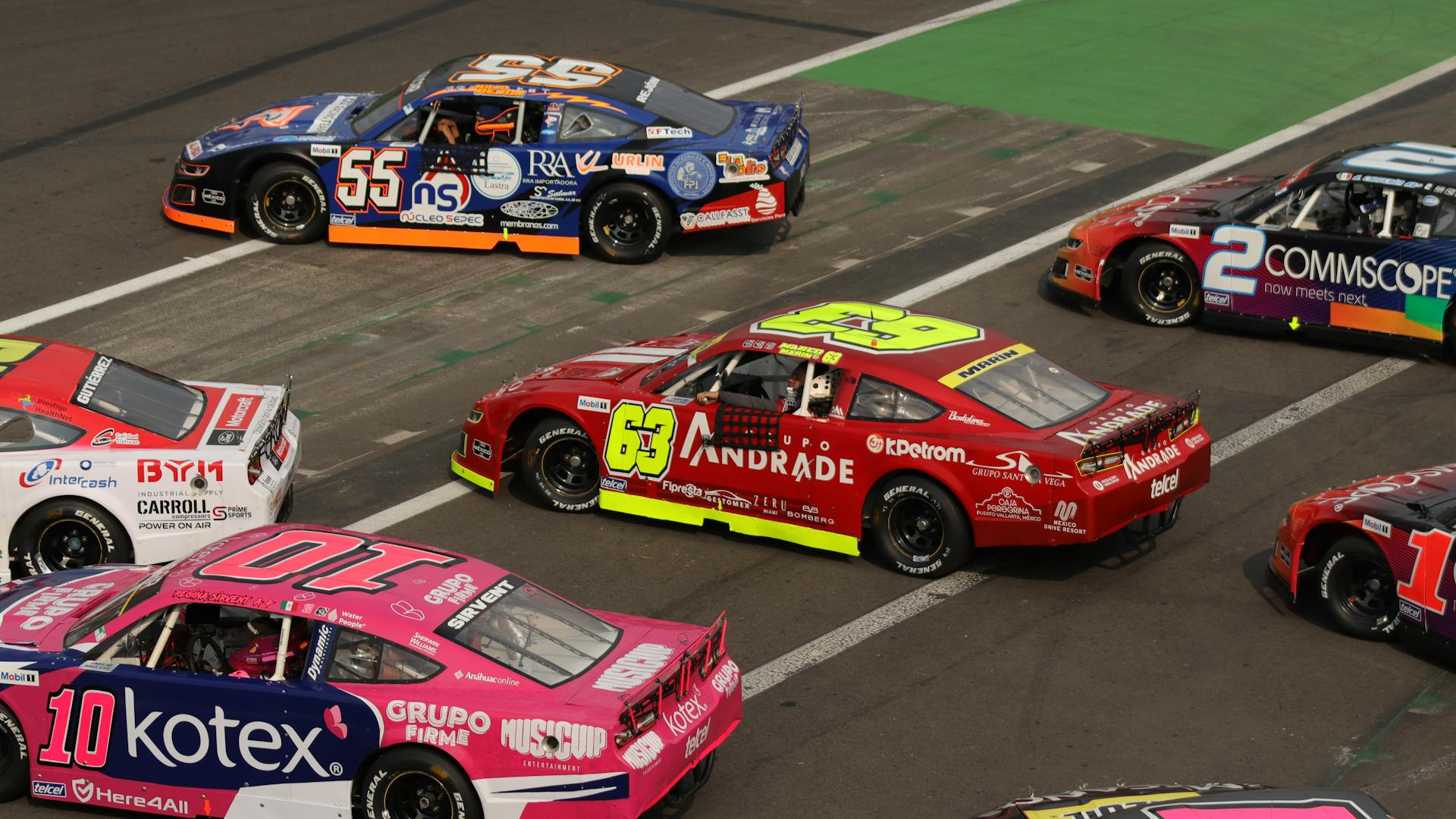
Photo by Diego Martinez on Pexels
Running a NASCAR development team isn’t just about grooming the next Kyle Larson or Bubba Wallace. It’s also about paying your bills, and according to a new lawsuit out of Cabarrus County, Concord-based Rev Racing hasn’t been doing that particularly well.
Garage-worthy EDC gear, on sale this week.
Kannapolis parts supplier AK Performance, Inc. filed a verified complaint against Rev Racing LLC, formerly known as Revolution Racing, LLC, on June 25 in Cabarrus County Superior Court, case number 26CV005321-120. The company says Rev Racing owes it $75,434.12 for parts, late fees and interest, and that after multiple requests for payment, the team simply “failed and refused” to settle the tab.
The invoices attached to the complaint point to something specific: legends cars, the small-bodied, quarter-scale replica racers that most short-track regulars cut their teeth on before ever touching a full-size stock car. For a team best known for developing Truck Series and ARCA talent, a legends car parts bill is a reminder of how these pipelines actually work. Long before a prospect gets anywhere near a Truck Series rig, they are usually turning laps in a car built around a motorcycle-derived engine, a tube-frame chassis, and bodywork about half the size of a real stock car. Rev Racing has run that grassroots pipeline for years, and grassroots pipelines need a steady flow of control arms, spindles and body panels that somebody has to actually pay for.
Check This Out: Best Dash Cams of 2026: How to Choose the Right One for Your Vehicle
This isn’t the first time Rev Racing has ended up on the wrong side of an invoice dispute. Kyle Busch Motorsports sued the team in February 2024, claiming Rev Racing owed roughly $325,000 tied to a 2023 arrangement that put Nick Sanchez behind the wheel in the Truck Series. That case didn’t drag on. KBM voluntarily dismissed it that May, the kind of quiet exit that in civil litigation usually signals a settlement got worked out before anybody had to explain themselves in front of a judge. Whatever arrangement was reached apparently didn’t sour the relationship: Sanchez went on to win twice for Rev Racing later that year, before later making headlines of his own after a postrace brawl with Matt Crafton at Talladega.
Rev Racing’s roster history carries more weight than a small parts bill might suggest. Kyle Larson, Bubba Wallace and Daniel Suarez all drove for the program at the regional level long before their Cup Series profiles were built, and Nick Sanchez remains an active example of the pipeline producing results at the national level. That track record is part of what makes the program’s recurring money troubles notable: the development side of the business clearly works, paying suppliers on time apparently doesn’t come as easily.
A verified complaint isn’t a verdict. Rev Racing has not yet filed an answer, and North Carolina’s civil procedure rules give a defendant roughly 30 days from being served to respond before AK Performance could move for a default judgment. If this dispute follows the same arc as the Kyle Busch Motorsports case, don’t expect it to reach a jury. Breach-of-contract fights over unpaid invoices are among the least glamorous, most predictable litigation in racing, and they typically end in a negotiated payment rather than a trial. What’s worth watching is whether AK Performance also collects on its request for attorney’s fees and court costs, the part of the lawsuit designed to punish a defendant for dragging its feet rather than simply repaying what was already owed.
Read Next: The 10 Best Outdoor Knives of 2026: Top-Rated Picks for Hunting, Camping, and Survival
For the small businesses that keep grassroots racing running, this is the unglamorous risk of doing business with race teams. Parts suppliers front hard costs on thin margins and then wait on invoices that can lag for months while a team juggles sponsorship money, entry fees and payroll. A single team stiffing a vendor for $75,000 can be the difference between a shop staying open and a shop closing its doors, which is exactly why lawsuits like this one exist. NASCAR’s ownership groups have been fighting their own version of this battle at the top level too, as Front Row Motorsports’ win in its antitrust fight over the charter system showed earlier this year, proof that money disputes in this sport now stretch from legends car parts invoices all the way up to nine-figure franchise fights.
Rev Racing has not issued a public statement responding to the complaint, and none of the invoices attached to the filing have been disputed on the record. What is documented is straightforward: a $75,434.12 balance, a second breach-of-contract lawsuit in two years, and a driver-development program that keeps producing NASCAR talent faster than it settles its bills.
About the Author