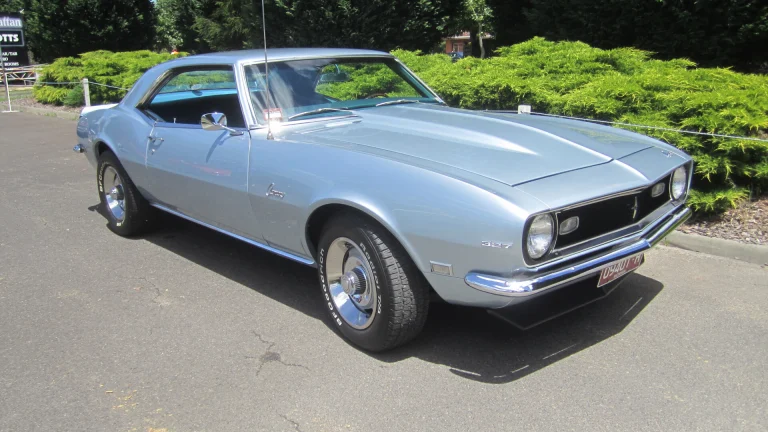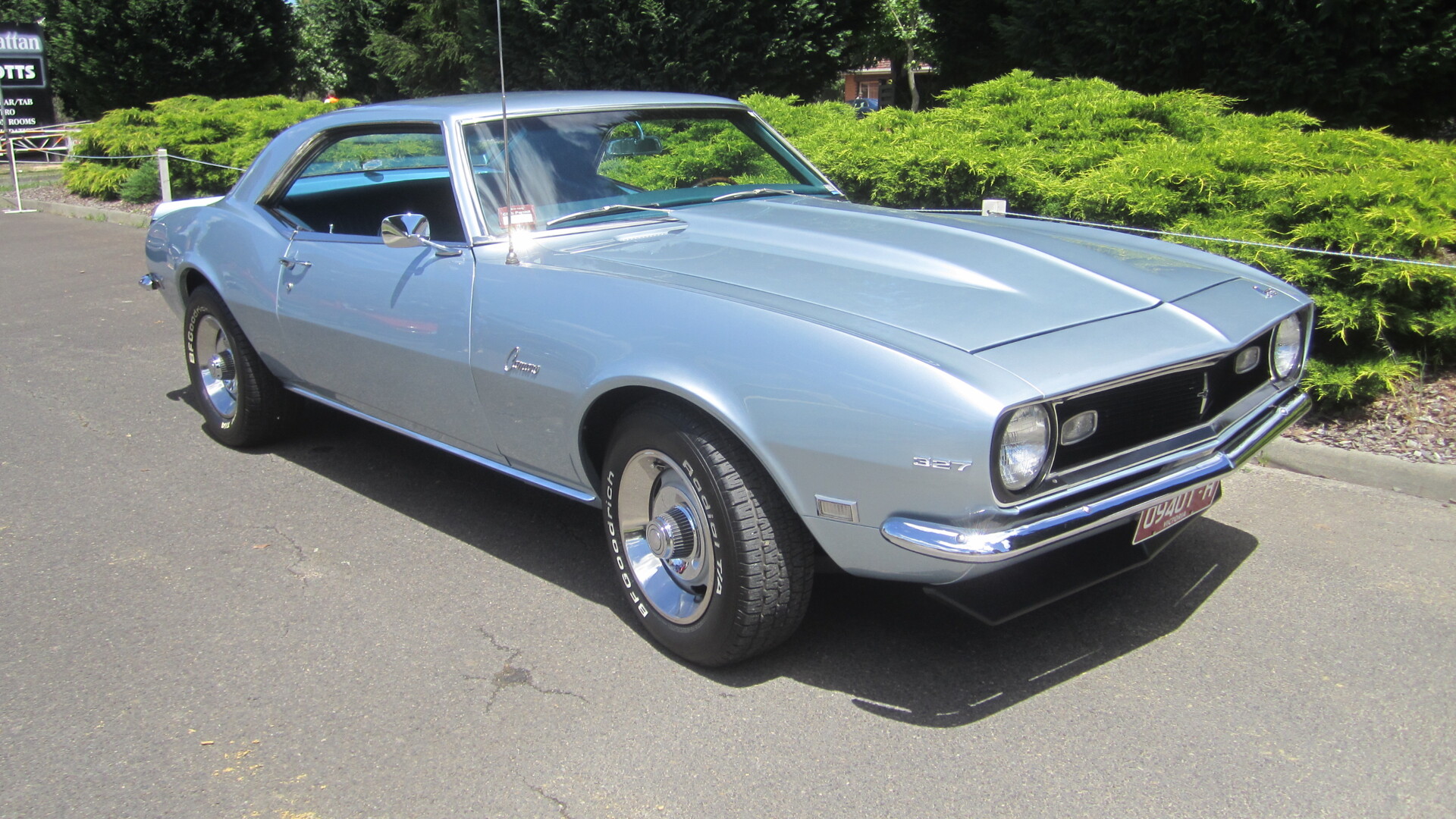
A 1968 Chevrolet Camaro. Photo: Sicnag, CC BY 2.0, via Wikimedia Commons. File photo; not the car in the crash.
A 58-year-old man from Picayune, Mississippi, died early Tuesday on Interstate 10 in Slidell, Louisiana, after a Ram 2500 merging into his lane struck the rear of his 1968 Chevrolet Camaro and sent the car into a guardrail, Louisiana State Police said.
Troop L troopers were called to westbound I-10 near Gause Boulevard in St. Tammany Parish at about 5 a.m. on November 17. The preliminary investigation found that the Ram, in the center lane, tried to move into the right lane and hit the rear left side of the Camaro, which was already in that lane. The Camaro left the road on the left side and struck the guardrail. The Ram stopped on the shoulder. The Camaro’s driver, who was not restrained, died at the scene.
The Ram’s driver was restrained, was not hurt, and was cited for careless operation. Troopers took routine toxicology samples from both drivers, and the release reports no results. State police have not named the Camaro’s driver, and neither does Backfire News. The release says the crash remains under investigation and that troopers will send their findings to the 22nd Judicial District Attorney’s Office, which will review them for possible additional charges. No additional charge has been announced.
What a careless operation citation covers
Louisiana’s careless operation law, R.S. 32:58, sets a standard instead of naming a specific act. Anyone driving on a public road has to drive carefully and prudently so as not to endanger another person’s life, limb or property, and failing to do so is careless operation. R.S. 32:58 carries its own penalty in exactly one case: a death caused by a driver who fell asleep. Every other violation falls under the general penalty in R.S. 32:57(A)(1): a fine of up to $175, up to 30 days in jail, or both for a first violation, and up to $500 and 90 days for a subsequent one.
The lane-change rule is a separate section. R.S. 32:79 says a vehicle should be driven as nearly as practicable within a single lane and should not leave it until the driver has “first ascertained that such movement can be made with safety.” The release lists one citation, careless operation. A citation is what a trooper can write at the scene. Whether a death changes the charge is the district attorney’s decision, and the release does not say which additional charges, if any, are under consideration.
A 1968 car and Louisiana’s seat belt law
State police titled the release “Unrestrained Driver Killed in St. Tammany Parish Crash.” Louisiana’s belt law, R.S. 32:295.1, covers occupants of passenger cars, vans, SUVs and trucks of 26,000 pounds or less, and the text on the Legislature’s website excludes vehicles manufactured before January 1, 1981. On that wording a 1968 Camaro falls outside the requirement. For vehicles it does cover, the fine on a first conviction is $50, court costs included. The release does not say whether the Camaro had belts installed or whether a belt would have changed the outcome.
What happens next
The open items are the toxicology results for both drivers and whatever the 22nd Judicial District Attorney’s Office decides after reading the troopers’ findings. No court date has been made public.
If you’ve followed a crash like this to the DA’s office, did the charge change once the file landed? What moved it?
About the Author