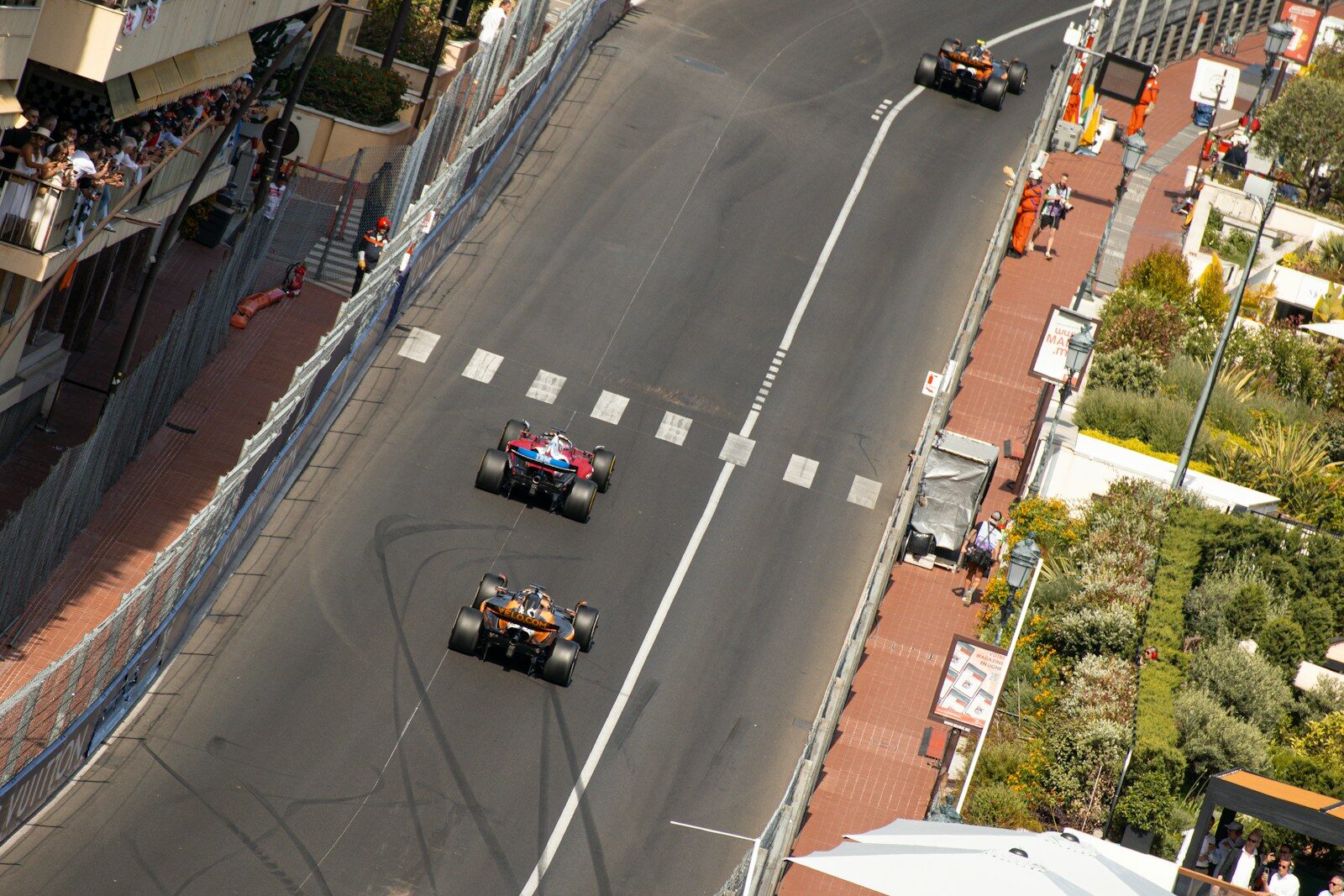
Pierre Gasly finished third at Monaco in June, lost the position to a pit lane penalty a few hours later, got it back five days after that on a technicality, and then lost it again this week when the FIA’s International Court of Appeal overturned the reversal for good. Two five-second penalties, three rulings, and three months of paperwork later, the case says a lot more about how Formula 1 measures speed in the pit lane than it does about anything Gasly did wrong behind the wheel.
A Podium Lost In The Pit Lane
For the 2026 Monaco Grand Prix, the Race Director trimmed the standard 80 km/h pit lane speed limit down to 60 km/h, a nod to how tight the entry and exit are around the harbor. Formula One’s Official Timing System doesn’t clock instantaneous speed through that zone. It divides the pit lane into sectors bounded by paired timing loops embedded in the tarmac, then calculates each car’s average speed between them using a distance figure that FOM measures by hand with a tape measure before the weekend even starts. Gasly’s Alpine tripped two of those sectors at a calculated 60.4 km/h and 60.5 km/h, each worth a five-second penalty.
He wasn’t alone. Six penalties for pit lane speeding went out that weekend across 423 pit lane passes, including one for teammate Franco Colapinto, who dropped out of the points entirely. Alpine chose to add both of Gasly’s penalties to his race time after the fact rather than have him serve them under the safety car, and when the math landed, third place became seventh.
Alpine’s Reversal, and the Three-Day Window That Made It Possible
Within the deadline set by the International Sporting Code, Alpine petitioned for a Right of Review, arguing the loop-to-loop distance FOM had entered into the timing software wasn’t the shortest path a car could actually take through that section of pit lane. A review petition only earns a hearing if the team can show a genuinely new element that wasn’t available when the original penalty was issued, and Alpine cleared that bar because FOM itself flagged, three days after the race, that the entry loop measurement might not reflect the tightest realistic line through the corner. The Stewards agreed the information was new, then ruled on the merits that Gasly hadn’t actually broken 60 km/h once a different, GPS-derived distance figure replaced the tape-measured one everybody had raced under. Both penalties were tossed and Gasly’s third place was restored on June 12, a decision that seemed to close the book on the whole affair.
Why McLaren and Red Bull Racing Cared Enough to Appeal
It didn’t close anything. McLaren and Red Bull Racing, neither of which had a driver directly involved in the penalty, appealed the Stewards’ reversal to the International Court of Appeal, joined as third parties by Racing Bulls and backed procedurally by Motorsport UK. That’s a useful reminder of how connected an F1 classification really is: reshuffling one car’s race time doesn’t just move Gasly, it moves every scoring position behind him, and both constructors evidently had enough riding on that ripple in the championship table to spend the money on a full appeal. Alpine, with the FIA itself defending the Stewards’ ruling it had issued, argued the reversal was fair precisely because the original timing data had been shown to be unreliable.
The Court’s Real Objection Wasn’t About Gasly’s Speed
After a hearing in Paris on August 25, the International Court of Appeal sided with McLaren and Red Bull Racing and reinstated both penalties on September 3. The panel’s real problem wasn’t whether Gasly’s Alpine crossed 60 km/h. It was about which yardstick gets to answer that question after the fact. The Stewards had accepted an alternative pit lane distance that Alpine calculated from GPS data reconstructed after the race, on a street circuit that had already been dismantled, in place of the tape-measured figure every team had calibrated against all weekend. The Court held that once FOM sets and publishes that reference distance before a session, it has to stay fixed for the rest of the competition, because competitors made real strategic and technical decisions against that one number. Letting it move retroactively would hand an advantage to whichever team can produce the most favorable post-race recalculation.
It’s a subtle distinction, but it effectively closes a loophole. A Right of Review can surface a genuinely new fact, like a broken sensor or a miscommunication nobody caught in real time, but it can’t be used to swap out the measurement method itself once the race is run and every car’s setup is locked in against the original numbers.
What Actually Changes Now
The ruling forces a recalculation of both the Drivers’ and Constructors’ Championship points from Monaco onward, with Gasly back to seventh. According to Formula 1’s own account of the reshuffled standings, Isack Hadjar inherits the third-place trophy he never got to stand on in June, a small mercy in what has otherwise been a rollercoaster rookie season for the Red Bull driver. The FIA and Alpine will split the appeal costs down the middle, while McLaren, Red Bull Racing, and Racing Bulls get their appeal deposits refunded, standard practice in FIA proceedings meant to discourage frivolous appeals but returned here because the Appellants won.
The Bigger Lesson for Every Team on the Grid
For engineers, the case is a reminder that pit lane compliance gets judged against whatever number FOM taped down before Thursday practice, not whatever a team’s own GPS logger says on Sunday night, a distinction worth building into setup and strategy calls at every street circuit on the calendar, including Singapore and Las Vegas later this year. For fans, it’s a reminder that a Formula 1 result isn’t fully final until the appeal windows run out, and those windows can stretch across an entire summer.
Monaco has now become as reliable a source of courtroom drama as it is of processional racing, and Gasly, who spent the back half of his season fighting through midfield chaos at races like the British Grand Prix, has lost the same podium finish twice without changing a single lap of how he actually drove it.
About the Author