A few weeks ago, I made what felt like a fairly straightforward argument.
Atlanta had just hosted one of the biggest sporting events in the world. The FIFA Club World Cup brought hundreds of thousands of visitors into the city, required extensive road closures, and demanded a level of planning that few metropolitan areas could pull off. Against that backdrop, the concern surrounding a two-hour Red Bull Showrun in Summerhill felt more than a little overblown.
That became the basis for my article, Atlanta Survived the World Cup. Surely Summerhill Can Handle Two Hours of F1 Cars.
The point wasn’t to dismiss concerns from residents or businesses. Road closures are inconvenient, and large events inevitably disrupt routines. The point was that cities don’t grow by avoiding ambitious events. They grow by embracing them, learning from them, and giving people reasons to gather. If Atlanta wanted to continue establishing itself as a destination for major sporting and cultural events, welcoming Formula 1 to its streets—even for an afternoon—seemed like a natural fit.
After attending the Red Bull Showrun as media, there’s only one thing I’d change about that original article.
I didn’t set my expectations high enough.
The conversation leading up to the event revolved around logistics. The conversation afterward should revolve around what Red Bull actually accomplished. Rather than simply bringing a Formula 1 car to Atlanta for a few demonstration runs, the company created an experience that celebrated motorsport in a way that’s rarely accessible outside of a Grand Prix weekend.
Having covered automotive events for years, it takes something genuinely exceptional to leave a lasting impression. The calendar is full of concours lawns lined with priceless classics, museum collections that preserve automotive history, manufacturer launches, race weekends, and private gatherings featuring some of the world’s rarest machinery. Each offers something unique, but very few combine world-class engineering, genuine accessibility, and nonstop excitement into a single afternoon.
The Red Bull Showrun did.
Before the First Engine Fired
The experience began long before a tire ever touched the course.
From the moment media credentials were picked up, every interaction with the Red Bull team reflected an organization that cared as much about the experience surrounding the event as the demonstrations themselves. Staff members were welcoming without feeling rehearsed, knowledgeable without being intimidating, and consistently willing to answer questions or help however they could. Large-scale events often succeed or fail on details most attendees never consciously notice, and the professionalism behind the scenes established a positive impression before the headline attraction had even begun.
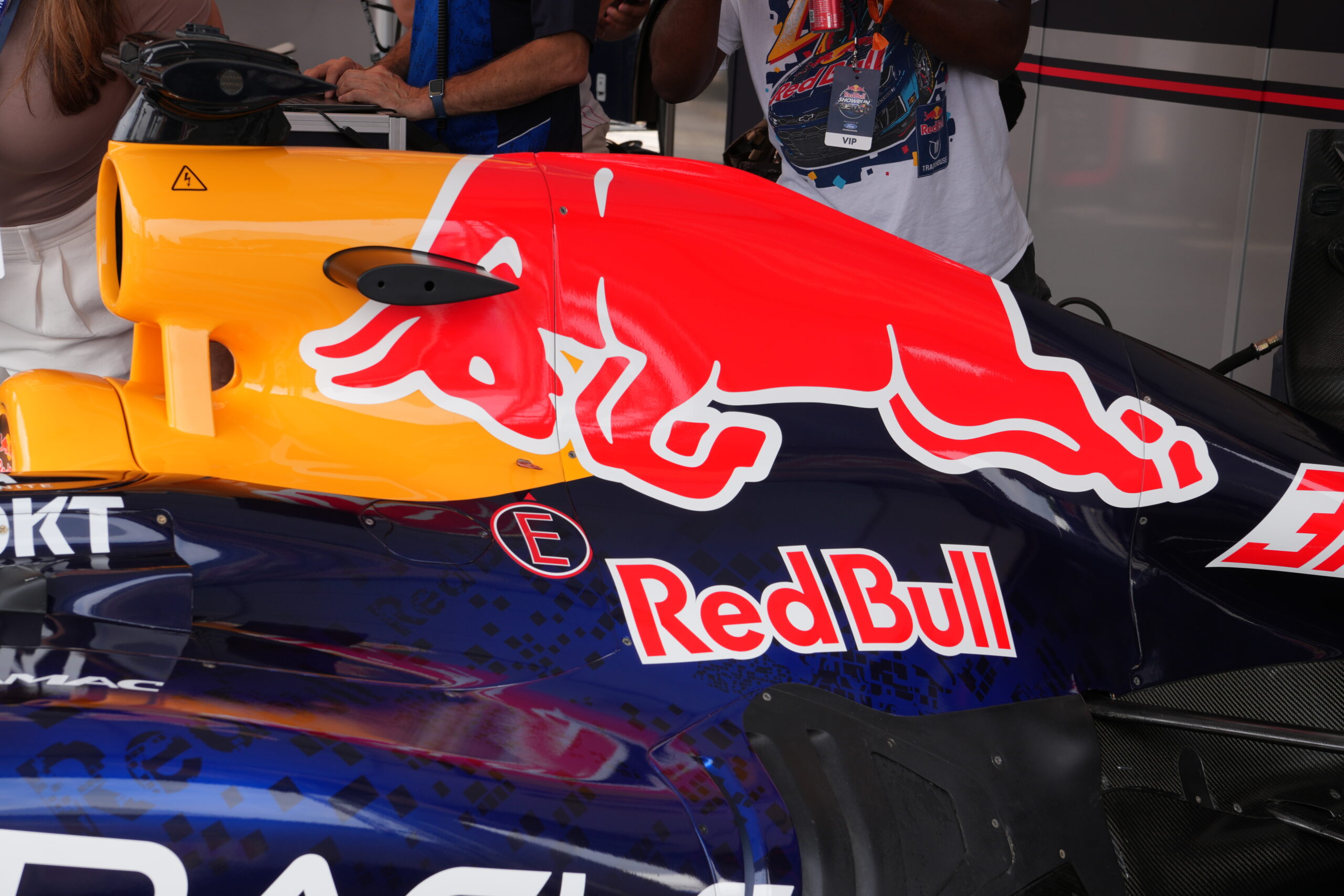
That hospitality extended into the paddock, where media were given the opportunity to spend time around the cars before they reached the streets. Television compresses everything. Photographs flatten proportions. Even the best online videos struggle to communicate what these machines actually look like in person.
Standing beside a Formula 1 car changes that immediately.
Every surface exists for a reason. Every wing, every duct, every suspension component has been refined through thousands of hours of engineering in pursuit of fractions of a second. There is almost nothing decorative about these cars. They are purpose-built machines that happen to be beautiful because every line serves a function.
Watching crew members make final preparations only reinforced that impression. Even in a demonstration environment, there was a quiet confidence to the work being done. Nothing appeared rushed, yet nothing was wasted. It served as a reminder that Formula 1 isn’t simply about speed—it’s about precision at every level.
Summerhill Becomes a Race Circuit
Then the engines came to life.
Anyone who claims a YouTube video captures the sound of a Formula 1 car has never stood next to one.
The first crack of ignition rolled across Summerhill like distant thunder before climbing into the unmistakable shriek that has defined Formula 1 for generations. The vibration reached the crowd almost simultaneously with the sound itself, resonating through the pavement and into the grandstands. Conversations stopped mid-sentence. Phones rose into the air. Smiles spread across faces before the cars had even accelerated.
When the first run finally began, the atmosphere transformed instantly.
Thousands of people lining the streets reacted in unison as Formula 1 machinery blasted through Atlanta. The sound echoed between buildings, bouncing down city blocks in a way that no television broadcast could ever reproduce. Tire smoke drifted through the air. The smell of hot rubber mixed with fuel. Cameras clicked continuously while children covered their ears, only to begin laughing moments later.
That first pass established the rhythm for the rest of the afternoon.
Every demonstration built anticipation for the next. Every burnout drew louder cheers. Every acceleration reminded the crowd that these weren’t museum pieces or static displays—they were machines designed to move, and they were finally being allowed to do exactly that.
More Than a Car Show
Traditional automotive events ask visitors to admire cars.
The Red Bull Showrun asked them to experience them.
There’s an important difference.
Static displays encourage conversations about horsepower figures, production numbers, auction values, and rarity. Those discussions have their place, but they rarely capture the emotional side of why people fall in love with automobiles in the first place.
Motion does.
Sound does.
The smell of warm brakes and hot tires does.
Watching a Formula 1 car rotate under braking before exploding back onto the throttle reminds people that engineering isn’t meant to sit quietly beneath polished lights. It’s meant to solve problems at extraordinary speeds while producing moments that leave crowds speechless.
For nearly two hours, Summerhill became something entirely different from the neighborhood drivers navigate every day. It became a stage where elite motorsport met everyday enthusiasts, where lifelong Formula 1 fans stood shoulder to shoulder with families simply curious to see what all the excitement was about.
By the end of the afternoon, those distinctions hardly mattered.
Everyone was reacting the same way.
The Longest View
One decision made early in the day ultimately became one of the most rewarding.
Instead of constantly moving around in search of new angles or chasing a handful of short social media clips, the choice was made to stay planted at the closest point media were allowed behind the safety barrier. Once the camera started rolling, it stayed rolling.
The goal wasn’t to create another highlight reel.
The internet already has plenty of those.
The goal was to preserve the experience.
As far as I can tell, no other media outlet documented the Showrun this way. Most coverage understandably focuses on a few spectacular moments stitched together into a thirty-second video. Those clips perform well online, but they rarely communicate what it actually felt like to stand there.
The uninterrupted recording captures something different. It preserves the anticipation between runs, the reactions from the crowd, the changing atmosphere throughout the afternoon, and the relentless rhythm that made the event so memorable. Anyone who missed the Showrun—or simply wants to relive it—will likely find that continuous perspective closer to the real experience than any polished montage.
Sometimes authenticity is more valuable than perfect editing.
Atlanta Showed Up
Perhaps the most encouraging part of the afternoon had nothing to do with Formula 1 itself.
Atlanta showed up.
Families lined the barriers hours before the first demonstration. Friends gathered on sidewalks. Children perched on shoulders for a better view. Enthusiasts who could identify every car shared space with spectators who had never watched a Formula 1 race but wanted to see what all the excitement was about.
That mix is healthy for motorsport.
The sport doesn’t grow by speaking only to existing fans. It grows by creating moments that capture the imagination of people who had never considered attending a race or following a championship. For many in attendance, this may have been their first experience hearing a Formula 1 car in person. Judging by the reactions throughout the afternoon, it won’t be their last encounter with the sport.
Events like the Red Bull Showrun serve as an invitation. They lower the barriers that often make elite motorsport feel distant or exclusive and replace them with something far more approachable: curiosity.
More Than Marketing
It’s easy to describe the Showrun as a marketing event.
Technically, that’s true.
But doing so misses the point.
The afternoon wasn’t defined by logos or sponsorships. It was defined by access, excitement, and a genuine effort to bring world-class motorsport into the heart of a city that embraced it. The event celebrated engineering, performance, and the community that naturally forms whenever extraordinary machines are allowed to do what they were designed to do.
That feeling extended beyond the cars themselves.
It was present in the conversations between strangers waiting for the next run. It was present in the excitement shared by families introducing children to motorsport for the first time. It was present in the unmistakable pride displayed by the Red Bull staff, whose enthusiasm remained evident from the first credential pickup until the final car returned to the paddock.
Great events are remembered because every element works together.
The cars matter.
The location matters.
The crowd matters.
The people behind the scenes matter.
When each of those pieces aligns, the result becomes something much larger than the sum of its parts.
The New Standard
The original article argued that Atlanta should give the Red Bull Showrun a chance.
Looking back, that argument now feels incomplete.
The city didn’t simply tolerate the event.
It embraced it.
The crowds were enthusiastic. The atmosphere was electric. Summerhill proved itself capable of hosting another world-class event, and Red Bull delivered an experience that justified every bit of anticipation leading up to it.
Some automotive events are enjoyable because of the cars they attract.
Others succeed because of their history.
A select few become memorable because of how they make people feel.
The Red Bull Showrun belongs firmly in that final category.
Long after the tire smoke cleared and the engines fell silent, what remained wasn’t a collection of photographs or social media clips. It was the memory of a city coming together around something genuinely exciting—a reminder that the automobile, at its best, is still capable of inspiring wonder.
If another Red Bull Showrun comes anywhere near Atlanta again, the recommendation is simple.
Go.
Bring your family. Bring your friends. Bring ear protection.
Then stand as close to the barrier as you’re allowed, feel the pavement shake beneath your feet, and understand why, after years of covering the automotive world, this became the new standard against which every future event will be measured.
Check out the full live replay here, and subscribe to our YouTube channel to catch footage as we upload it.
About the Author