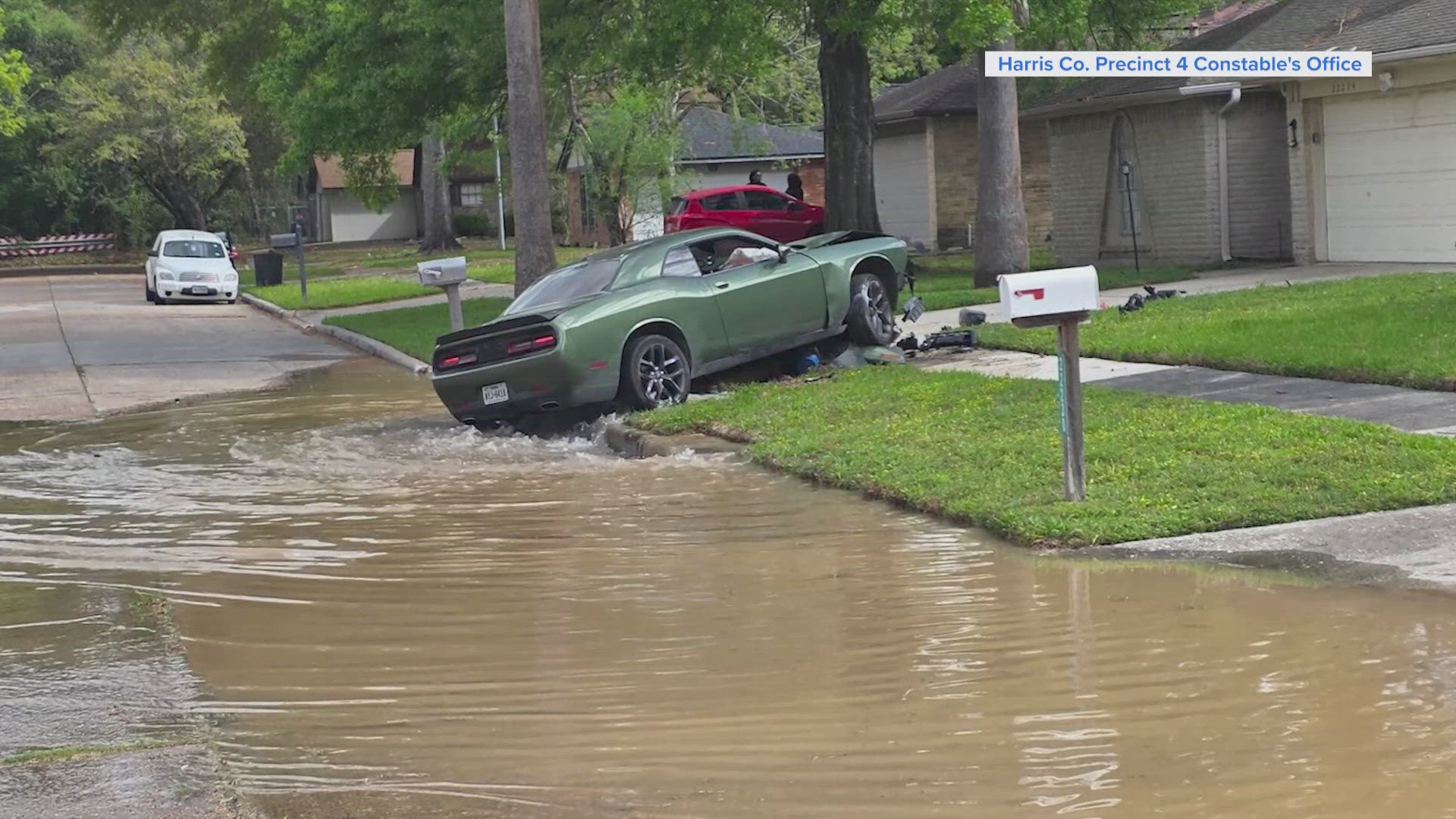
A Dodge Challenger tearing through a quiet Spring, Texas neighborhood didn’t just end in a crash — it turned into a burst hydrant, a flooded yard, a foot chase, and two arrests, all within a matter of minutes. Beyond the wrecked car, the incident left behind a bill that has nothing to do with body panels and everything to do with municipal infrastructure.
A Crash With Consequences Beyond the Car
According to Harris County Precinct Four deputy constables, the Challenger ended its run by slamming directly into a fire hydrant near Lynngate, in a residential area where deputies say two men had driven the muscle car before losing control. The result wasn’t just a wrecked vehicle — it was a burst hydrant sending water pouring across a front yard, creating both property damage and a logistical mess that extended well past the crash site itself.
The Bill Nobody Talks About After a Crash Like This
While no injuries were reported, the financial and logistical fallout is hard to ignore. A damaged hydrant isn’t a minor fix — it requires an immediate response from utility crews to shut off the water main and prevent further loss, and in this case that response came quickly, with a crew arriving to stop the flow. Still, the damage to the yard and surrounding property had already been done by the time crews got it under control, on top of whatever the county eventually bills for hydrant replacement and repair. It’s a cost that rarely makes headlines the way the crash itself does, but it’s a real expense that falls on local utilities and, ultimately, taxpayers.
Fleeing Turned One Bad Decision Into Two Arrests
Instead of staying at the scene, both men reportedly took off on foot, a decision that escalated things from a routine crash investigation into a full manhunt through a residential neighborhood. Deputies tracked down the driver, who was taken into custody on suspicion of driving while intoxicated. The passenger didn’t avoid trouble either — authorities discovered he had an active arrest warrant, which led to his own detention once deputies caught up with him.
A Pattern Counties Keep Dealing With
This isn’t the first time a powerful car has ended up in a residential crash, and it’s unlikely to be the last. The combination of speed, poor judgment, and tight urban streets creates a recurring problem that cities and counties continue to manage, from hydrant and utility repairs to the added deputy hours spent tracking down drivers who flee rather than stay put. What makes this case stand out is the chain reaction it triggered — a single crash led to flooding, a foot chase, and multiple arrests, all in a neighborhood where residents expect a baseline level of safety and predictability. For people living nearby, it’s a blunt reminder that it only takes one reckless driver to disrupt an entire block, and one fire hydrant to turn a bent bumper into a genuine utility incident.
The Bigger Picture for Enforcement
Cases like this tend to feed directly into how aggressively local law enforcement polices high-powered cars in residential zones. Stricter enforcement and broader restrictions often follow incidents like this one, even though the overwhelming majority of drivers with similarly powerful cars operate responsibly and never come close to this kind of outcome. The real question is whether incidents like this keep getting treated as isolated mistakes, or whether they keep pushing broader crackdowns that affect every driver regardless of how responsibly they actually operate.
About the Author