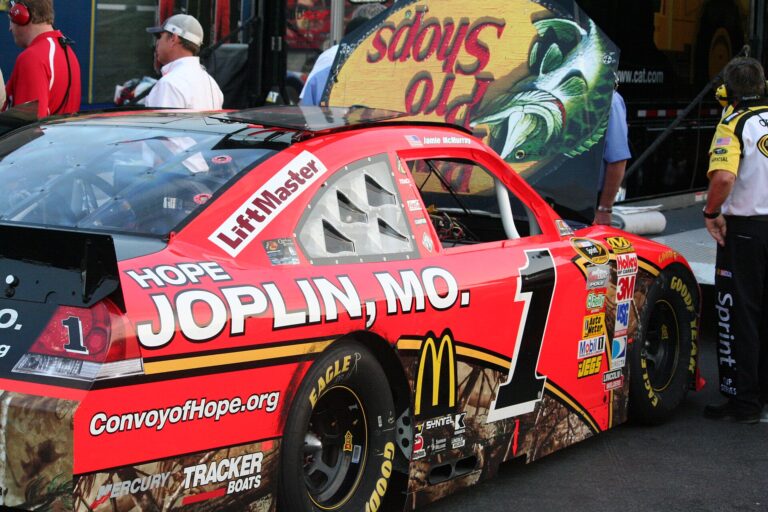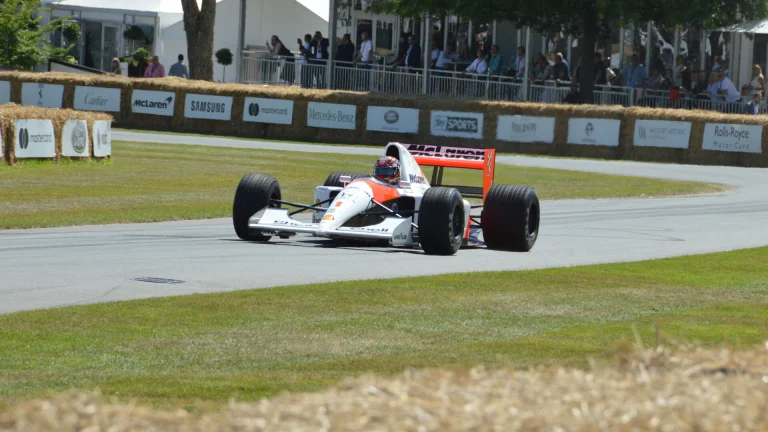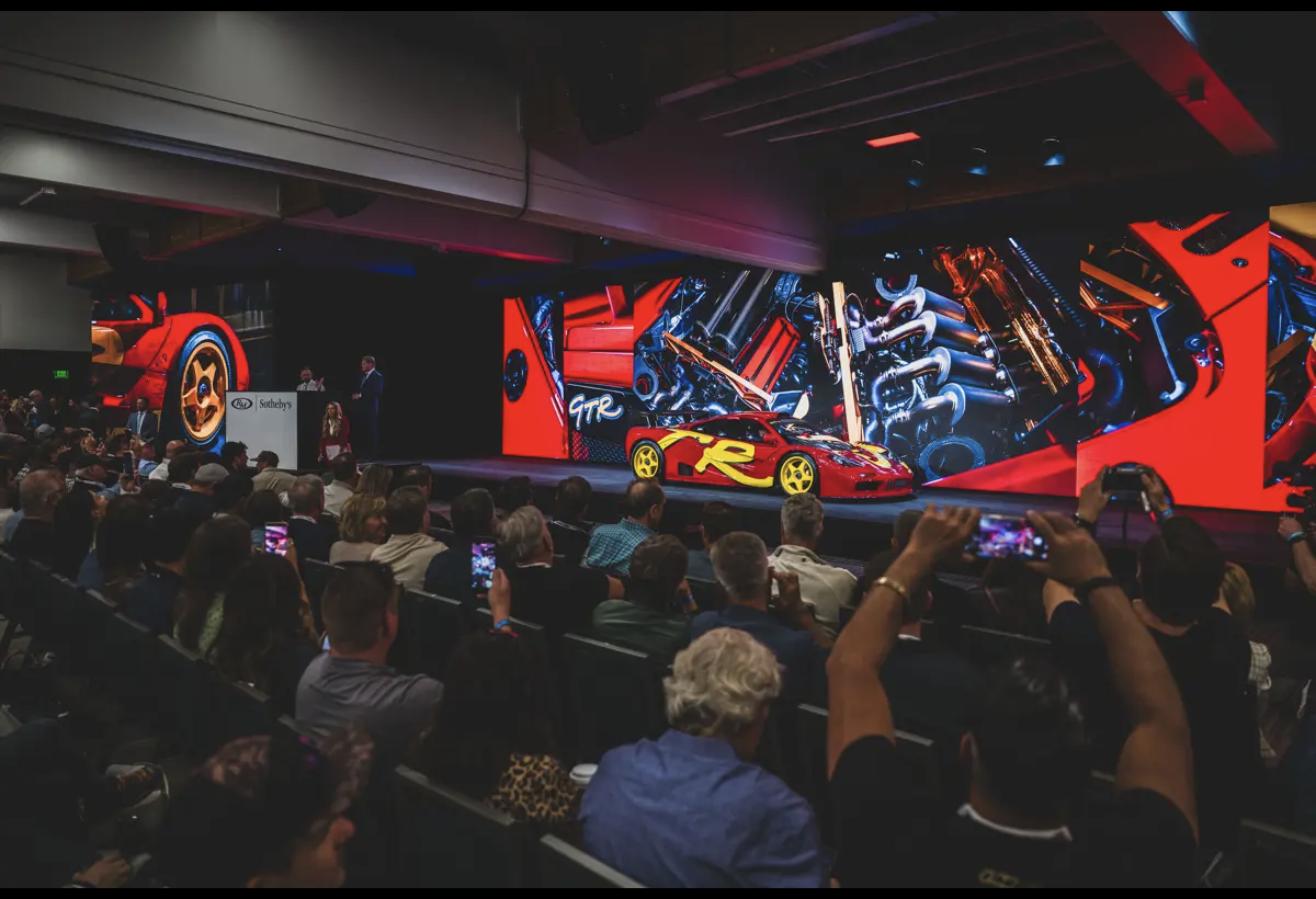
Two auctions, two nights apart, on the same stretch of California coastline, produced a coincidence no spreadsheet could have modeled. On Friday, August 14, Gooding Christie’s sold a 1963 Ferrari 250 P for $18,705,000, a new world record for the model. The following night, at RM Sotheby’s three-night Monterey sale, a 1963 Chevrolet Corvette Grand Sport brought precisely $18,705,000 too, instantly becoming the most money any Corvette has ever fetched at a public auction. Same peninsula, same week, same number, down to the dollar.
That tie is worth sitting with, because the two cars arrived at Pebble Beach from opposite directions. The Ferrari came from a factory program built by a company that has never stopped racing. The Corvette came from a program General Motors’ own leadership pulled the plug on before it ever got the chance to prove itself.
Five Cars and a Corporate Cold Shoulder
The Grand Sport exists because Zora Arkus-Duntov, Chevrolet’s chief engineer and the man most responsible for turning the Corvette into something more than a boulevard cruiser, wanted a car that could beat Shelby’s Cobras and Ferrari’s GT entries on the same circuits where Ford and Maranello were spending real money to win. His answer was a tube-frame chassis wrapped in thin aluminum body panels, stripped several hundred pounds lighter than a production Sting Ray and built to satisfy the FIA’s homologation requirements for GT competition.
It never got the chance to satisfy that math. General Motors had signed on to the Automobile Manufacturers Association’s 1957 resolution against factory-backed racing, and by early 1963 corporate leadership had no appetite for a public fight over an engineering department quietly building race cars on the side. The order came down before Duntov’s team could build anywhere near the number of cars FIA homologation demanded. Only five Grand Sports were ever completed. Instead of being scrapped, they were dispersed to privateer teams with no paperwork tying them back to Chevrolet, whatever the reality on the shop floor.
That distinction, five cars instead of the fleet international competition rules required, is the entire reason a Grand Sport can command Ferrari money six decades later. It is not just rare. It is a factory program that got cut off mid-sentence, which makes every surviving example simultaneously a race car and a physical artifact of a corporate decision still argued about in Corvette circles today.
The Ferrari Side of the Ledger
The Ferrari half of that price tag has its own engineering story, even if it is a more familiar one. The 250 P arrived in 1963 as part of Ferrari’s shift away from front-engine sports racers like the 250 Testa Rossa, moving the three-liter V12 behind the driver to improve weight distribution and cut frontal area, the same fundamental layout that carried Ferrari’s prototype program through the rest of the decade. Cars built to that specification carried Ferrari’s factory team to outright wins at both Sebring and Le Mans that same season. Gooding Christie’s result did not just mark a strong number for one car; it reset the benchmark for the entire 250 P model line.
The Weekend Detroit’s Rebel Racers Both Cashed In
The Grand Sport was not even the only unloved American outlier making history at Pebble Beach this year. A few miles away, at that same Gooding Christie’s sale, the ex-Carroll Shelby 1964 Shelby Cobra Daytona Coupe brought $42,905,000, nearly doubling the existing auction record for any American car. Both cars were built by people working against their own employers’ instincts, Shelby operating largely outside Ford’s official corporate structure, Duntov running his program against direct pressure from GM’s own leadership. Both were engineered with a single target in mind: beating Ferrari on a racetrack. Sixty-some years later, both ended up validating the exact machines corporate offices once treated as liabilities, in the same auction week, a few hundred yards apart.
What It Sold Alongside
Context matters here, because $18,705,000 sounds enormous until you see what RM Sotheby’s built around it. The Corvette was the third-highest sale of a three-night auction that posted $380 million in total sales, a 90 percent sell-through rate, bidders logged in from 39 countries, 69 lots crossing seven figures, and two breaking $30 million. It sold the same Saturday evening as a 1996 McLaren F1 GTR that brought $34,655,000, a new record for any McLaren F1 variant and for any British car ever auctioned, topping the model’s previous benchmark by more than $29 million. The evening closed with a 2026 Ferrari Luce “Tailor Made,” a brand-new one-off commissioned purely for charity, hammering at $40,000,000 with every dollar earmarked for the Ferrari Foundation. The broader Monterey Car Week auctions combined for hundreds of millions more across town that same week.
That Luce sale is worth flagging for what it is not: a market signal. A charity lot with one bidder chasing a tax deduction and a photo opportunity says very little about what a new Ferrari actually trades for. The Grand Sport and the 250 P, by contrast, sold in genuine competitive bidding against real comparables, which is exactly why the identical hammer price between them means something. Two collectors, on two different nights, independently decided that a documented piece of Ferrari factory history and a documented piece of GM’s buried racing ambition were worth the same number of dollars. RM Sotheby’s president Gord Duff called the week “one for the record books in every way,” and for once that is not an exaggeration.
The Insurance Call Nobody Photographs
None of this is abstract for whoever owns the other four Grand Sports scattered around the world. A public auction result resets the comparable-sales data insurers use to underwrite agreed-value policies on cars in this bracket, and $18.7 million is a very different baseline than whatever number sat in each of those files a week ago. It is the same recalibration playing out for the surviving Shelby Cobra Daytona Coupes after their sibling reset that market days earlier: one auction result, and every other owner in the family is suddenly on the phone with a broker.
Provenance paperwork matters even more at this altitude. A car built in five examples, sold off Chevrolet’s books to obscure the factory’s involvement, and then passed through a string of amateur racing teams for years afterward, generates exactly the kind of documentation gaps that keep authentication specialists employed. Anyone bidding at eight figures on a car like this is underwriting a paper trail as much as a chassis, and this result suggests the market will now pay Ferrari-grade money for a Chevrolet with Ferrari-grade paperwork behind it.
The Argument Isn’t Over
Best of Show that weekend went to a Clark Gable Duesenberg, proof that Pebble Beach’s concours lawn still runs on a different clock than its auction tents. But the tents are where the market actually shows its hand, and this year it showed that a Corvette General Motors tried to erase belongs in the same sentence as a factory Ferrari. Shelby and Duntov spent the 1960s trying to beat each other and Ferrari at the same time. Sixty-three years later, their cars are still settling the argument, one record-setting weekend at a time.
About the Author