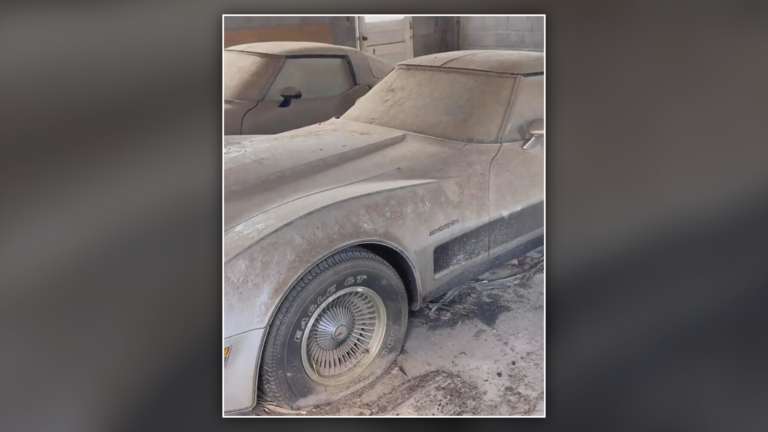
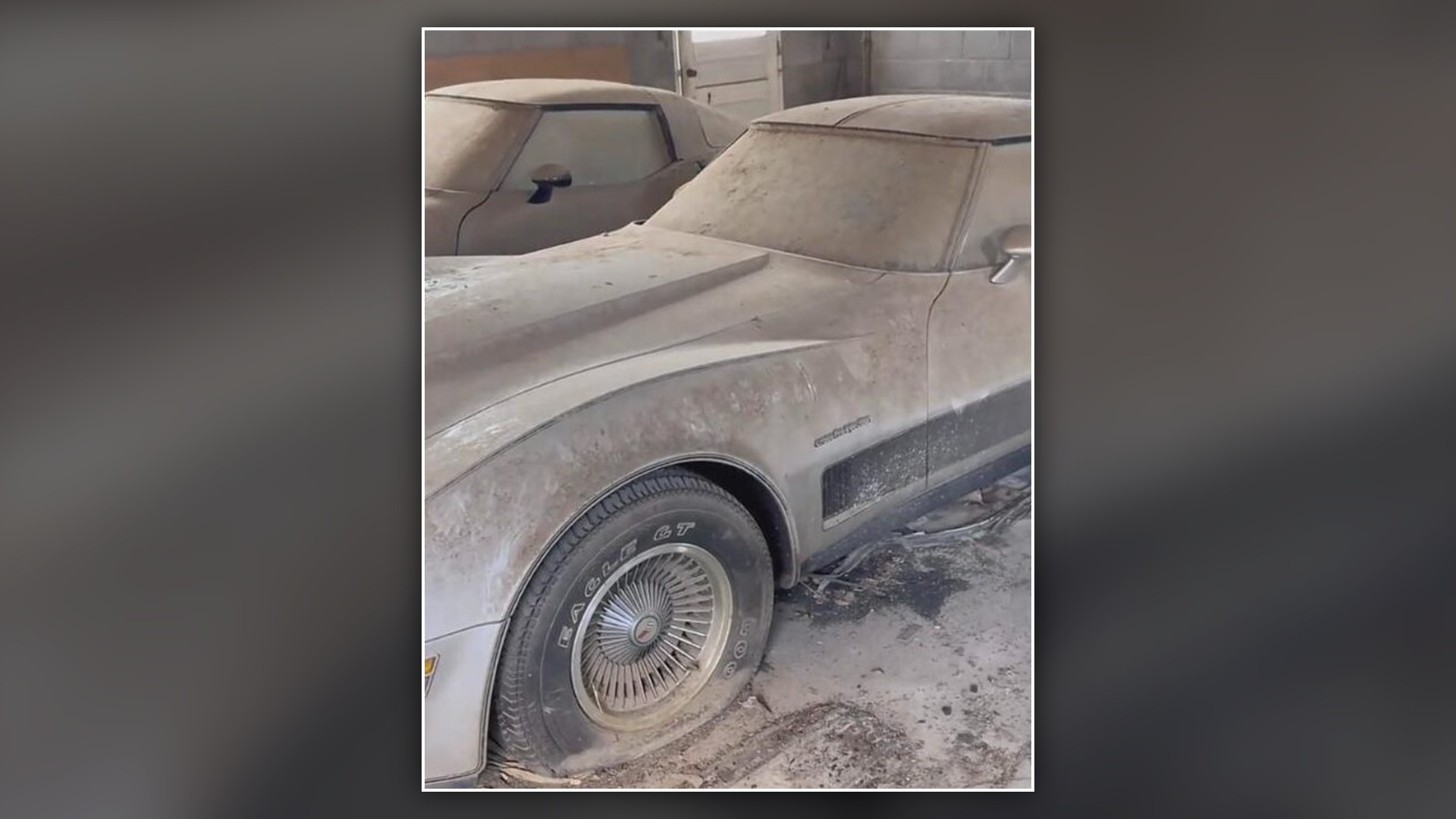
Thirty-three miles. That is the number WD Detailing puts on the 1982 Corvette Collector Edition in its latest TikTok, a car the detailer says went from the dealership to a garage and essentially never came back out. The temporary tag is still on it. The dealer’s protective plastic is still on the seat. And somewhere between the dust and the final polish, the crew found that a rodent had moved into the engine bay and made itself at home.
That last part is the real story. A Corvette that has covered 33 miles in 44 years has not been frozen in time. It has been aging the entire time, just without the miles to show for it.
@wddetailing LOWEST Mileage 1982 Corvette In The WORLD! Watch on TikTok
What the footage shows, and what it doesn’t
The video went up on the @wddetailing account on October 7 and had passed 2.4 million plays and 170,000 likes a week later. It runs about three minutes and covers the full job: the silver-beige coupe caked in dust next to another C3, a slow walk around the untouched cabin, an underbody blast on a lift, carpet and engine-bay cleanup, and a final pass over the glass hatch.
The 33-mile figure comes from the narration. No odometer close-up, window sticker or title is shown on screen, and Backfire News has not independently verified the mileage or the ownership history. The detailer’s own pitch is hedged, too: he calls it probably the lowest-mileage Corvette of its model year, then allows that it is at least in the top three. Treat 33 as the owner-side claim until paperwork says otherwise.
Why a Collector Edition is the right car to bury
The Collector Edition was Chevrolet’s farewell to the third-generation Corvette, and the National Corvette Museum’s production records show why survivors get attention. Bowling Green built 25,407 Corvettes for 1982. Only 6,759 were Collector Edition coupes.
Chevrolet gave them a spec you can pick out even under a layer of grime, which is exactly what the opening shots allow. The paint is silver-beige metallic with a fading shadow treatment across the hood, fenders and doors. The wheels are finned cast aluminum with a center ornament, wrapped in P255/60R-15 white-letter Goodyear Eagle GTs. Inside, the seats and door trim are multi-tone silver-beige leather, and the roof panels are bronze-tinted glass.
The piece of hardware that matters most is the hatch. The Collector Edition introduced a frameless glass rear window that lifts fully with a remote release, the first opening hatch on a Corvette. That is the panel the video ends on.
Chevrolet also assigned these cars their own VIN sequence specifically to keep owners from turning ordinary 1982 coupes into fake Collector Editions. In other words, GM expected forgeries on day one. Anyone shopping a low-mile example should start with the VIN, not the odometer.
Cross-Fire Injection and the cost of standing still
Every 1982 Corvette ran the L83 350-cubic-inch V8 with Cross-Fire Injection, the badge for which is visible on the dusty front fender in the footage. The system used two throttle-body injectors managed by an electronic control module, with a 9.0:1 compression ratio and a four-speed automatic that locks its torque converter in second, third and overdrive fourth.
That was early electronic engine management, built in the tight emissions era, and on this car it has barely ever been asked to work. That is the catch with ultra-low mileage. Fuel left in a system for decades turns to varnish. Rubber hoses, seals and belts harden whether the car moves or not. Tires age by date code rather than tread depth, and at least one of the original Eagle GTs looks visibly low in the opening shots. Stored-car nests are their own hazard, since nesting rodents tend to chew wiring insulation.
The odometer says nearly new. The chemistry says 1982. Making this Corvette safe to drive regularly would mean replacing the very parts that make it original, which is the trap every museum-grade survivor falls into.
Cleaning versus recommissioning
That is why a detail is the smart first move here. Washing off corrosive dust and droppings protects the car without swapping a single factory part, and the video takes care to point out the original dealer plastic rather than tear it off.
The racing world fights the same battle with historic machinery. Honda Racing Corporation USA has gone the other way with its old race cars, putting them back to work on track instead of parking them in a museum, and vintage events such as the HSR Classic 10 Hour at Road Atlanta exist because owners decided driving old cars beats preserving them in amber. A 33-mile Collector Edition sits at the far opposite end of that argument.
What to watch next
If this car comes up for sale, the details that will matter are the documentation: the original window sticker and dealer paperwork, the date on that temporary tag, and a VIN that matches the Collector Edition sequence. Those will separate a verifiable 33-mile car from a great TikTok story.
Then watch what the owner does after the detail. A full recommissioning would make it drivable and shave off some originality. Leaving it alone keeps the odometer intact and the problems in place.
Either way, the bloodline is still busy. The same Bowling Green badge that went into storage in 1982 is currently chasing the LMGT3 title in the World Endurance Championship, where the cars rack up more miles in one six-hour race than this Collector Edition has seen in four decades. If it were yours, would you recommission it and drive it, or leave the 33 miles alone?
About the Author