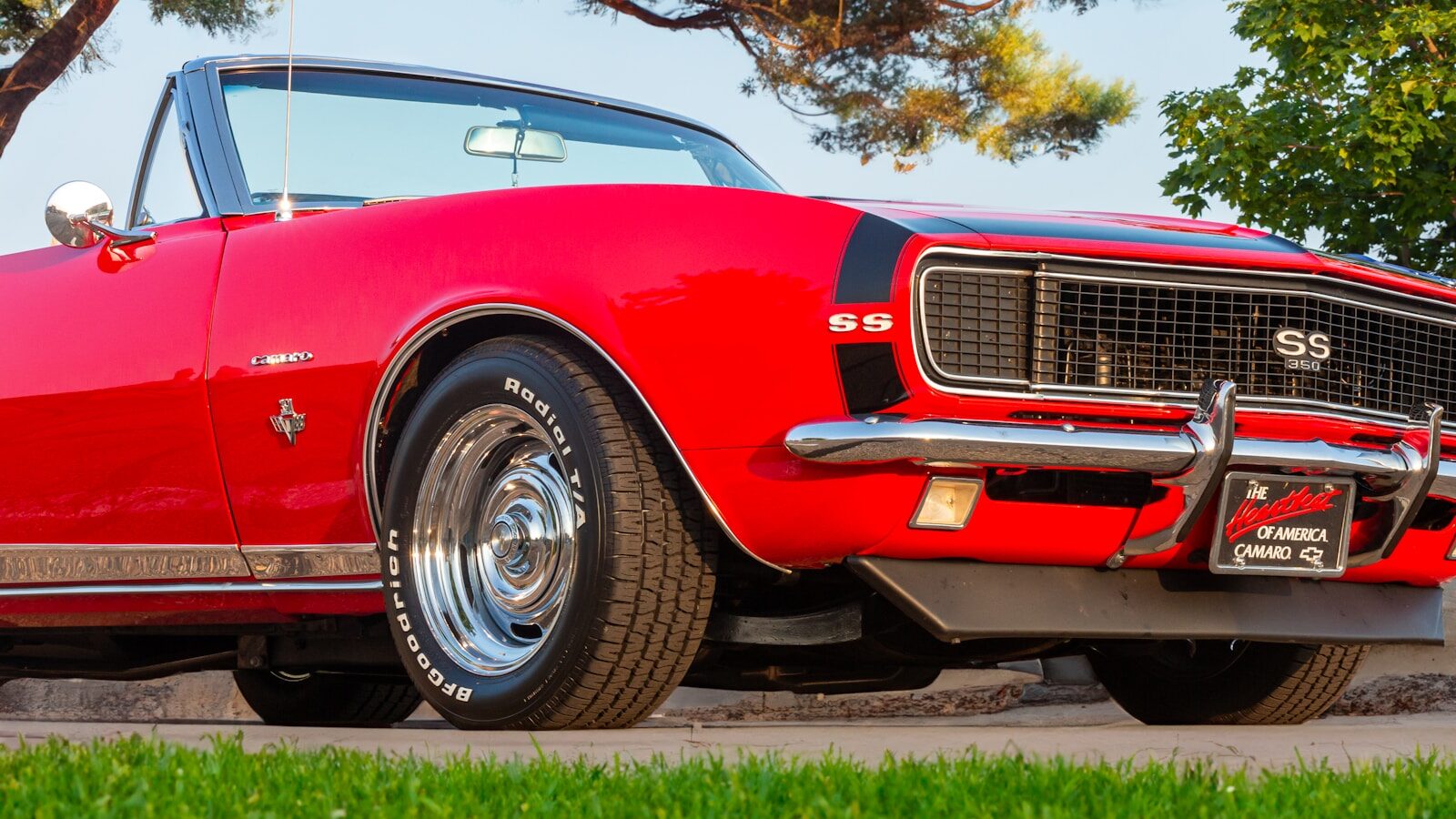
An Alabama nonprofit put a 1968 Camaro SS convertible up for public bid using a classified ad that gave away almost nothing: “1968 Chevrolet, as is.” No photos, no condition report, no mention that the car had spent years sitting at a motorsports museum. Just a P.O. Box in Talladega and an invitation to name a price. Exactly one person did.
That bidder won with $15,000. Then the seller — the very organization that owned the car — turned around and spent nearly $23,000 putting it back together before handing over the title. The winning bidder was the seller’s own boss.
Alabama’s attorney general says that sequence amounts to a felony. A Talladega County grand jury indicted Michael Raita, 67, the former executive director of the International Motorsports Hall of Fame, on one count of using public employment for personal gain, a class B felony under Alabama law that carries a maximum of 20 years in prison and a $30,000 fine. Raita, a longtime Birmingham sports anchor before he took the museum job, turned himself in to the Talladega County Sheriff’s Office and posted $25,000 bond. He’s due to be arraigned May 28, and his attorney says he intends to plead not guilty.
A pace car, sold blind, fixed on the house
The International Motorsports Hall of Fame has operated next to Talladega Superspeedway since 1983, honoring inductees from every branch of racing rather than just NASCAR, the kind of institutional weight that made news again this year when Jeff Gordon received an honor no other NASCAR driver has. Running a place like that means someone has to manage a stable of donated and inherited vehicles, and in December 2021 the commission decided to offload a 1968 Camaro SS convertible that state filings describe only as a former pace car. The ad prosecutors now have on file said nothing more than that it was a sparsely worded classified ad. Raita placed the only bid, at $15,000, and won it. According to the indictment and a state audit, the Hall of Fame then spent about $22,917 restoring the car before Raita took possession, despite having advertised it as a no-guarantees, as-is sale. A second vehicle, a 1998 Ford F-150 pickup, went to Raita’s wife in March 2024 for $1,000, sold under a similarly bare-bones classified ad, with her as the only bidder.
That combination — an insider as the only bidder, a modest hammer price, and a restoration bill picked up by the seller — is exactly the pattern that makes government auction watchdogs nervous, whether the item in question is a Camaro or a used forklift. Documented, numbers-matching 1968 Camaro SS convertibles with pace car history routinely bring well into six figures at collector auctions, which is a big part of why a $15,000 sale price reads less like a bargain and more like a prosecution exhibit. Restomod and resale interest in the same generation of Camaro has stayed strong for exactly that reason, as shown by a 1968 Yenko-style project that recently hit eBay still wearing its original 427 option.
The bookkeeper’s indictment is a bigger number
Raita wasn’t charged alone. Karen Lakey, 56, the Hall of Fame’s former accounts manager, was indicted on the same charge, use of public employment for personal gain, after a Talladega County grand jury reviewed how she handled the museum’s checkbook. Prosecutors allege she diverted all or part of $159,477.55 in Hall of Fame funds for herself or a family member. A state audit of the commission’s books, covering October 2019 through September 2024, went further, telling Lakey she owed the organization more than $236,000, a figure the audit says included overpayments on her own salary, checks she wrote to herself and cashed, payments toward her personal power bill, and more than $40,000 spent on behalf of family members. The gap between those two numbers isn’t a typo: the audit’s repayment demand is a civil accounting exercise, while the indictment only covers the slice prosecutors believe they can prove was criminal. Lakey turned herself in to the Talladega County Sheriff’s Office and posted $25,000 bond; it isn’t clear whether she has retained an attorney.
The same audit found 35 separate violations of state law across the commission’s operations and flagged well over $200,000 in improper spending overall. Governor Kay Ivey didn’t wait for the criminal case to catch up. She removed all 18 members of the Motor Sports Hall of Fame Commission once the findings became public, a housecleaning that’s rare even by the standards of Alabama’s frequently reshuffled state boards, and a reminder that fraud allegations tied to racing organizations aren’t limited to small nonprofit museums, as an international fraud and embezzlement case involving a former Formula 1 driver showed earlier this year.
What Raita’s attorney is arguing
Raita’s attorney, Tommy Spina, isn’t disputing that the Camaro and the truck changed hands the way prosecutors describe. His defense is that the board signed off on all of it. He says every transaction was carried out with the full knowledge and approval of the Hall of Fame’s chairman and board of directors, and that once the initial bid deposit and the truck purchase are factored in, Raita is actually out roughly $21,000 in net cash while the museum still owns and possesses the Camaro. Former state senator Gerald Dial of Lineville, who chaired the commission at the time and says he’s also the one who recommended hiring Lakey, has said publicly that the understanding was for Raita to return the Camaro and be repaid what he’d spent restoring it.
None of that is a legal defense to the actual charge, which turns on whether Raita used his position for a gain that state law didn’t specifically authorize, board approval or not. Alabama’s public corruption statute doesn’t carve out an exception for internal sign-off, and that distinction has tripped up officials in unrelated public-auction cases before, including a fraud-tainted Dodge Daytona that sat in a Missouri junkyard as evidence for a decade before it ever reached a bidder.
Why a vague government classified ad should worry you
This case is a useful reminder of why public surplus auctions for seized, donated, or institutionally owned vehicles are supposed to include photos, VINs, and an open bidding window rather than a P.O. Box and a one-line description. A vague ad, a single bidder, and no competitive pressure on price is a pattern that regularly turns into a criminal referral, whether the asset is a Hall of Fame Camaro or a modern muscle car whose carbon-fiber body turned out to be nothing like what the auction listing claimed. Enthusiasts chasing “insider” deals on institutional collections, whether it’s a race shop, a museum, or a police impound lot, should treat a single-source, no-photo classified ad as a warning sign rather than a bargain. It’s the same instinct that should kick in with any barn-find Camaro carrying a cloudy title history: provenance and paperwork matter as much as the sheet metal, and a steep discount usually means somebody, somewhere, eventually has to explain the gap.
Both Raita and Lakey are presumed innocent, and an indictment is only an accusation until a jury says otherwise. But the case has already cost the Motor Sports Hall of Fame Commission its entire board, and it’s a reminder that small nonprofit museums sitting on valuable rolling artifacts need the same kind of accountable afterlife plan for their vehicles that big-league race teams use for retired race cars, one with a paper trail nobody has to explain to a grand jury.
About the Author