Nothing makes a car more desirable than being told you can’t have it.
Automakers have spent billions trying to create automotive legends, but sometimes the federal government does the job for free. Throughout the 1980s, 1990s, and early 2000s, some of the world’s most exciting performance cars remained out of reach for American enthusiasts thanks to safety regulations, emissions requirements, and federal certification rules. Some were never intended for the U.S. market, while others simply weren’t worth the expense of federal approval.
That only made enthusiasts want them more. Stories of seized imports, crushed cars, and frustrated owners transformed ordinary performance cars into automotive folklore. In many cases, the fact that Americans couldn’t buy them became a bigger part of their legacy than their actual performance numbers.
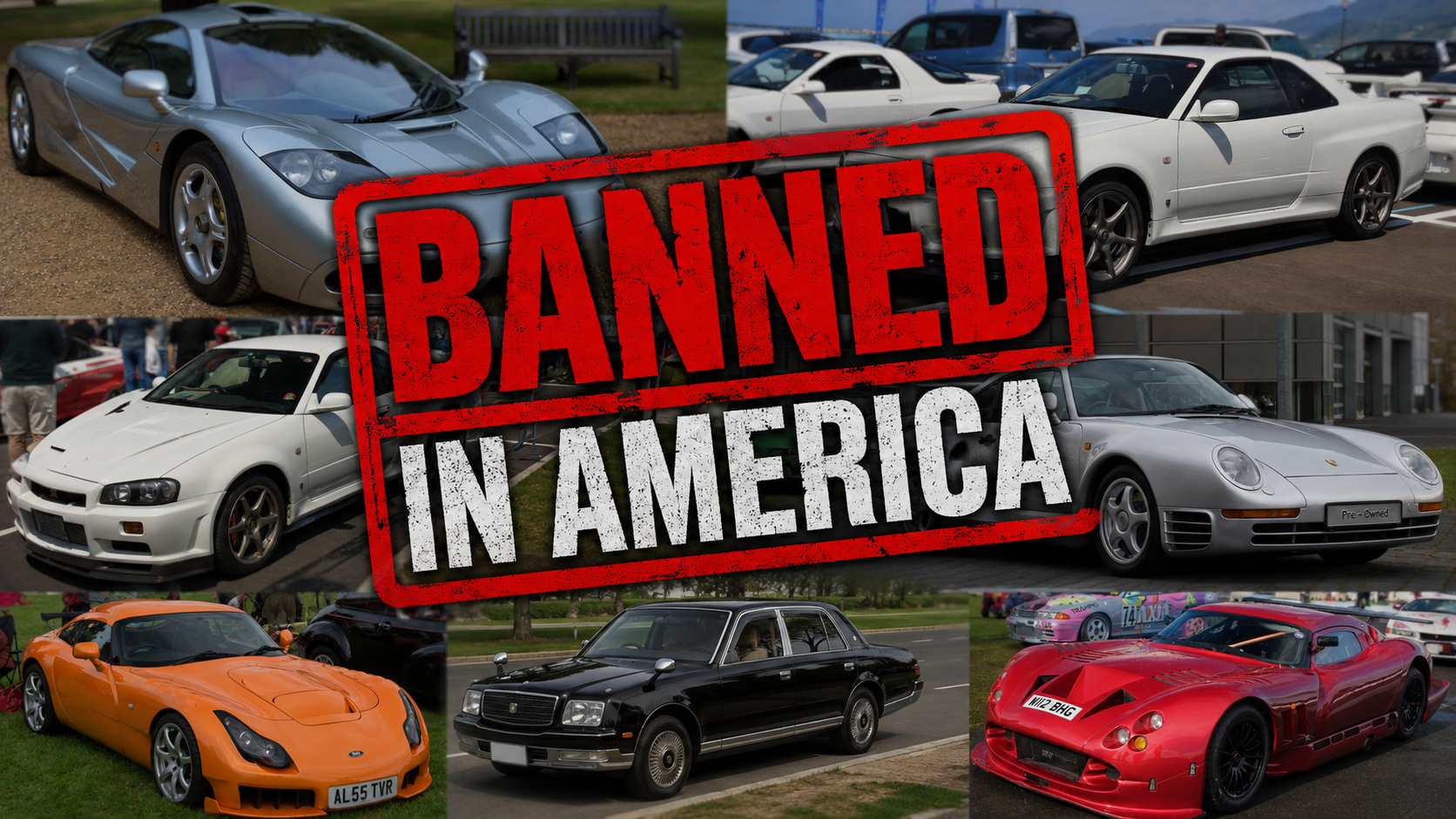
These are 10 cars that became legends because America said no.
1. Nissan Skyline GT-R R34
If there is a king of forbidden cars, it’s the Nissan Skyline GT-R R34. Long before social media turned every performance car into a household name, the R34 was already becoming a legend through video games, magazine covers, and movies. To an entire generation of enthusiasts, it represented everything exciting about Japanese performance cars.
The problem was that Americans couldn’t legally own one. Nissan never certified the R34 for sale in the United States, meaning federal safety and emissions standards created a wall between enthusiasts and their dream car. While a handful entered the country through loopholes and specialty import programs, many others were seized when authorities discovered they had been imported illegally.
Ironically, the restrictions may have done more for the Skyline’s reputation than Nissan ever could have. Had the company simply sold the GT-R through dealerships, it probably would have been remembered as an excellent sports car. Instead, it became the automotive equivalent of buried treasure, with enthusiasts spending decades counting down the days until the 25-year rule finally made legal ownership possible.
2. Porsche 959
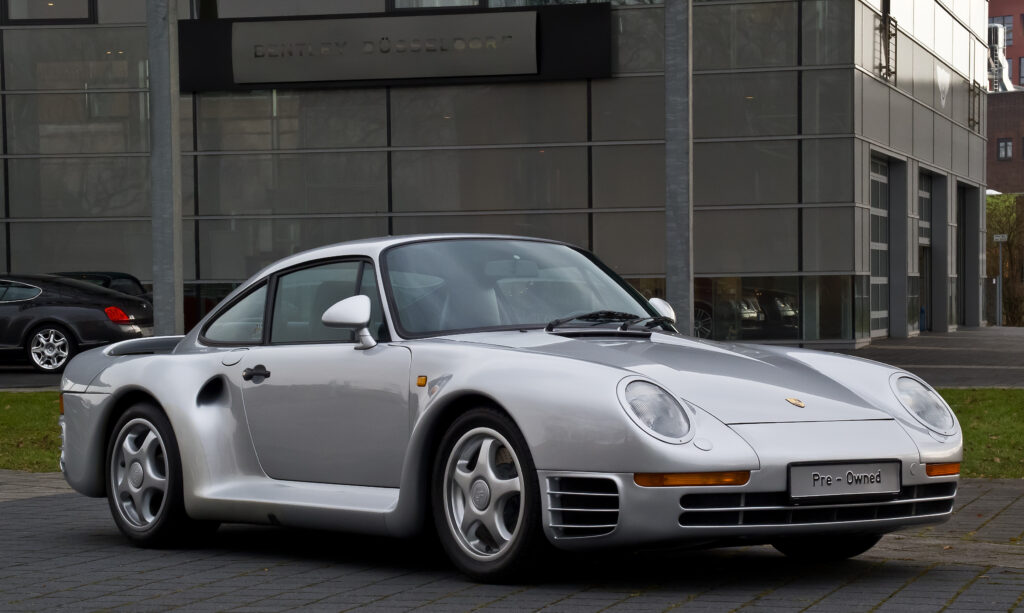
The Porsche 959 wasn’t just another supercar. When it debuted in the 1980s, it was arguably the most technologically advanced production car on the planet. Its sophisticated all-wheel-drive system, twin-turbocharged flat-six engine, and advanced electronics were years ahead of what most manufacturers were building at the time.
Unfortunately, technological brilliance wasn’t enough to satisfy federal regulators. Porsche never completed the expensive certification process required for American sales, leaving wealthy buyers in an unusual position. They could afford the car, but they couldn’t legally drive it on public roads in the United States.
Perhaps the most famous victim of the rule was Microsoft co-founder Bill Gates, who owned a 959 that spent years in regulatory limbo. The controversy eventually helped inspire the federal Show and Display exemption, which allows certain historically significant vehicles into the country despite not meeting every certification requirement. In a strange way, the Porsche 959 helped change the laws that once kept it out.
3. McLaren F1
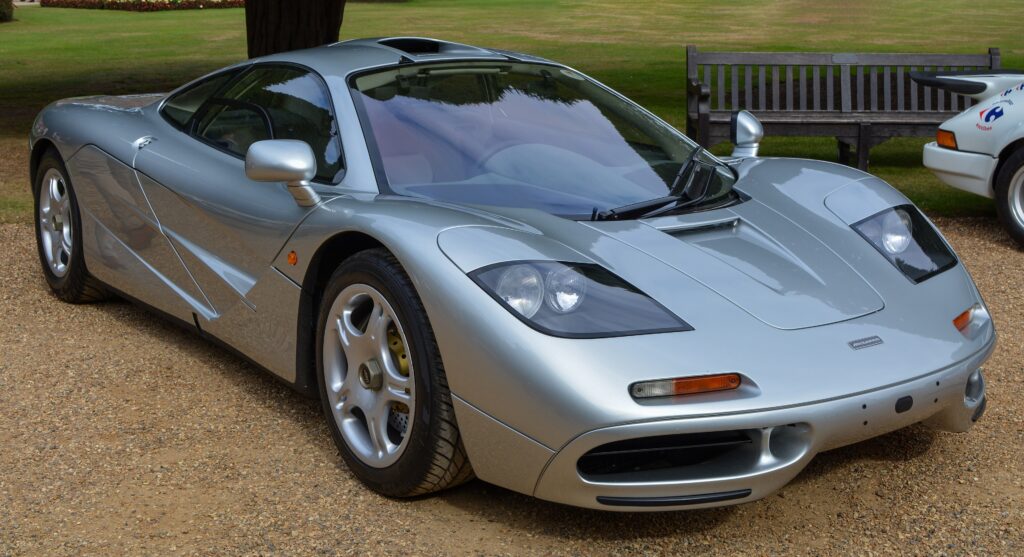
The McLaren F1 is often described as the greatest driver‘s car ever built. Designed by Gordon Murray and powered by a naturally aspirated BMW V12, it shattered expectations for what a road car could achieve. Its central driving position and lightweight construction made it unlike anything else on the market.
Getting one into America wasn’t nearly as straightforward as driving it. The F1 lacked the federal certification required for normal U.S. sales, forcing owners to navigate exemptions and special approvals. For a car that was already astronomically expensive, the paperwork became an additional hurdle.
Today, those regulatory headaches are mostly forgotten. With values reaching well into eight figures, the McLaren F1 has become one of the most coveted collector cars in the world. The struggle to own one legally only added another chapter to its remarkable story.
4. TVR Sagaris
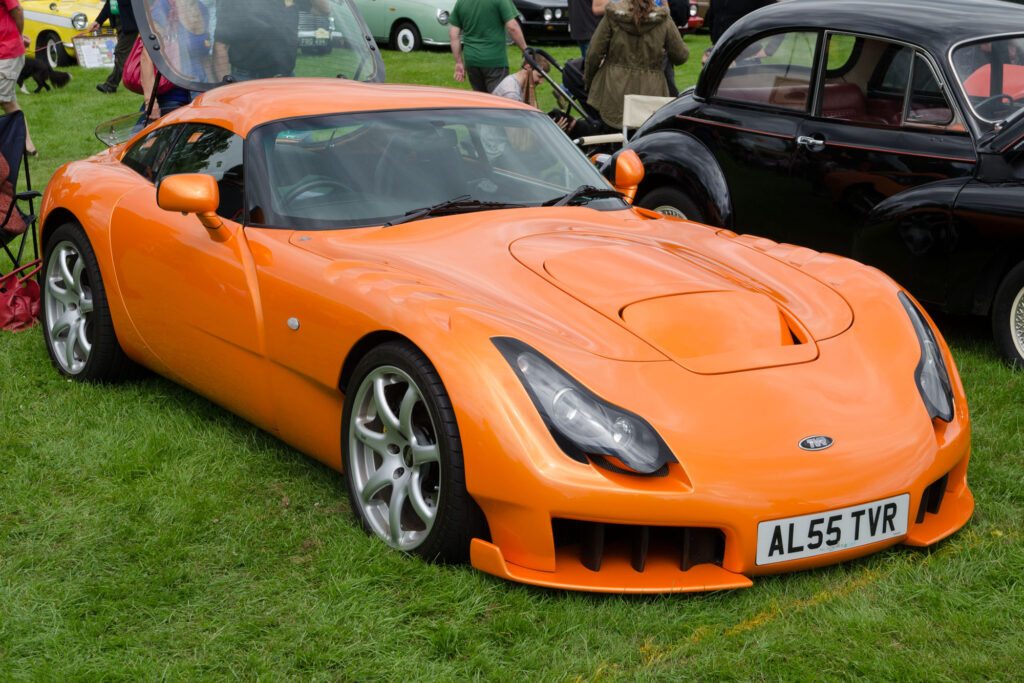
The TVR Sagaris looked like it escaped from a science fiction movie. Covered in vents, dramatic bodywork, and styling cues that seemed designed to offend conventional tastes, it stood out even among exotic sports cars. That uniqueness made it an instant favorite among enthusiasts.
Unfortunately, American buyers could only admire it from afar. TVR never federalized the Sagaris for sale in the United States, meaning it failed to meet the certification requirements needed for legal importation. As a result, fans spent years staring at magazine photos and online videos instead of seeing them in person.
The lack of availability only increased the car’s mystique. The Sagaris became one of those vehicles enthusiasts spoke about in almost mythical terms. For many Americans, it represented the kind of automotive insanity that seemed impossible to buy at home.
5. TVR Cerbera Speed 12
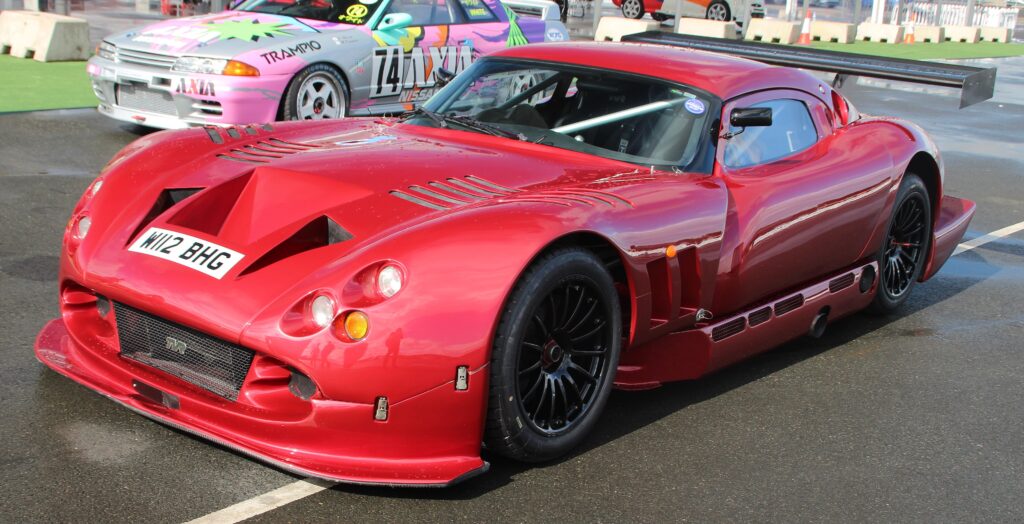
Some cars push boundaries. The TVR Cerbera Speed 12 practically erased them. Built around a monstrous V12 engine and boasting power figures that sounded unbelievable for the late 1990s, the Speed 12 quickly gained a reputation as one of the most extreme road cars ever conceived.
Stories surrounding the car became almost as famous as the vehicle itself. According to automotive lore, TVR’s own chairman reportedly found the car intimidating to drive. Whether exaggerated or not, the tale helped establish the Speed 12 as something bordering on automotive madness.
Federal certification was never realistically in the cards. The Speed 12 existed more as a statement than a practical production car. That reality only enhanced its reputation among enthusiasts who viewed it as one of the wildest machines America never had a chance to reject officially.
6. Jaguar XJ220
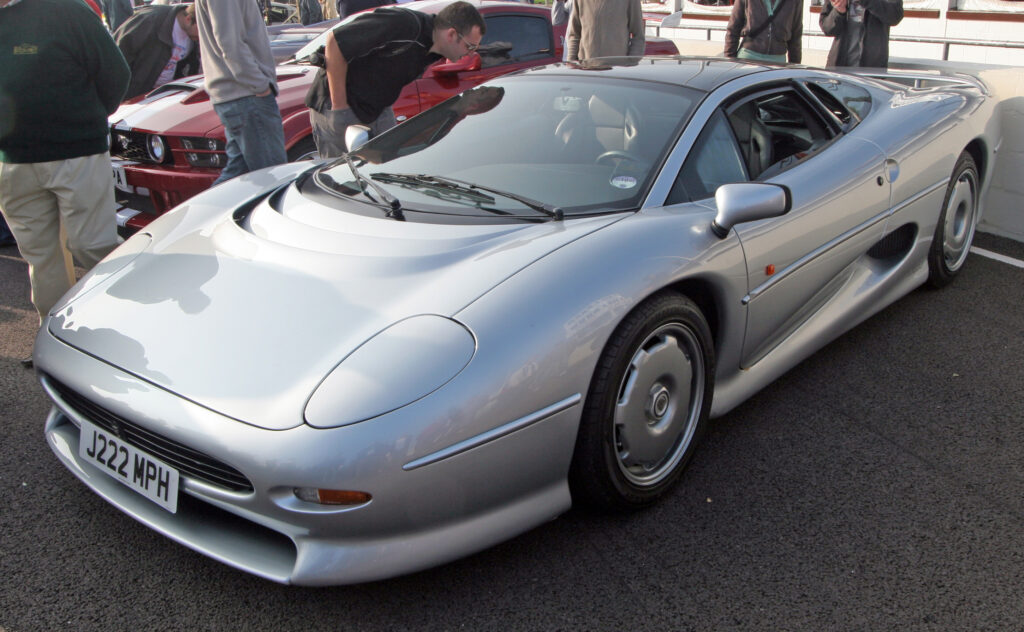
When Jaguar introduced the XJ220, it immediately became one of the most talked-about supercars in the world. It eventually earned the title of fastest production car on the planet, giving the British automaker a major victory in the performance wars of the early 1990s.
American enthusiasts naturally wanted one. Unfortunately, federal certification issues complicated matters. While some examples eventually entered the country through various legal pathways, the process was far more difficult than simply purchasing one from a dealership.
The hurdles surrounding the XJ220 created an additional layer of exclusivity. Not only was it one of the fastest cars in existence, but it was also one of the hardest for American buyers to obtain. That combination helped cement its status as a true supercar icon.
7. Mitsubishi Lancer Evolution VI
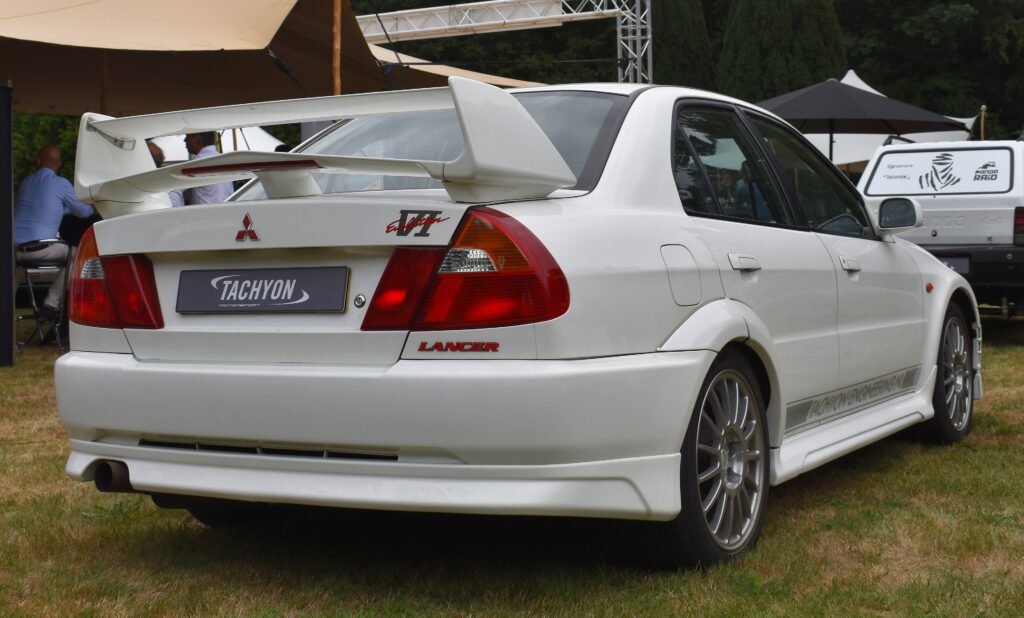
Today, it’s easy to forget that Americans once had no access to the Mitsubishi Lancer Evolution. Before Mitsubishi officially brought the Evo to the United States, generations of rally-bred performance sedans existed only in magazines, grainy videos, and enthusiast forums.
Among them, the Evolution VI became one of the most desirable. Its aggressive styling, turbocharged engine, and rally heritage made it a dream car for performance enthusiasts who wanted something different from the usual sports-car formula.
The inability to buy one only fueled demand. By the time the Evolution finally reached American dealerships in 2003, years of anticipation had already elevated the model to legendary status. The ban had essentially become part of the car’s appeal.
8. Subaru Impreza 22B STI
Few Subarus command the respect of the 22B STI. Built to celebrate the company’s World Rally Championship success, the widebody coupe represented everything enthusiasts loved about Subaru during its golden era of motorsport dominance.
The problem was that American fans couldn’t buy one. Produced in extremely limited numbers and reserved primarily for the Japanese market, the 22B remained a distant dream for enthusiasts who followed rally racing throughout the 1990s.
That scarcity eventually turned the car into one of the most collectible Subarus ever built. Today, pristine examples regularly command six-figure prices. The fact that so many enthusiasts spent decades wanting one has undoubtedly contributed to its extraordinary value.
9. Toyota Century V12
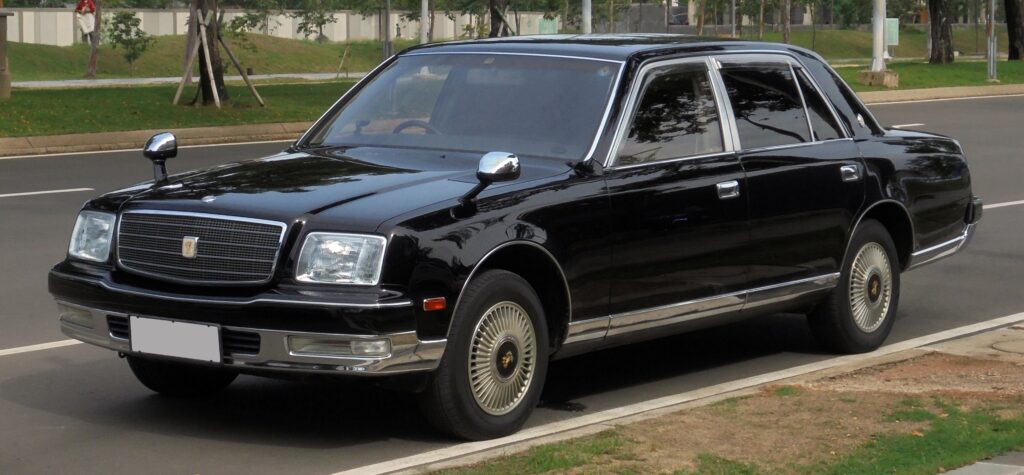
The Toyota Century may be the strangest car on this list. While most forbidden vehicles earned their reputations through speed or racing success, the Century became famous for its quiet luxury and exclusivity. It was designed to transport executives, dignitaries, and members of Japan’s elite in complete comfort.
Beneath its conservative exterior sat something unexpected: a V12 engine. At a time when Toyota was better known for practical transportation, the company quietly built what many consider Japan’s answer to Rolls-Royce.
For years, the Century remained largely unavailable to American buyers. That only increased its appeal among enthusiasts who appreciated its uniqueness. In a market obsessed with flashy luxury cars, the understated Century offered something entirely different.
10. Mercedes-Benz CLK GTR
The Mercedes-Benz CLK GTR exists because racing regulations created one of the greatest loopholes in automotive history. To compete in international GT racing, manufacturers were required to build road-going versions of their race cars. Mercedes took that requirement very seriously.
The resulting machine looked less like a production car and more like something that had escaped from Le Mans. With its race-derived engineering and microscopic production numbers, the CLK GTR immediately became one of the rarest and most outrageous vehicles ever offered to the public.
For American enthusiasts, ownership was never realistic for multiple reasons. Even if regulatory barriers weren’t an issue, finding one and affording it would have been nearly impossible. Yet that hasn’t stopped generations of enthusiasts from dreaming about it, which may be the ultimate measure of a forbidden car’s success.
The Funniest Part? Most Of These Cars Are Legal Now
Thanks to America’s 25-year import rule, many of these once-forbidden machines can now be legally imported. The regulations that frustrated enthusiasts for decades eventually expire, allowing some of the world’s most sought-after vehicles to cross U.S. borders legally.
In the end, the government didn’t stop enthusiasts from owning these cars. It simply forced them to wait.
And if automotive history has proven anything, it’s that telling enthusiasts they can’t have something is often the fastest way to ensure they’ll spend the next 25 years obsessing over it.
About the Author