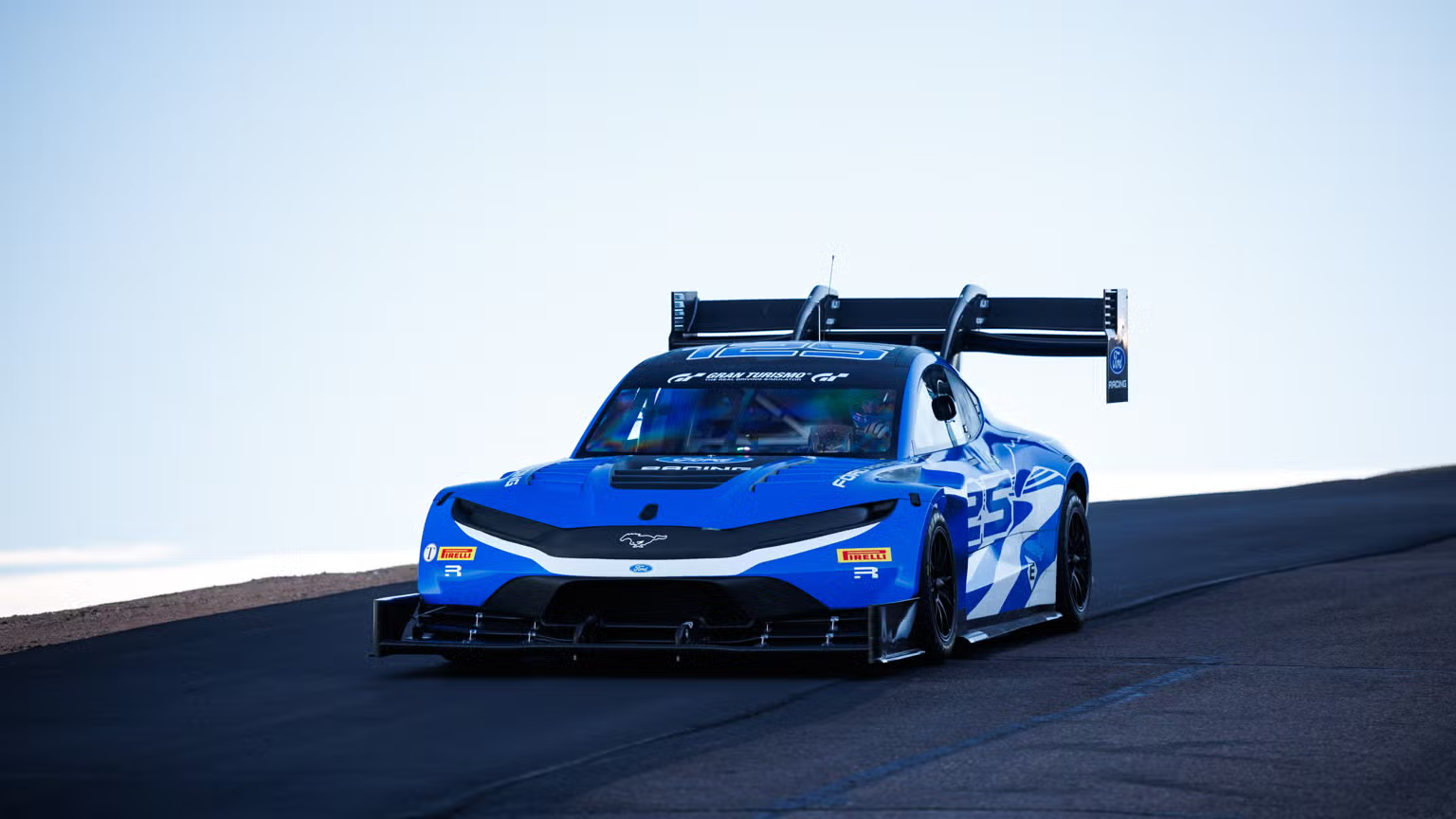
Romain Dumas has done it again. The French driver guided Ford’s all-electric Super Mustang Mach-E to an 8:18.202 up the 104th running of the Pikes Peak International Hill Climb, taking the King of the Mountain title for the sixth time in his career and handing Ford its second outright win at the legendary Colorado event. The run lands as one of the quickest the mountain has ever seen.
The appeal of an electric race car at Pikes Peak comes down to physics. The course climbs 12.42 miles to a summit that sits at 14,115 feet, where the air grows thin enough to starve a combustion engine of the oxygen it needs to make power. Electric motors simply do not care. They deliver the same output at the finish line as they do at the start, which is why battery-powered machines have been quietly rewriting the record books on this mountain for years. Dumas fired the opening shot himself back in 2018, when his Volkswagen ID.R clocked a 7:57.148 and became the first car to ever break the eight-minute barrier here.
It wears a Mach-E badge, but make no mistake — this is not the crossover sitting on a dealer lot. The Super Mustang Mach-E is a three-motor, 1,400-horsepower racing machine that generates up to 12,000 pounds of downforce, the most Ford has ever recorded in its rolling road wind tunnel. It shares about as much DNA with a showroom Mach-E as a Formula 1 car shares with a hot hatch. Ford’s appetite for turning the nameplate into a competition weapon is nothing new, either; the company has been chasing this mountain hard, as it showed when Ford Performance revealed its F-150 Lightning SuperTruck built specifically for Pikes Peak.
Ford did not have the climb to itself. Chevrolet arrived with a serious answer of its own, sending JR Hildebrand up the hill in a 1,250-horsepower hybrid ZR1X. Powered by a 5.5-liter twin-turbo V8 paired with a front electric motor, it posted a 9:30.104 and obliterated the production car record by more than 23 seconds. It was a stunning drive in its own right, yet it still finished more than a full minute behind the Mach-E. The ZR1 family has been generating buzz well beyond the racetrack, too, as fans saw when a tiny dealership giveaway turned the 2026 Corvette ZR1 into one of America’s hottest performance car obsessions.
Context is what makes Ford’s 8:18.202 so striking. The production EV record still belongs to a Tesla Model 3 that ran an 11:02 in 2020, while the Hyundai Ioniq 5 N trimmed the production EV crossover mark to 10:49 in 2024. The Super Mustang Mach-E is far from a production car, but its time underscores just how much headroom purpose-built electric racers have over anything you can buy.
The outright record still belongs to Dumas and that 2018 ID.R, which was only about 21 seconds quicker than the Ford managed this time. The second-fastest time in the event’s history is the 8:13.878 that rally legend Sébastien Loeb set in 2013 with the Peugeot 208 T16, a benchmark that has stood for more than a decade. With Ford now slotting into third, it feels like only a matter of time before electric machinery rounds off the entire podium.
For Ford, the win is another data point in a larger story about where its performance ambitions are heading. The Mustang name has always carried weight with enthusiasts — something the market reminds us of constantly, like when Dave Navarro’s low-mileage Shelby GT500 sold for more than its original sticker. Whether the badge sits on a screaming supercharged V8 or a 1,400-horsepower electric hill-climb special, Ford clearly intends to keep the pony car at the front of the conversation. At Pikes Peak this year, it was — by more than a minute.
About the Author