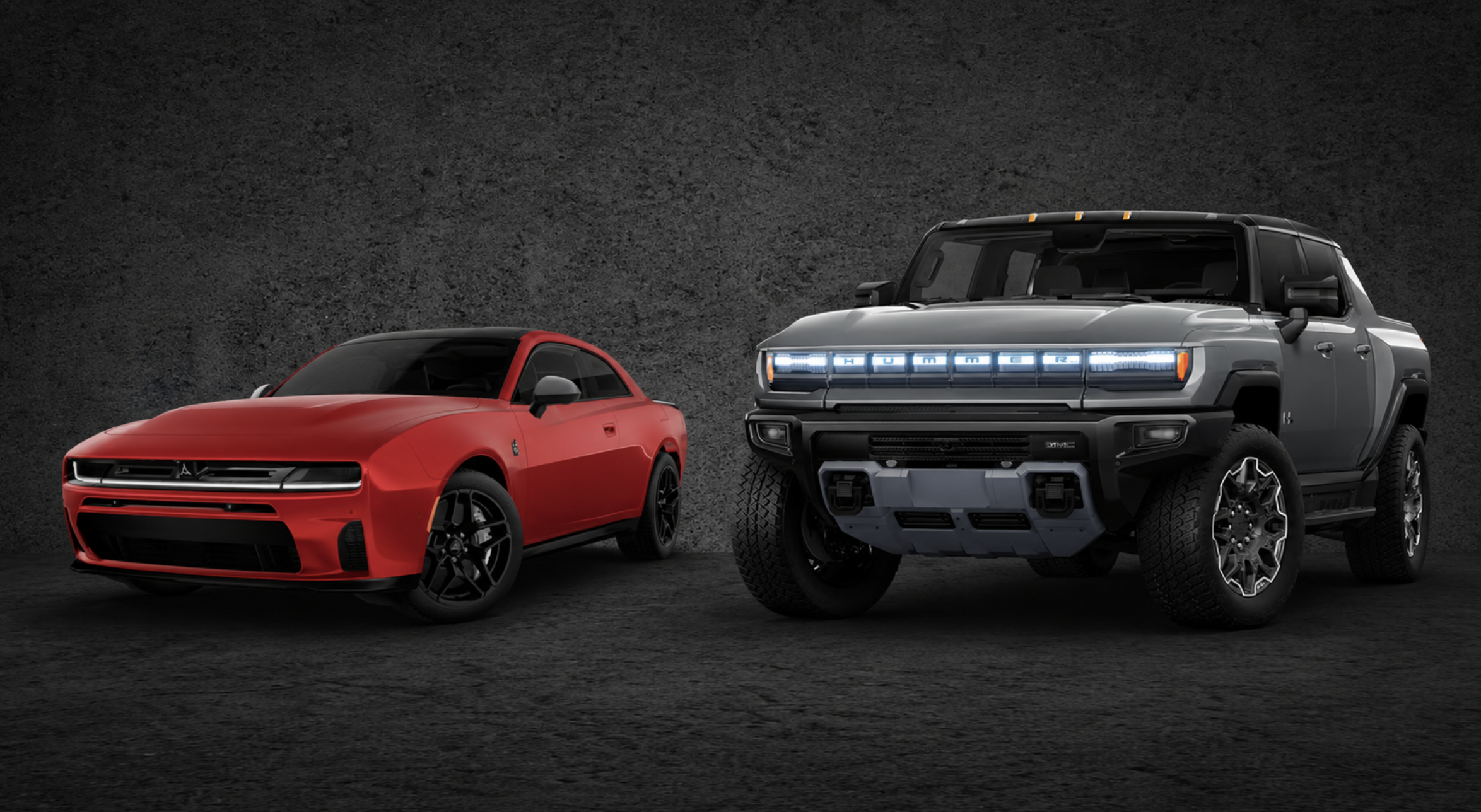
The GMC Hummer EV has always looked like trouble with a charging port, and now the insurance data is doing very little to soften that image. A new study from Insurify ranks Hummer EV drivers at or near the top for tickets, crashes and DUI rates, putting one of the most outrageous electric trucks on the road right where many people expected it to be.
The Dodge Charger Daytona EV is not far behind, which also feels less shocking than confirming what everyone already suspected. Big power, big personality and instant electric torque can be a dangerous combination when the wrong driver treats public roads like a launch-control demo. But the real curveball is the Kia Soul EV, a cheap, humble electric box that somehow lands third overall in the same bad-behavior conversation.
The Hummer EV Leads The Trouble List
According to Insurify, GMC Hummer EV drivers posted a 7.5 percent ticket rate, an 8.3 percent accident rate and a 6.4 percent DUI rate. Those are ugly numbers for a vehicle that already carries a reputation for being excessive. The Hummer EV is not subtle, and apparently neither are some of the people driving it.
This is where the story turns. The Hummer EV was built around huge presence and huge performance, and the study suggests that image may be matching up with risky driving behavior. That does not mean every Hummer EV owner is out there driving recklessly, but the numbers put the model in a very uncomfortable spotlight.
For other drivers, that matters because insurance data is not just gossip. Tickets, crashes and DUI records are the kind of things that affect risk profiles, premiums and public perception. When one vehicle sits this high across multiple bad-behavior categories, it becomes harder to dismiss as coincidence.
The Charger Daytona EV Is Right Behind It
The Dodge Charger Daytona EV also ranks near the top of Insurify’s list, with a 7.0 percent ticket rate, a 7.7 percent accident rate and a 5.4 percent DUI rate. Again, nobody should be fainting from surprise here. Dodge built the Charger name around attitude, speed and muscle-car theater, and the electric version still carries that energy.
The issue is not that enthusiasts like powerful cars. They always have, and there is nothing wrong with that. The problem comes when massive performance ends up paired with drivers who cannot separate a proper performance setting from normal traffic.
Here’s the part that matters. The Charger Daytona EV and Hummer EV are both electric vehicles with serious power and outsized personalities. They make speed feel effortless, and that can shrink the mental gap between what a vehicle can do and what a driver should do.
The Kia Soul EV Is The Strange One
Then there is the Kia Soul EV, which is easily the oddest name near the top of the list.
Insurify found that Soul EV drivers had a 7.1 percent ticket rate, a 6.5 percent accident rate and a 4.8 percent DUI rate. That puts it third overall behind two vehicles that make far more obvious sense in a discussion about aggressive driving and bad decisions.
The Soul EV is not a high-horsepower status machine. It is not the kind of car people usually picture when talking about drivers showing off with instant electric torque. It is practical, affordable and unusual looking, which makes its ranking even more interesting.
One possible explanation in the provided information is buyer demographics. The Soul EV and Chevrolet Bolt have historically appealed to younger and more budget-conscious buyers, groups that statistically tend to take more risks behind the wheel. That does not make the car the problem, but it does help explain why a vehicle with modest performance might still show up in a study like this.
The Bolt And Blazer EV Add More Questions
The Chevrolet Bolt also appears high in the rankings, with a 4.8 percent ticket rate, 4.6 percent accident rate and 4.2 percent DUI rate. Like the Soul EV, it is not exactly a tire-shredding performance icon. Its presence in the data points again to the idea that driver behavior does not always follow horsepower.
The Chevrolet Blazer EV tells a different story. It posted a 6.2 percent ticket rate and a 7.0 percent accident rate, suggesting its drivers may be getting a little too comfortable with the immediate shove electric vehicles can deliver. Instant torque is fun, but it can also get people into trouble faster than they expect.
That detail matters because EV performance is not reserved for exotic cars anymore. More mainstream electric models can deliver quick acceleration with very little drama. That can be great for merging and passing, but it also means bad decisions happen quickly.
The Cybertruck Was Bad, But Not The Worst
The Tesla Cybertruck did not top the list, which may surprise people who expected the polarizing pickup to dominate every bad-behavior category. It still was not exactly clean. Insurify recorded a 4.9 percent ticket rate for Cybertruck drivers, matching the Tesla Model 3.
The Model 3 had a higher accident rate than the Cybertruck, at 5.9 percent compared with 5.4 percent. That puts Tesla’s mainstream sedan ahead of the angular pickup in one important category, even if the Cybertruck attracts more attention on the road.
The DUI data is where things get more specific. Cybertruck owners posted a 1.4 percent DUI rate, which was higher than other Tesla models. Model 3, Model S and Model X drivers each came in at 0.4 percent, while Model Y drivers were even lower at 0.3 percent.
What This Means For Drivers
The obvious takeaway is not that electric vehicles make people drive badly. That would be lazy, and it would miss the point. The real issue is that certain vehicles seem to attract, enable or at least coincide with drivers who rack up violations and crashes at higher rates.
That is not the fault of ordinary enthusiasts who enjoy performance cars responsibly. It is also not a reason to smear every EV owner. But it is fair to ask why some of the loudest, heaviest and most aggressively marketed electric models appear so prominently in risky-driving data.
Automakers benefit when they sell vehicles on speed, power and attitude. Drivers pay the price when that image collides with real-world consequences, including tickets, crashes, DUIs and potentially higher insurance scrutiny. The Hummer EV and Charger Daytona EV may be impressive machines, but Insurify’s numbers show there is a cost when big performance meets bad judgment.
The cheap Kia stealing part of the headline makes the study even more useful. It proves this is not just about horsepower or price. It is about who is behind the wheel, how they drive and what happens when modern EV capability lands in the hands of people willing to gamble with everyone else’s safety.
Source: Insurify
About the Author