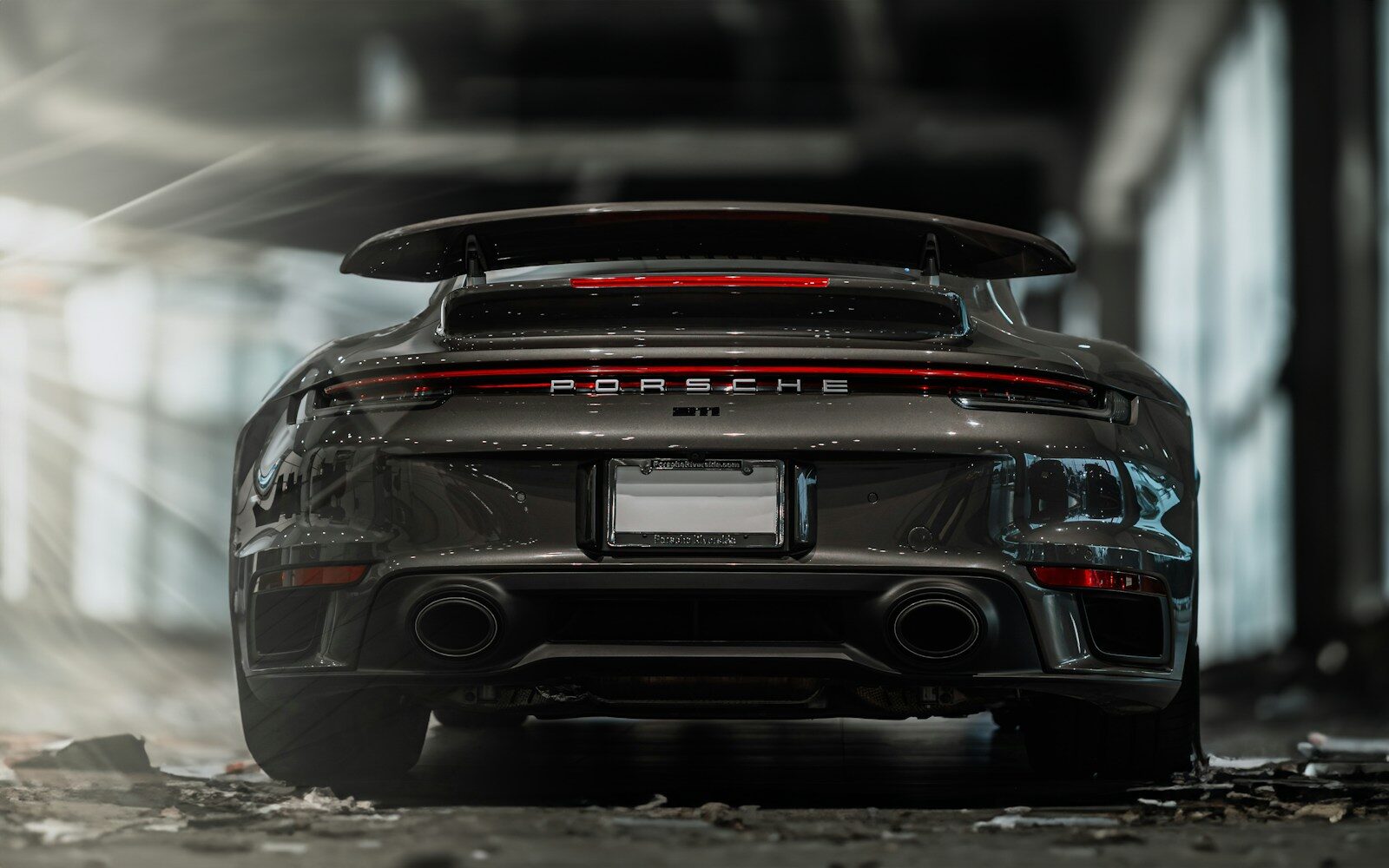
For the past few years, American performance cars have been kicking down the gates of Europe’s most protected territory. The Chevrolet Corvette ZR1 and Ford Mustang GTD didn’t just show up at legendary race tracks to participate — they showed up to embarrass brands like Porsche and Mercedes on their own turf. Now Porsche has fired back.
Porsche Reclaims a Record by Two Tenths of a Second
The German automaker announced this week that a Porsche 911 GT2 RS set a new production car lap record at Road Atlanta, narrowly beating the Chevrolet Corvette C8 ZR1 by two tenths of a second with a lap time of 1:22.6. It’s a small enough margin to look almost meaningless on paper, but it instantly turned what looked like American momentum into another chapter in an escalating global performance war between Detroit muscle and European supercar royalty. These records have become rolling advertisements for global credibility — no longer just bragging rights for internet forums or track-day junkies. Nürburgring times, Road Atlanta records, and GT3 racing programs now directly shape how automakers sell high-performance cars around the world.
For decades, European brands like Porsche, Ferrari, and Mercedes largely owned the narrative around precision engineering and circuit dominance, while American muscle was often viewed as powerful but crude — fast in a straight line, less convincing in the corners. That gap has been shrinking fast. Ford stunned the industry earlier this year when the Mustang GTD ripped around the Nürburgring in 6:40.8, becoming the fastest American production car ever to lap the circuit and shattering Porsche’s previous production-car benchmark there, leaving only the limited-production Mercedes-AMG One ahead overall. Chevrolet has been attacking from another angle with the Corvette ZR1, posting aggressive Nürburgring numbers while stacking up production car records at tracks across the United States — Virginia International Raceway, Watkins Glen, Road America, and Road Atlanta all fell to Corvette development teams.
Why Porsche Chose Road Atlanta
Porsche clearly noticed. Its response came at Road Atlanta, one of North America’s most respected racing circuits and home to Petit Le Mans, the IMSA WeatherTech SportsCar Championship finale. The track sits just 60 miles from Porsche’s North American headquarters in Atlanta, and if the Nürburgring is sacred ground for Germany, Road Atlanta matters just as deeply to American performance culture.
Porsche didn’t show up with just any car. The record-setting machine was a 2019 Porsche 911 GT2 RS equipped with the Manthey Kit, a Porsche-approved dealer-installed upgrade package that sharpens the suspension, brakes, and aerodynamics for track use. The car produces 700 horsepower from its turbocharged flat-six, remaining one of the most extreme versions of the rear-engine 911 platform ever built. The Corvette ZR1 it dethroned, by comparison, packs 1,064 horsepower from a twin-turbo V8 — meaning Porsche managed to edge out a car with more than 350 additional horsepower. Both cars ran on Michelin Pilot Sport Cup 2R production tires, so this wasn’t a case of one manufacturer gaming the setup with radically different rubber; the margins were genuinely razor thin. On a high-speed 2.5-mile circuit like Road Atlanta, two tenths of a second is a microscopic gap, but in the world of production car lap records, tiny gaps become massive marketing weapons.
The GT2 RS also set the outright production car record while Jörg Bergmeister, a former FIA GT3 World Champion and current Porsche brand ambassador who drove the record lap, managed a separate 1:23.9 run in the naturally aspirated 2025 Porsche 911 GT3 RS, establishing another benchmark for naturally aspirated production cars at the circuit. Chevrolet has taken a different approach to its own records, leaning on its own engineers rather than celebrity racing drivers — the Nürburgring lap and multiple American track records were driven by lead vehicle dynamics engineer Brian Wallace and other Corvette development staff. That contrast says a lot about how each company wants to present itself: Chevrolet’s message is built around factory engineering confidence, while Porsche leans harder into professional racing pedigree and decades of motorsport heritage. Neither side is hiding what this battle is really about — brand dominance.
A Battle Over More Than Trophies
None of these companies are fighting over trophies that casual commuters care about. They’re battling over enthusiast respect, engineering legitimacy, and global performance credibility in a market where buyers now have legitimate alternatives from Detroit. American brands are no longer building performance cars only for American buyers — the Corvette is now sold globally, including in right-hand-drive markets like Japan, and Ford races V8-powered Mustangs internationally and competes at Le Mans. These cars are being pushed directly into markets once dominated almost exclusively by European brands, and Porsche and Mercedes can no longer afford to dismiss Detroit.
That reality explains why lap records suddenly matter so much on both sides of the Atlantic. Every Nürburgring headline, every Road Atlanta benchmark, and every GT3 podium finish feeds into a much larger sales battle happening behind the scenes. The startling part for Europe is how quickly American brands have closed the gap — the Mustang GTD came within 11 seconds of the multimillion-dollar AMG One at the Nürburgring despite the Mercedes essentially being a Formula One-derived hypercar for the street, and Ford went even further by bringing its extreme mid-engine Mk IV to the Nürburgring and obliterating the AMG’s lap time entirely with a staggering 6:15.9 run. That kind of performance would have sounded ridiculous coming from an American manufacturer not long ago, and Porsche’s Road Atlanta response proves the Germans aren’t backing down quietly. For years, American performance cars chased European validation. Now, according to The Detroit News, Porsche is the one defending home turf on American soil.
About the Author