Image: Kari Ann Peniche via Instagram
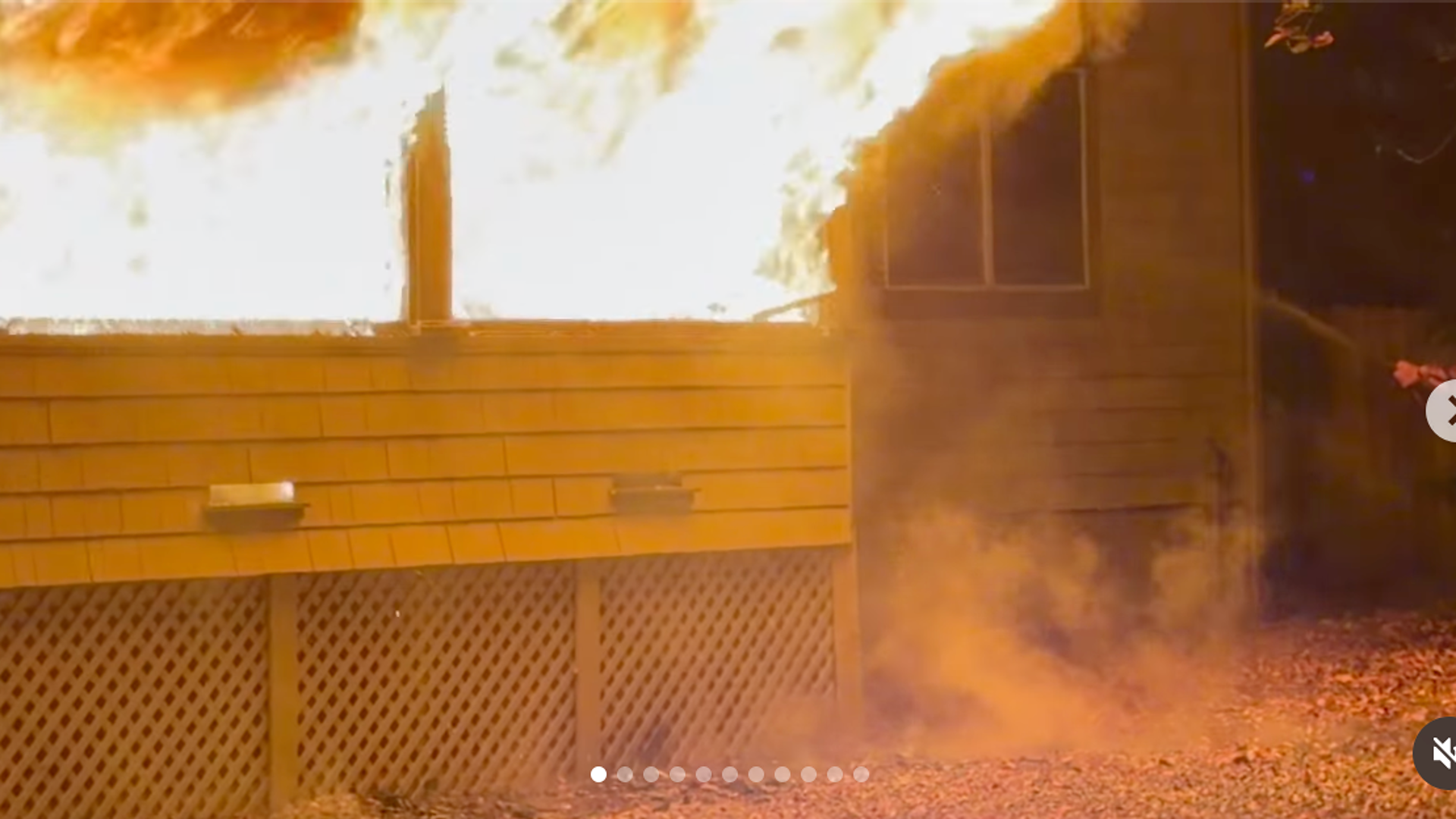
Kari Ann Peniche’s two-story home on East Historic Columbia River Highway in Troutdale, Oregon, burned on the night of Thursday, Nov. 5, after an e-bike battery failed in the living room. Gresham Fire’s fire marshal told KATU that investigators determined the battery exploded while it was charging, and that the house held as many as three e-bikes or scooters. Peniche, a former Playboy model and reality TV personality, said in an Instagram post that her family got out and lost everything else.
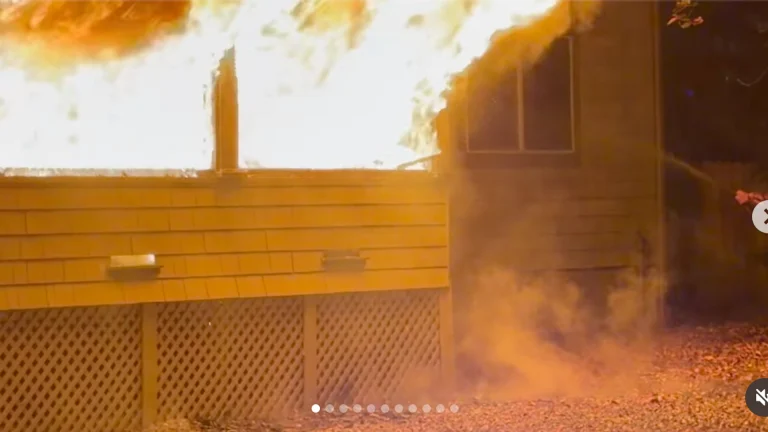
She wrote that a bad smell sent her son looking for the source, until his friend noticed the e-bike battery was smoking. From there, she wrote, “in a matter of seconds our home was engulfed in flames.” The first image in her post shows the house burning at night, seen from the yard.
View this post on Instagram: Kari Ann Peniche (@kariannpeniche)
Video and photos: Kari Ann Peniche via Instagram
What Gresham Fire and the family each say
Shawn Durham, battalion chief and fire marshal for Gresham Fire, told KATU that all six people in the house escaped without injury. The street has no fire hydrants, so Corbett Fire brought water tenders. KATU reported no damage estimate.
Peniche’s post describes a battery that was smoking before it began exploding. Durham’s account, as KATU reported it, adds that the battery was charging at the time. Neither names the bike’s brand, the battery’s maker, or whether the pack carried a UL certification mark, and I found no published investigation report.
A UL mark on an e-bike battery is still optional
That missing detail matters because no federal rule requires one today. In a notice published in the Federal Register on June 24, 2026 (91 FR 38162, docket CPSC-2025-0012), the Consumer Product Safety Commission proposed to require e-bikes to meet UL 2849:2020, with commission modifications, and to cover user-replaceable battery packs under UL 2271:2023. The modifications include tamper-resistant battery enclosures and revised labeling. The notice treats those standards as voluntary today, and the proposal is the step that would bind sellers. Comments were due Aug. 24, 2026, and I did not find a final rule.
The commission’s own count explains the push. From Jan. 1, 2019, through Dec. 31, 2023, it identified 227 incidents involving these products. Fires accounted for 195 of them, along with all 39 deaths and 174 of 181 injuries, and 120 incidents happened while the product was charging. A separate CPSC staff report dated April 2026 ties 19 e-bike deaths between 2017 and 2024 to 13 fire incidents.
Oregon fire marshal data
The Oregon State Fire Marshal’s lithium-ion battery fire report counts 649 incidents from 2020 through 2025, with the yearly total rising from 74 in 2020 to 161 in 2025. E-bikes were the most frequently reported device at 44 incidents, or 6.8 percent. Together with scooters, golf carts and hoverboards, “recreational rideables” made up 111 incidents, or 17.2 percent. The report lists physical damage, electrical misuse, extreme temperatures and manufacturing defects among the common causes, and it counts only fires where the battery was identified in the incident narrative or the equipment field.
By that count, e-bikes are the largest single named source in Oregon and still a small minority of the total. Most of the state’s lithium-ion fires start in something else, which puts Troutdale inside a category that has more than doubled in six years rather than one dominated by bikes.
What happens next
Gresham Fire has not released a damage figure, and I found no lawsuit or claim filed over the fire. Whether the pack was original or aftermarket, and what certification it carried, are details a cause-and-origin report would settle, and none has been published. On the federal side, the commission would have to issue a final rule before any of the proposed requirements bind a seller. Until then, the only party who knows whether a given e-bike battery was tested to UL 2849 is whoever sold it.
Backfire News has covered the enforcement side of this market, including Orange County’s charges against parents over kids’ e-motos. The product-safety side is a federal rule that is still a proposal.
Should Washington require every e-bike battery sold in the U.S. to pass UL testing before it reaches a shelf, or is that cost better left to the manufacturers and retailers who choose to certify?
About the Author