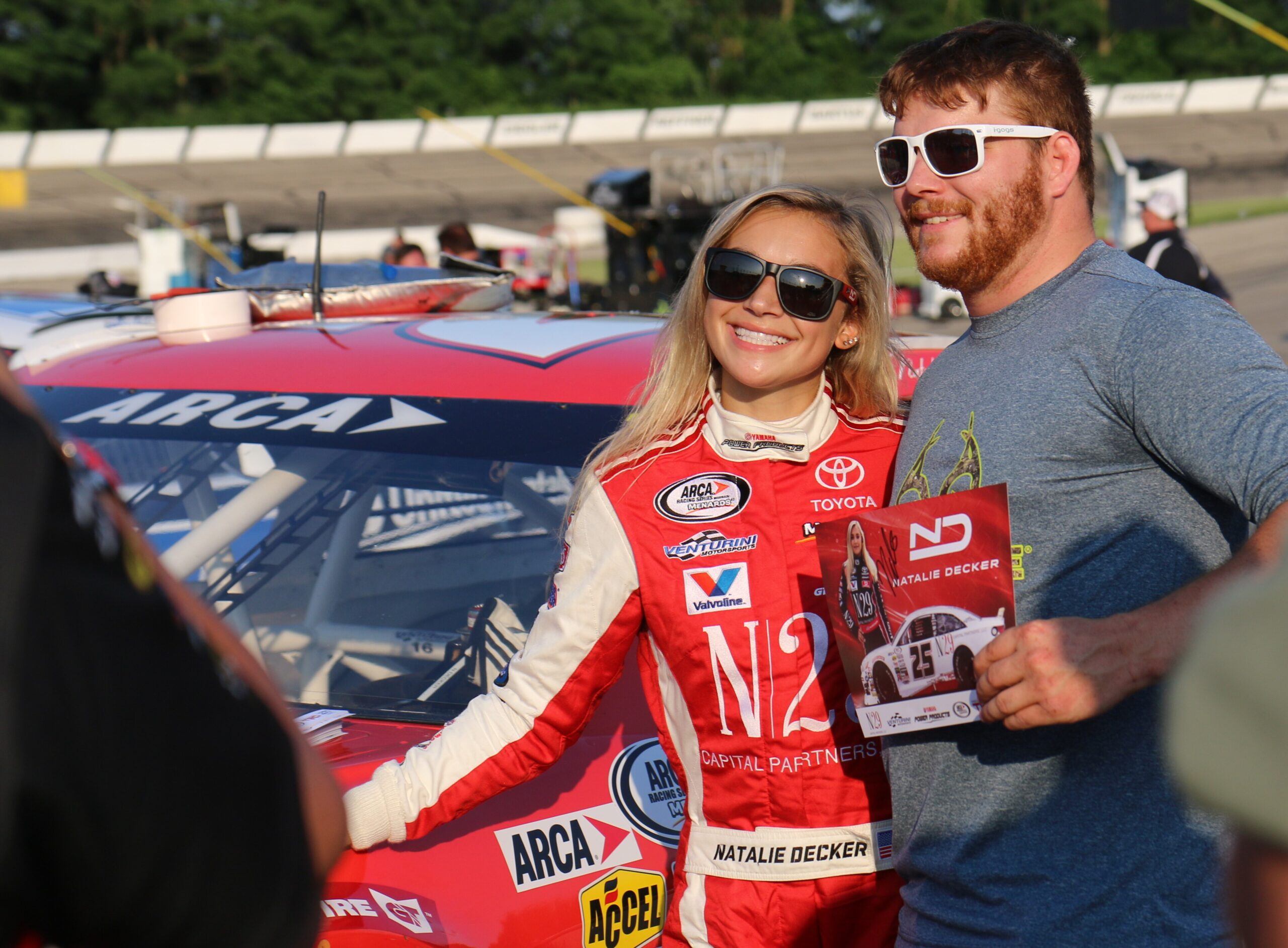
Natalie Decker’s latest NASCAR Truck Series appearance at Dover didn’t just end badly. It unraveled publicly, over the radio, in front of a fanbase that never misses a moment when things go sideways.
How the Meltdown Unfolded
Decker broke down emotionally during the race, venting frustration to her team before eventually parking the truck after 81 laps, ending her day early and effectively walking away from the event. What started as another difficult Truck Series outing quickly turned into one of the more uncomfortable in-race meltdowns NASCAR fans have seen this season, and the moment that really changed the story came when Decker openly questioned whether she even wanted to return to the series at all. During the emotional radio exchange, Decker admitted she was overwhelmed by the backlash she expected online after the incident, and she voiced frustration with the Truck Series itself while struggling to keep her composure over the radio. The mix of anger, pressure, and emotional exhaustion spilled out in real time while the race continued around her.
Why the Backlash Cuts So Fast Now
For NASCAR drivers, especially in the Truck Series, pressure never stays confined to the racetrack anymore. Every mistake, radio transmission, and emotional reaction spreads across social media within minutes — fans clip it, repost it, meme it, and dissect it from every angle, and drivers know that happens. Decker clearly knew what was coming before she even climbed out of the truck, and her comments about the online reaction she expected reveal something bigger than just a bad race. The emotional toll of modern motorsports has changed dramatically over the last several years; drivers aren’t just dealing with team pressure, sponsors, or poor finishes anymore, they’re also managing nonstop public reaction in real time while cameras and scanners capture nearly every moment of frustration. In Decker’s case, the emotional spiral became impossible to hide.
The Truck Series has always been one of NASCAR’s roughest environments. Drivers are fighting for careers, sponsorships, seat time, and relevance every single week, smaller teams struggle financially, and drivers often carry enormous expectations with limited equipment, so mistakes get magnified fast because opportunities can disappear overnight. That environment creates tension even before a race begins, and when a race starts going wrong, things can escalate quickly inside the cockpit — drivers are isolated, frustrated, overheated, and constantly communicating with teams while trying to stay focused at speed. Radio blowups happen in NASCAR all the time, and angry exchanges between drivers and crew chiefs are practically part of the sport’s culture. But this situation felt different because the emotion never sounded controlled. Decker wasn’t just frustrated with the truck or the race — she sounded worn down by everything surrounding the experience, especially the reaction she believed was waiting online once the clips spread.
A Public Image Shaped by Viral Moments
NASCAR fans can be unforgiving when drivers show visible frustration or vulnerability publicly, and social media tends to reward outrage over context. Emotional moments become entertainment instantly, especially when radio traffic leaks out during nationally televised races, and Decker’s meltdown now becomes part of her public image whether she likes it or not. That’s the reality of modern racing — drivers are no longer judged only by finishes or championships, but by viral clips, emotional reactions, and whether fans decide they belong at this level. For women in motorsports, that scrutiny often becomes even more intense, with female drivers frequently facing added pressure to prove they belong in a series that remains overwhelmingly male, and when things go wrong publicly, the reaction tends to be amplified.
The moment is already fueling debate around Dover. Some fans will argue Decker simply reached a breaking point after a brutal day inside the truck. Others will say quitting mid-race damages credibility in one of the toughest motorsports environments in America. Neither side is likely backing down anytime soon, and NASCAR itself probably doesn’t love the attention either. The sport has worked hard to modernize its image and grow engagement through driver personalities, behind-the-scenes access, and radio communication, but moments like this expose the downside of that transparency — fans get authentic emotion, but drivers lose the ability to process frustration privately, and every bad moment becomes content. That creates a difficult environment for struggling drivers already fighting to survive in competitive series with limited support and enormous public pressure, where one emotional collapse can overshadow years of work almost instantly.
What Comes Next for Decker
For Decker, the biggest question now is whether Dover was simply an emotional breaking point or the beginning of a real exit from the Truck Series. Her comments over the radio sounded serious in the moment, but emotions during races can shift quickly once the adrenaline fades. Still, the damage from Dover is already done publicly — fans heard the frustration, the exhaustion, and a driver openly questioning whether the series was even worth the emotional toll anymore, and that may be the most revealing part of the entire situation. Modern motorsports constantly demands more access, more personality, and more raw emotion from drivers, but when those emotions turn difficult in public, the same audience demanding authenticity often turns on drivers for showing it. Natalie Decker’s Dover meltdown didn’t just expose one bad race — it exposed the pressure cooker NASCAR drivers now live inside every single weekend.
About the Author