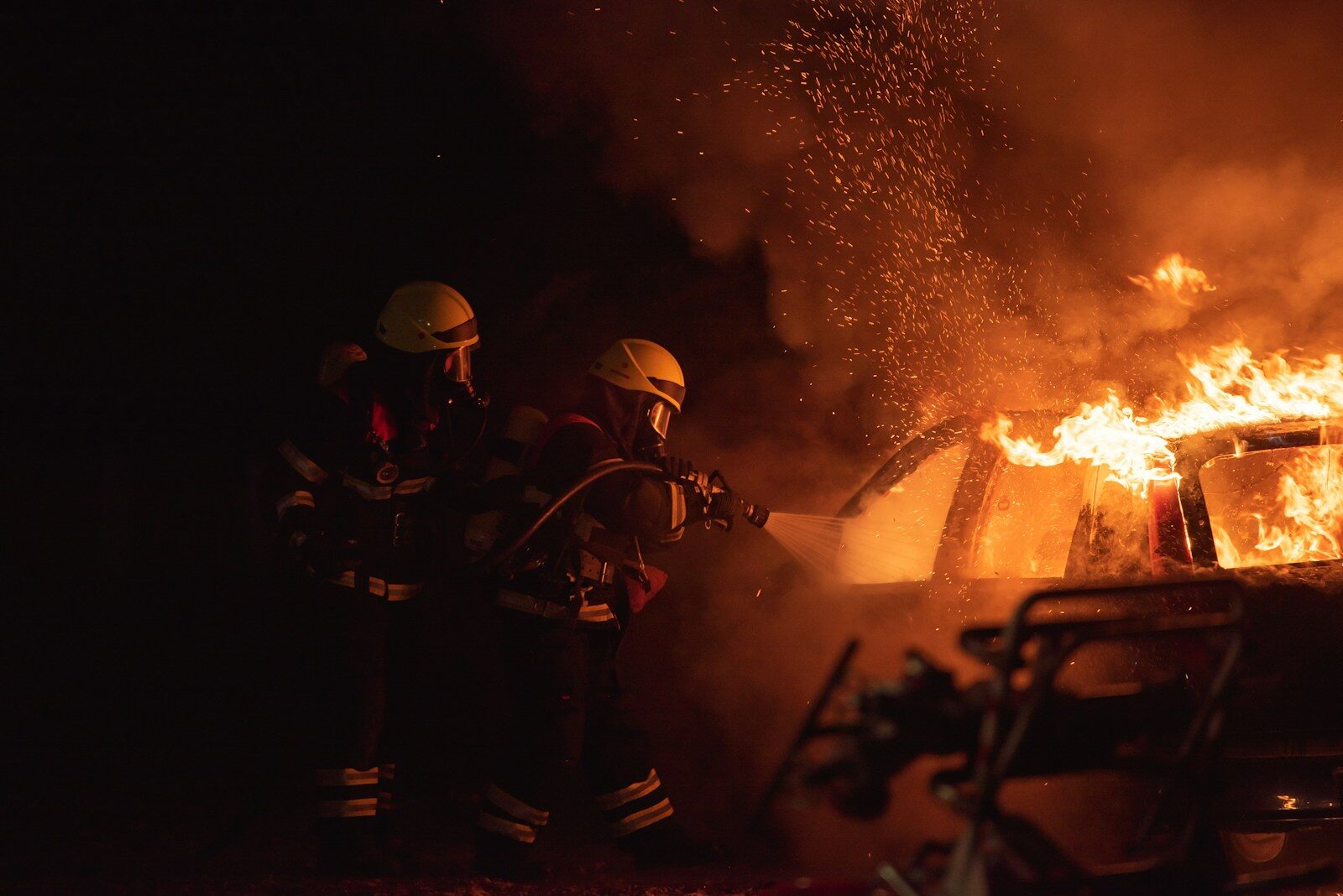
A massive early-morning fire tore through a high-end automotive business in South Calgary on Monday, triggering a full-scale emergency response and leaving behind what could amount to millions in losses. The blaze, which broke out around 4:30 a.m., required an overwhelming response of roughly 75 firefighters and 25 fire trucks to bring under control — an unusually large deployment that signals just how intense the situation became.
At the center of the destruction is Kulu Motorcar, a dealership known for handling exotic and high-performance vehicles, with inventory that has included machines like the Acura NSX and Aston Martin Vantage. The financial stakes were high the moment flames engulfed the building. Nearby tuning shop Tunerworks was also caught in the fallout, sustaining damage despite not being the fire’s origin point.
What Happened, and Why It Escalated So Fast
Early reports suggest that hybrid or electric vehicles may have been involved, adding a dangerous twist to an already serious fire. While officials haven’t confirmed specific models or numbers, the presence of lithium-ion batteries introduces a well-documented hazard: thermal runaway, a phenomenon that can cause fires to intensify rapidly and resist conventional firefighting methods entirely. In past incidents involving EV battery fires, crews have needed extreme measures, including submerging entire vehicles in water, just to fully extinguish them. That history helps explain why such a large volume of firefighting resources was needed in Calgary. Even with that response, the fire caused significant structural damage and likely destroyed or compromised high-value inventory inside Kulu Motorcar. The business has already shut its doors indefinitely, signaling that recovery won’t be quick, or cheap.
The Financial Fallout Could Be Massive
When a dealership specializing in exotic cars goes up in flames, the financial consequences escalate fast. Vehicles in that category can easily reach six figures apiece, meaning even a handful of losses could push total damages into the millions. Insurance will likely play a major role in what happens next — Kulu Motorcar is expected to pursue a commercial claim, but payouts often hinge on the outcome of ongoing investigations. If the cause is tied to a specific risk like battery-related failure, it could complicate the claims process and raise broader concerns for insurers covering similar high-end automotive businesses going forward.
Tunerworks faces its own separate set of challenges. Although customer vehicles were reportedly spared, the company reported damage to its showroom and office space from both the fire itself and the massive amount of water used to fight it. That kind of disruption tends to ripple outward into lost revenue, delayed projects, and strained customer relationships that can take months to fully repair.
Why This Fire Matters Beyond One Shop
This incident goes well beyond a single building fire. It highlights a growing tension in the automotive world: the collision between high-performance culture and rapidly evolving vehicle technology. Electric and hybrid vehicles bring undeniable performance and efficiency advantages, but they also introduce new risks that traditional infrastructure isn’t always prepared to handle. Fire departments are adapting, but incidents like this show just how resource-intensive these situations can become when things go wrong. For enthusiasts and businesses alike, the question isn’t only about safety anymore — it’s about cost, insurance viability, and long-term sustainability. Shops dealing in high-end or electrified vehicles may genuinely need to rethink storage layouts, fire suppression systems, and overall risk management strategies in light of fires like this one.
The Bigger Question Facing the Industry
No injuries were reported, largely because the fire broke out before business hours — the best-case outcome in an otherwise devastating situation. But the bigger issue remains unresolved as investigators work to determine the exact cause. If electric or hybrid vehicles did play a significant role, this fire could reignite a broader debate about how prepared the automotive industry really is for widespread electrification. Are current safety protocols actually sufficient, or are businesses being pushed into a new risk landscape without the tools needed to manage it properly? Because when a single fire demands 25 trucks, shuts down multiple businesses, and potentially wipes out millions in inventory, it stops being just an isolated incident. It becomes a warning sign for every shop handling this kind of inventory.
About the Author