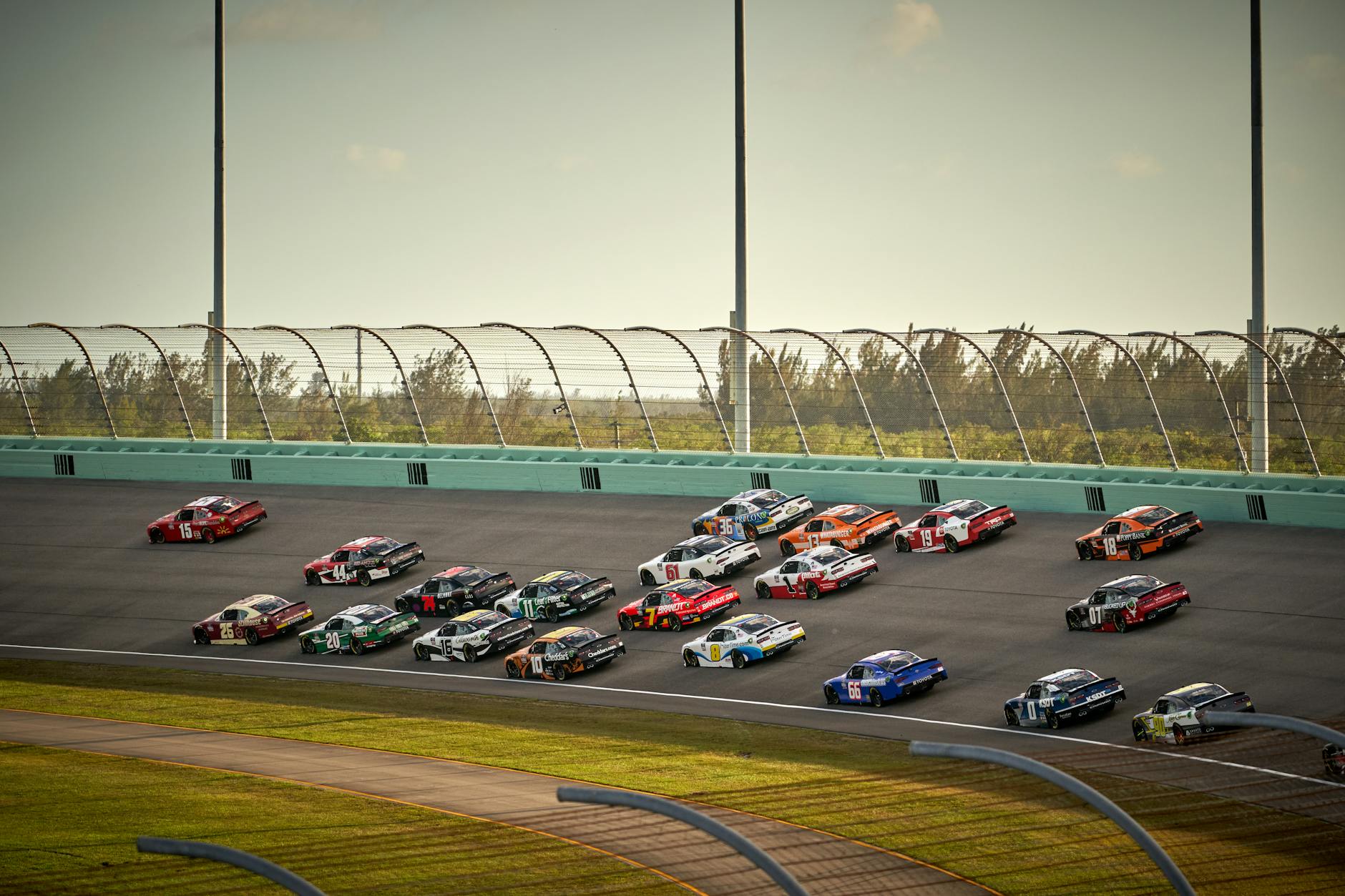
Photo by Alfred GF on <a href="https://www.pexels.com/photo/nascar-cars-racing-on-a-track-11521138/" rel="nofollow">Pexels.com</a>
Garrett Mitchell, known to millions of fans as Cleetus McFarland, is set to make his NASCAR O’Reilly Auto Parts Series debut at Rockingham Speedway on April 4, driving the No. 33 Chevrolet for Richard Childress Racing under a newly announced two-year part-time deal. The move has reignited a debate that’s now pulling in more than one veteran voice.
A Second Respected Voice Joins The Criticism
Kyle Busch was the first to publicly question the move during race weekend at Phoenix, pointing to the gap between McFarland’s experience and that of typical drivers reaching the national series. Now former driver and longtime analyst Kyle Petty has added his own skepticism, addressing the situation during a segment on NASCAR: Inside the Race.
Petty framed his concern around how the sport’s traditional development path is supposed to work. In his view, the road to NASCAR’s national series has historically run through competitive progression: drivers typically start in karting or grassroots racing, move into regional stock car series, and gradually climb through ARCA, the Truck Series, and Xfinity before ever reaching the top level. Allowing a driver to step directly into a national series seat without spending real time on that ladder, Petty argued, raises legitimate questions about how these opportunities get handed out in the first place.
Petty didn’t dismiss the promotional side of the equation entirely. He acknowledged that motorsports has always included marketing elements meant to draw fans and sponsors, and that well-known personalities entering races can genuinely bring new audiences into the sport. His larger point was about the gap between that promotional value and the on-track demands of the O’Reilly Series, which he described as a highly professional level of competition that typically requires years of seat time before a driver can perform consistently.
What Experience McFarland Actually Has
Mitchell built his following on automotive content centered around high-performance builds, motorsports events, and racing-themed entertainment, growing his Cleetus McFarland brand to millions of subscribers and a fan base that closely tracks his racing activity. On the actual racing side, he ran a part-time ARCA Menards Series schedule in 2025, a series that commonly serves as a proving ground for drivers adjusting to larger tracks and stock car competition, and made his NASCAR Truck Series debut earlier this year at Daytona — his first start in any of NASCAR’s three national touring series.
Critics argue that combination still amounts to a small fraction of the experience most national-series drivers accumulate before reaching that level. NASCAR’s development ladder is notoriously difficult to climb, with thousands of drivers competing across regional and developmental series for only a handful of available national-level seats, which is exactly the imbalance Petty and Busch are pointing to.
Why Teams Make This Call Anyway
Despite the criticism, NASCAR team decisions rarely come down to on-track experience alone. Performance potential, sponsor backing, and marketing value all factor into who gets a seat, and drivers who bring significant built-in audiences can help teams secure sponsorship partnerships that keep a racing program financially viable. Richard Childress Racing’s decision to put McFarland in the No. 33 reflects exactly that business calculus: a high-profile personality behind the wheel can generate engagement, attract new viewers, and create attention for the team and its sponsors well beyond what a typical rookie debut would draw.
Rockingham Speedway itself carries real weight in NASCAR history, known for producing tough, technical races that test car control as much as raw speed, which makes it a demanding proving ground regardless of a driver’s background. Whether McFarland is competitive there or struggles against a field of far more experienced drivers remains to be seen, but the debate his debut has sparked, now involving two respected veteran voices, is already one of the most talked-about storylines in NASCAR this season. That conversation’s direction will likely hinge entirely on what happens when he actually takes the green flag on April 4.
About the Author