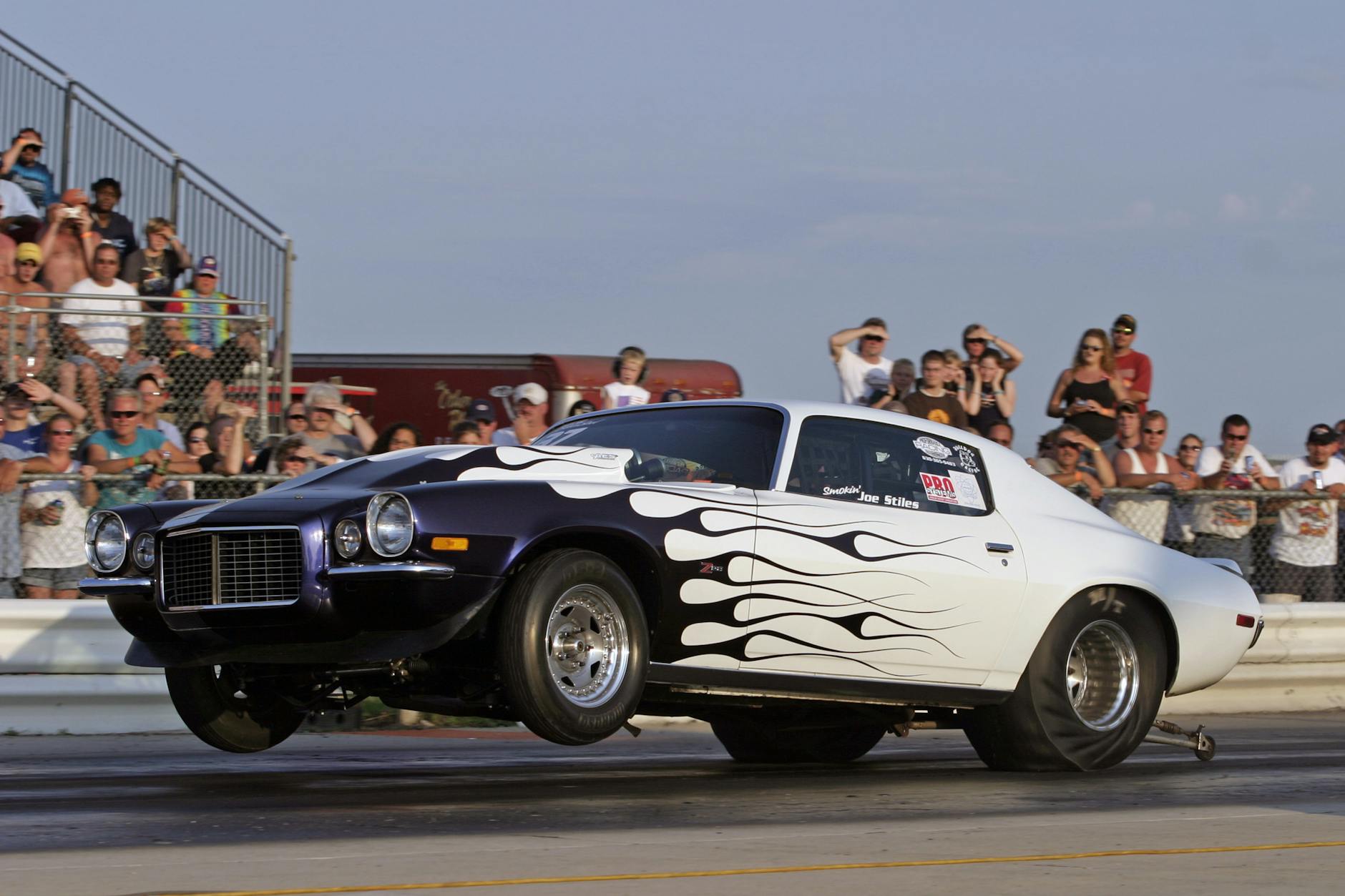
Photo by Dale Bryant on <a href="https://www.pexels.com/photo/dramatic-drag-race-car-launch-with-spectators-35502866/" rel="nofollow">Pexels.com</a>
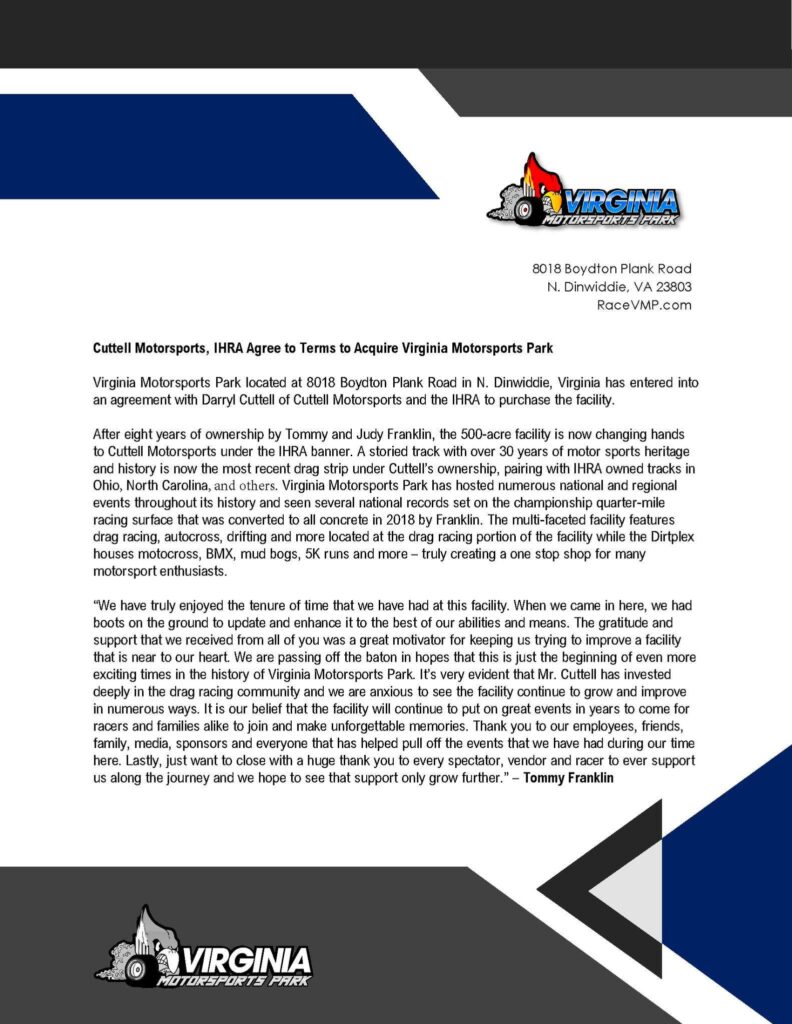
IHRA has made another significant land move, this time on the other side of the country from its Atlanta Dragway purchase. Virginia Motorsports Park, a 500-acre facility in North Dinwiddie, Virginia, has entered into an agreement to be purchased by Darryl Cuttell of Cuttell Motorsports under the IHRA banner, ending eight years of ownership under Tommy and Judy Franklin.
A Track With Real History Changing Hands
On its face, this is a straightforward ownership transition for a respected East Coast venue with more than 30 years of history. The facility’s all-concrete quarter-mile surface, converted in 2018, has hosted national and regional events and set multiple records over the years, and the multi-use complex extends well beyond drag racing to support autocross, drifting, motocross, mud bogs, BMX, and more. Tommy Franklin framed the handoff as a passing of the baton rather than a retreat, describing Cuttell as deeply invested in the drag racing community and expressing confidence in the track’s continued growth.
Why This Deal Is Bigger Than One Track
Virginia Motorsports Park now joins IHRA-aligned properties in Ohio, North Carolina, and elsewhere, and that pattern matters more than any single transaction. Adding tracks to a portfolio rather than simply sanctioning events at facilities owned by others is expansion, not maintenance, and expansion of this kind usually signals a deliberate long-term strategy rather than opportunistic land buying.
That strategy becomes especially relevant given IHRA’s other recent move: officially acquiring Atlanta Dragway in Banks County, Georgia. Taken together, the two deals suggest a sanctioning body building a connected national footprint of owned tracks rather than a loose network of independently owned venues it merely sanctions events at.
What Ownership Alignment Actually Buys a Sanctioning Body
When a sanctioning body owns the tracks it schedules events at, rather than negotiating separately with independent owners, it typically gains clearer scheduling control, stronger national cohesion across its event calendar, and more predictable long-term planning. It also gains leverage, both with racers who now depend on IHRA-controlled venues and with the broader industry watching how the sport’s infrastructure consolidates.
What Comes Next
If IHRA continues acquiring tracks at this pace, the drag racing map could look meaningfully different within a few years, with fewer independently owned national-level facilities and a tighter, more centrally controlled calendar. For now, what’s confirmed is straightforward: Virginia Motorsports Park is entering a new chapter under IHRA alignment. What’s less clear is how many more of these deals are still coming, because a sanctioning body that starts buying real estate at this pace usually isn’t thinking about just one or two tracks.
About the Author