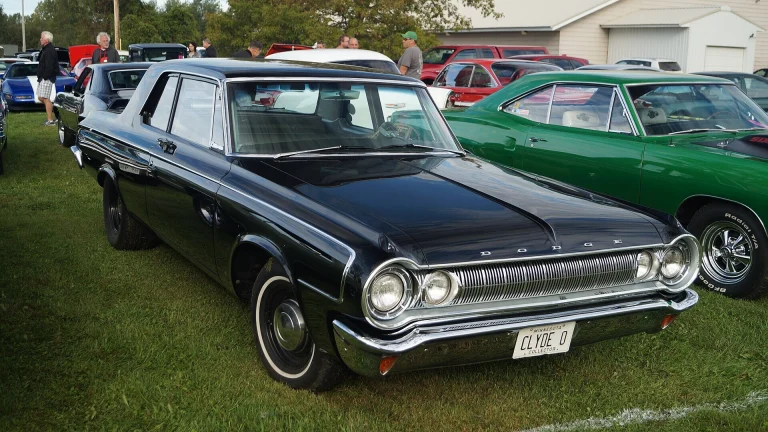
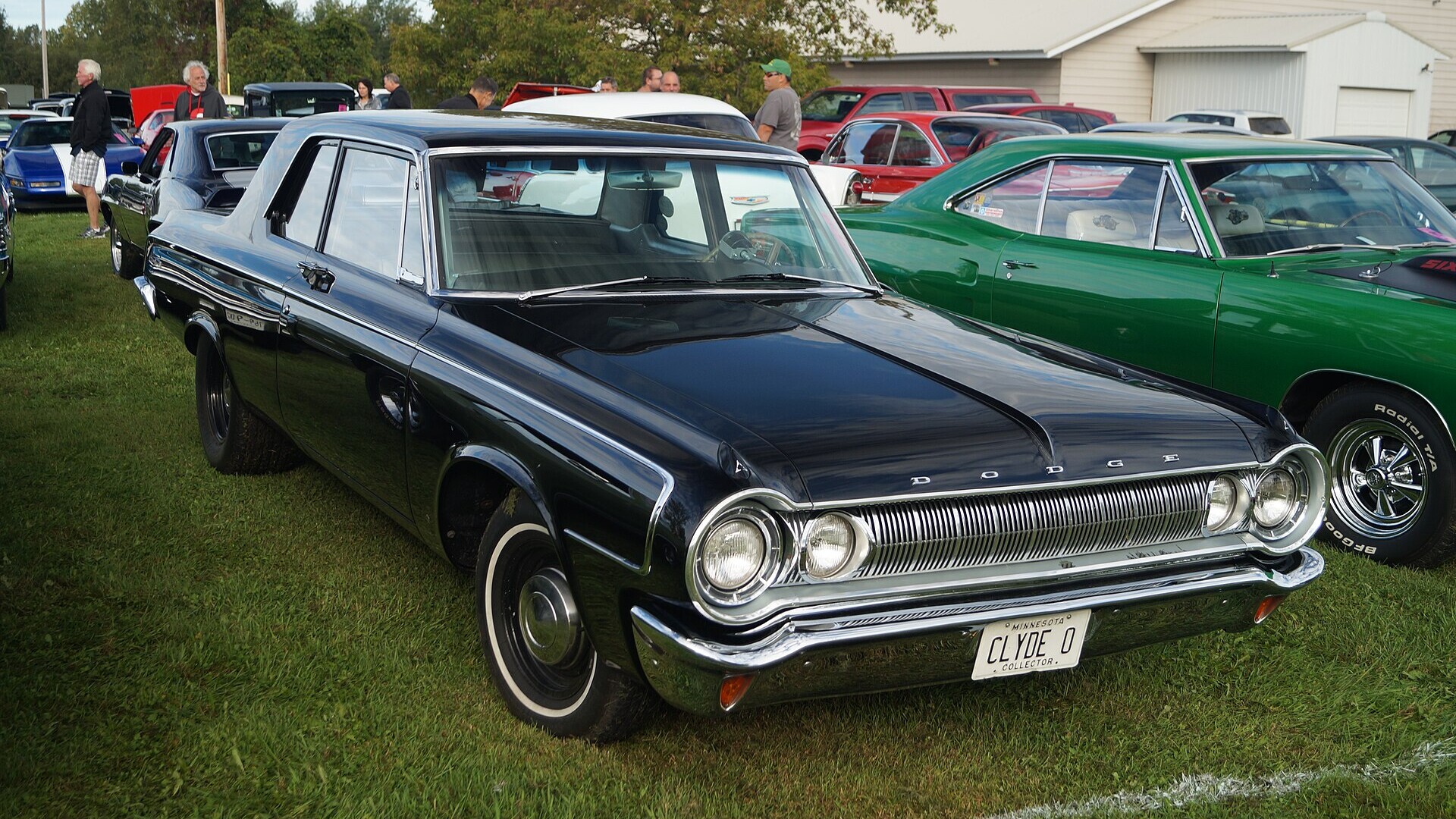
A 1964 Dodge 330, the same model as the legendary "Golden Eagle." Photo: Greg Gjerdingen via Wikimedia Commons (CC BY 2.0)
Every haunted-car list eventually gets to the “Golden Eagle,” a 1964 Dodge 330 said to have served as a police cruiser in Old Orchard Beach, Maine. The story says the car has killed at least 14 people, maybe as many as 32. It’s one of the most dramatic legends in the genre, and we couldn’t find a single piece of evidence for any of it.
The usual version runs like this. Three officers who drove the car in service each killed their families and then themselves. After it was retired, people who vandalized it or even touched it met terrible ends: struck by lightning, killed by passing trucks. A 2008 dare to touch it supposedly came right before a family murder and house fire. The doors are said to open on their own at highway speed. At one point a church group is supposed to have cut the car up, only for an owner to put it back together. Some versions even claim it inspired Stephen King’s Christine.
Every one of those claims is repeated from one website to the next, and none of them comes with a name, a date that can be checked, or a source. That’s a real problem for a story this size. Three murder-suicides involving police officers in one small Maine town would have been huge news. There would be obituaries, court records, newspaper coverage and probably a few books. We couldn’t find any of it. The Christine connection is unsupported too; we found nothing tying a Maine cop car to King’s account of where that book came from.
The death toll is a clue in itself. When a story can’t decide whether a car killed 14 people or 32, nobody has been keeping track of real events. That’s how urban legends grow. Each retelling adds a victim or two, and nobody goes back to check.
For a car that has supposedly killed 32 people, the Golden Eagle has left an amazingly thin paper trail. No obituaries, no court files, no plate number. In the collector world, value comes from things you can check: build records, ownership history, period photos, matching numbers. A car whose main selling point is an unsourced blog post can’t be insured, appraised or financed on the strength of that story. No serious auction house is going to put “allegedly killed its owners” in a lot description, and no careful buyer is going to pay extra for it.
Compare that with some of the other cars in this series. Bonnie and Clyde’s Ford and Pancho Villa’s Dodge are grim artifacts, but their histories are backed by records, witnesses and decades of documentation. People can argue about what those cars mean. Nobody argues about whether the events happened.
A 1964 Dodge 330 police car doesn’t need a body count. Big Mopar, plain body, real period character, and zero confirmed victims. Enjoy the Golden Eagle story around the fire pit if you like, but file it under folklore. If anyone ever turns up a police report, an obituary or a newspaper clipping that ties this car to a single death, we’ll happily revisit it. Until then: what’s the wildest cursed-car story someone has told you as fact, and did they ever show you a source?
Sources
- 1964 Dodge “Golden Eagle” Killed at Least 14 People, Puts Christine to Shame
- Golden Eagle Car — AltDriver
About the Author