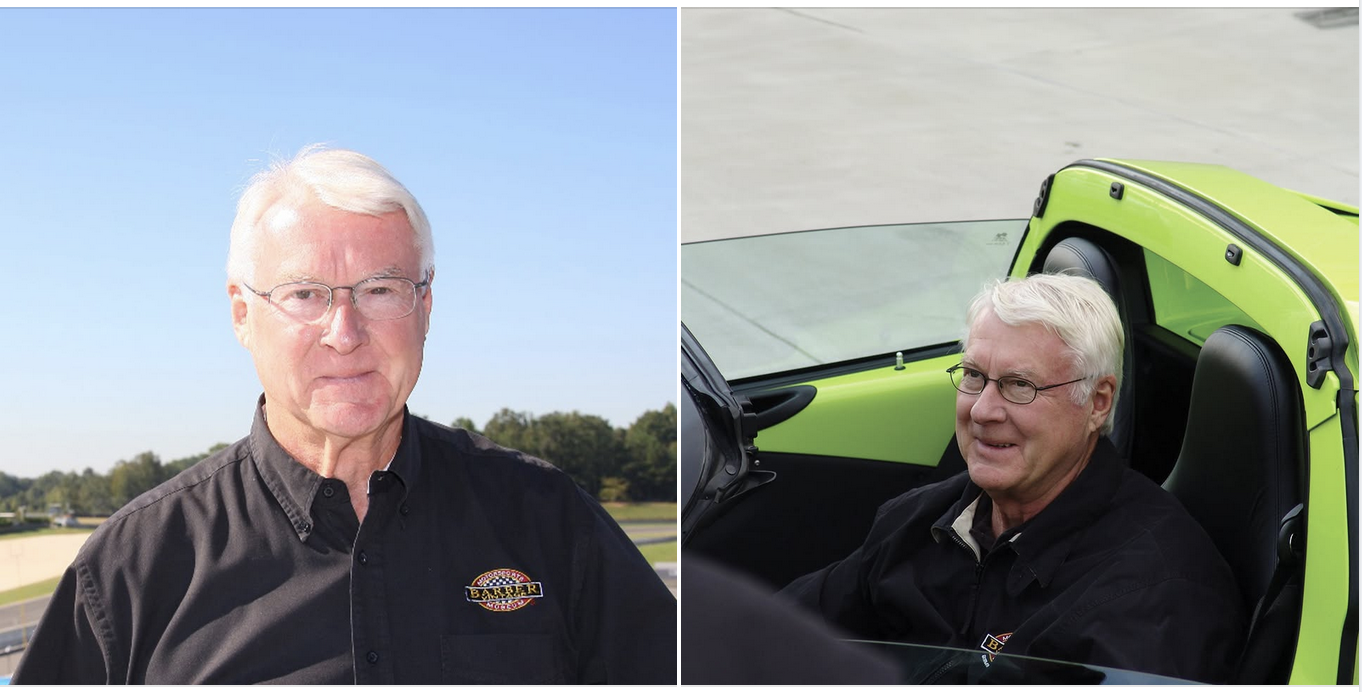
George Barber Jr., founder of the Barber Vintage Motorsports Museum and one of the most influential figures in American motorsports preservation, has died at 85. The museum confirmed his passing in a statement: “We are deeply saddened by the passing of George Barber. He built more than an organization—he built a community. We are grateful for his vision and leadership, and we will share additional information in the days ahead.”
From Dairy Magnate to Motorsports Visionary
Barber’s legacy extends well beyond motorcycles. He first built his fortune as founder of Barber Dairies, growing a regional dairy operation into a major Southern brand before eventually selling the company. It was what he chose to do afterward that cemented his place in motorsports history. A racer himself in his younger years, Barber developed a passion for collecting and preserving motorcycles at a scale few private collectors could match, and what started as a personal collection grew into a mission to preserve two-wheeled history on a global scale.
The World’s Largest Motorcycle Collection
In April 2014, Guinness World Records officially recognized the Barber Vintage Motorsports Museum as home to the world’s largest motorcycle collection. Located in Birmingham, Alabama, the museum houses more than 1,800 motorcycles from over 200 manufacturers, alongside rare race machines and historic automobiles. The adjacent Barber Motorsports Park grew into a world-class road racing venue in its own right, hosting motorcycle racing, sports car competition, and international events, and it’s widely regarded as one of the most visually striking and meticulously maintained circuits in North America.
Preserving Eras, Not Just Machines
Barber didn’t simply collect motorcycles. He preserved eras of engineering and racing history, and his approach was never about static display cases. Many of the motorcycles in the collection remain fully operational today, a direct reflection of his belief that mechanical heritage should be experienced running rather than just observed behind glass.
In an era when corporate consolidation and shrinking margins have squeezed out plenty of enthusiast-focused spaces, Barber built something that was designed to last well beyond him. The museum became a genuine pilgrimage site for riders, racers, and historians traveling from around the world specifically to see it.
A Legacy Built to Outlast Him
Barber wasn’t chasing headlines with what he built. He was building an institution designed to outlast its founder, and at 85, he leaves behind far more than a museum and a racetrack. He leaves an institution that reshaped how motorsports history gets preserved in America. Additional details and memorial information are expected in the coming days, and for now, the machines he saved stand as their own proof of what one person decided was worth protecting.
About the Author