The clash between Ford and an aftermarket builder over Mustang GTD-inspired styling didn’t blow up yesterday – but the message behind it keeps getting louder. As automakers move harder to protect their high-end designs, a dispute that surfaced a few years back now reads less like an isolated legal spat and more like a warning shot the industry can’t ignore.
Shop Backfire News merch here.
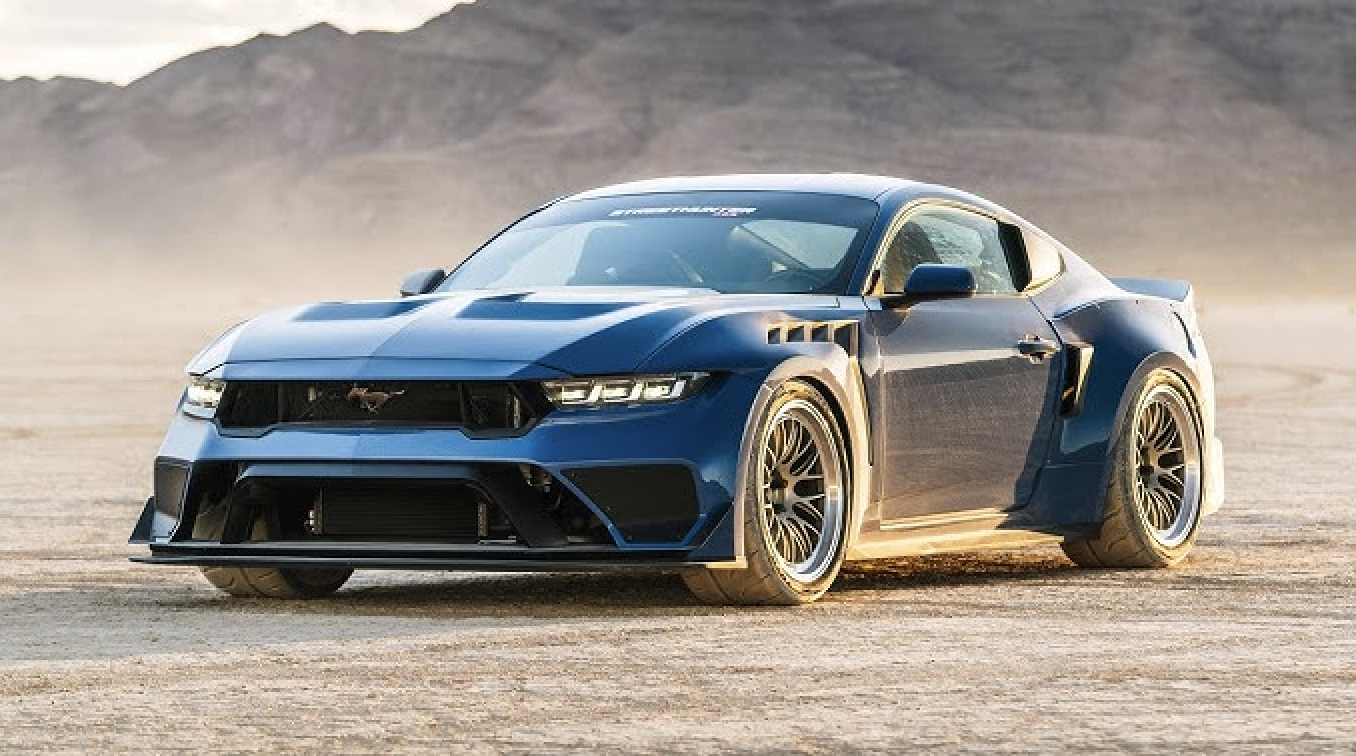
It traces back to Ford’s response to a proposed body kit from Street Hunter Designs, the aftermarket company founded by YouTuber TJ Hunt. The kit never officially launched, but it closely mirrored several defining visual cues of the Mustang GTD – Ford’s most extreme Mustang to date, priced around $325,000 and built to be a halo car for the brand.
Per reports at the time, Ford fired off a cease-and-desist before the kit could reach the market. The argument: the widebody proportions, aggressive aerodynamics, and sculpted design language tied to the GTD weren’t just styling cues, but protected elements bound to the flagship’s identity and exclusivity. Let look-alike parts circulate, Ford reasoned, and you blur the line between a limited-production statement and mass-market imitation.
Street Hunter pushed back in public, calling the move an overreach that threatened long-standing norms in the aftermarket. Builders have always borrowed, reinterpreted, and evolved factory styling – inspiration has been baked into the culture for decades. But Ford’s stance hinted at a shift: once a design becomes central to brand prestige and price, reinterpretation may no longer be tolerated. And that shift has only picked up speed since.
Automakers today treat design language as intellectual property far more aggressively, especially on high-margin or limited cars. Styling isn’t just aesthetics anymore – it’s branding, differentiation, and profit protection. Halo cars like the GTD are meant to signal engineering dominance and exclusivity, and manufacturers are less and less willing to watch those signals get diluted.
What makes the Ford-Street Hunter fight so relevant now is how cleanly it foreshadowed where things were headed. Similar tensions have surfaced across the aftermarket since, with builders facing more scrutiny over replicas, conversions, and look-alike parts. The gray area between inspiration and infringement is shrinking fast.
For aftermarket companies, the stakes are real. Many lean on factory designs as the foundation for their creativity and customization work. If manufacturers keep tightening their grip on visual identity, the room for reinterpretation could narrow hard – and smaller builders especially may find themselves wading through legal risk that simply didn’t exist a decade ago.
For buyers, the impact is quieter but no less real. Customization has always been part of car culture’s appeal: the idea that owning a car includes the freedom to make it yours. As automakers claim more control over how their designs can be echoed or modified, that freedom may start coming with strings attached.
Ford’s move was never really about one body kit or one builder. It was about drawing a boundary – and years later, that line hasn’t faded. If anything, it’s become a reference point in a much bigger struggle over who controls automotive design once a car rolls off the showroom floor. The aftermarket didn’t transform overnight because of the GTD dispute, but it got a clear glimpse of the future: one where performance branding is guarded as fiercely as the cars themselves, and where inspiration alone may no longer be enough to stay out of trouble.
About the Author