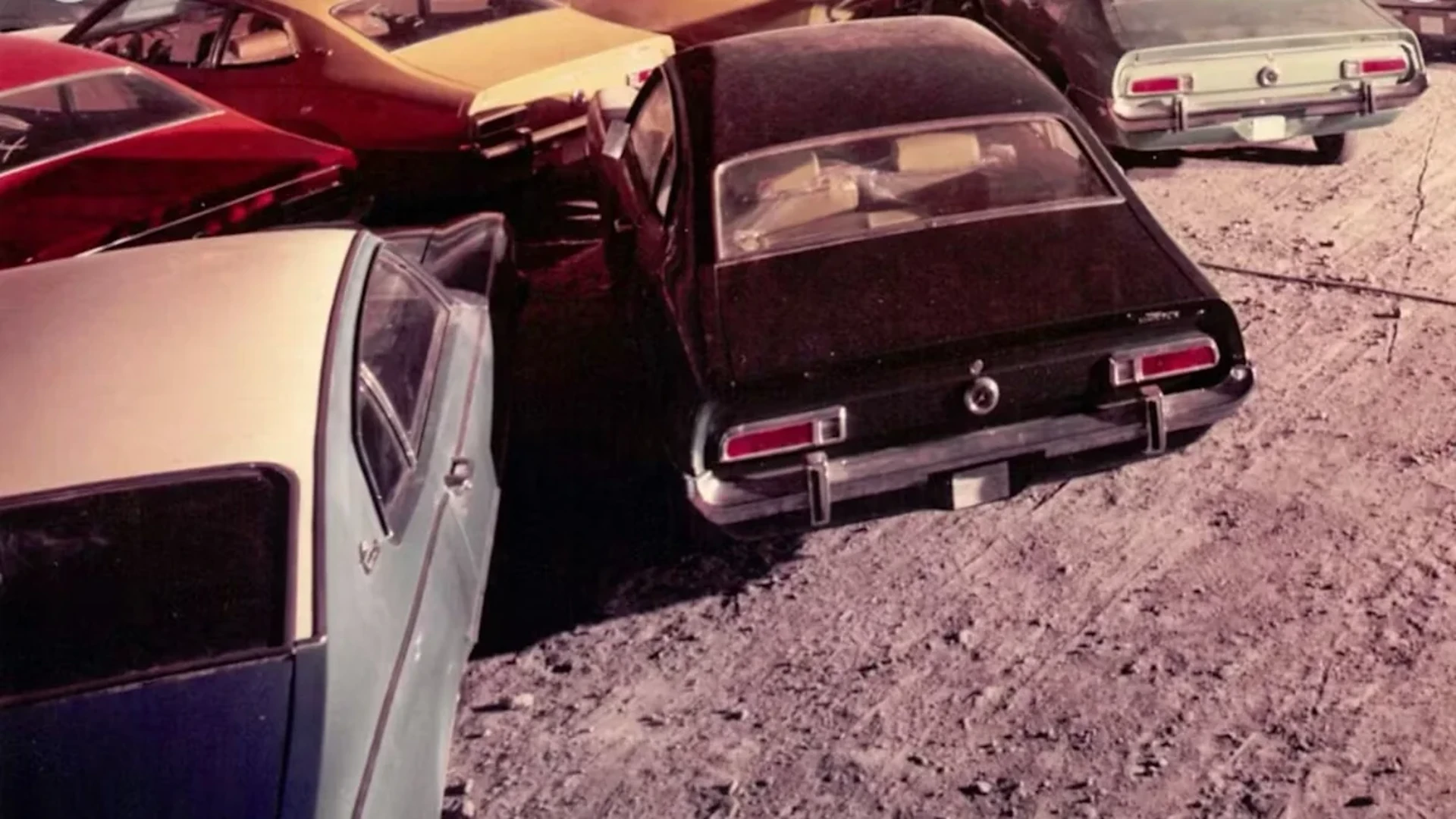
Photo: Hunt Midwest via @speedsuspectsnews / Instagram
The photo of unsold Ford Mavericks lined up in a limestone cave beneath Kansas City has made the rounds online for years, and we’ve covered the story ourselves more than once. What usually gets left out is the part that makes it more than a quirky 1970s snapshot. Ford never really left SubTropolis. Six decades after it moved in, the automaker’s vehicle logistics are still running out of the cave, up to 160 feet below the Missouri dirt.
How Ford Ended Up Underground
SubTropolis started life as a limestone mine. Midwest Precote, a regional asphalt producer, began digging there in 1945, leaving behind a grid of 40-foot-wide tunnels held up by 25-foot-square limestone pillars. In 1964, Hunt Midwest, the company tied to Lamar Hunt, opened the mined-out space as an underground business complex.
Ford was there almost from day one. Hunt Midwest counts the automaker among SubTropolis’ first tenants in 1964, and its Kansas City Assembly Plant sat a short drive away in suburban Claycomo. The cave stays between 65 and 70 degrees year-round, with no hail, no tornadoes, and no need for heavy climate control, which made it an easy sell for a company with a lot of expensive metal to protect.
Where the Mavericks Come In
The Maverick arrived in the spring of 1969 as a 1970 model, a cheap, simple compact aimed squarely at imports like the Volkswagen Beetle. It was an instant hit, moving more than half a million units in its first model year. Kansas City Assembly was one of the plants cranking them out.
By the early 1970s, Ford had leased roughly 25 acres underground for vehicle inventory storage. The widely shared photo shows rows of unsold 1973 Mavericks parked shoulder to shoulder in the cave, waiting for demand to catch up with production. Exactly how many cars went down there, and for how long, has never been nailed down publicly, and Ford hasn’t exactly been eager to revisit it. That silence is part of why the story keeps resurfacing. One former Claycomo worker has even claimed online that he spent time scrubbing protective cosmoline off stored Mavericks before they shipped.
The timing is interesting, too. The OPEC oil embargo hit in late 1973, and suddenly a relatively thrifty compact looked a lot more appealing. Whether Ford got lucky or simply waited out a soft patch, the cave let it hold inventory without flooding dealers or slashing prices. We broke down that 1970s sales-slump angle in more detail earlier this year.
Ford Is Still Down There
Here’s the part most retellings skip. According to Hunt Midwest, automotive users now lease about 1 million square feet inside SubTropolis. That includes Ford’s North American Vehicle Logistics Outbound Shipping facility, along with aftermarket upfitters and space that supported the launch of the Transit cargo van. Hunt Midwest has also built out an “Automotive Alley” around the complex, with more than 130 acres of automotive operations minutes from the Claycomo plant.
That matters because Kansas City Assembly is still one of Ford’s most important plants, building F-150s and Transits. When production gets tangled up, like the recent F-150 slowdown in Dearborn and Kansas City, having a climate-controlled logistics hub a few miles away is a real advantage.
Why the Cave Still Makes Sense
The economics haven’t changed much since the 1960s. Hunt Midwest pitches 50 to 70 percent savings on total energy costs because the rock keeps the temperature stable without much help. Ford isn’t alone, either. The U.S. Postal Service runs its collectible stamp operation from SubTropolis, and the National Archives and the EPA have facilities there as well.
The Maverick itself bowed out after 1977, replaced by the Fairmont, before the name came back decades later on a compact pickup that has its own fan club. Some owners are even cramming twin-turbo Coyote V8s into them. The original car’s legacy, though, might be that grainy photo of cars hidden in a cave, and the reminder that Ford’s underground parking lot never actually closed.
Lead image: Hunt Midwest, via @speedsuspectsnews on Instagram
About the Author