Photo: California Highway Patrol / Instagram
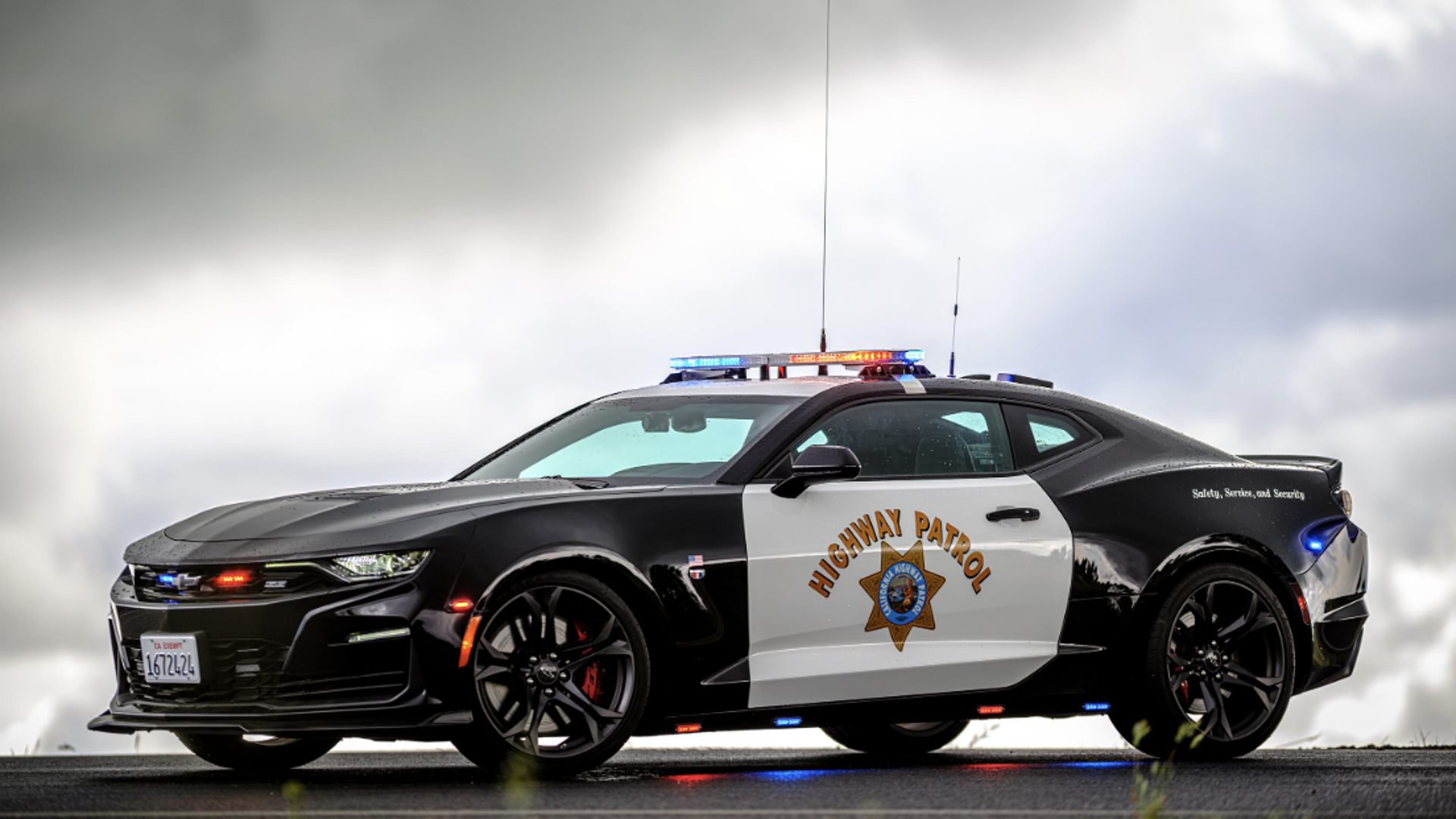
The joke writes itself: a black-and-white Camaro SS 1LE with a light bar, so don’t bother running. The California Highway Patrol’s own policy manual tells a different story. The state wrote rules for this car that strip out nearly everything that makes a 1LE a 1LE.
CHP Fleet Operations announced on its Instagram account that its final Camaro is heading into service. That’s a neat trick for a car Chevrolet stopped building years ago. When Chevrolet announced the end of the sixth-generation Camaro, it said the car would retire after the 2024 model year, with the last examples leaving Lansing Grand River Assembly in Michigan in January 2024. CHP hasn’t said where this one has been since.
What CHP actually bought
The SS 1LE was the serious version of the V8 Camaro, not a trim package. This auction listing describes the LT1 as a 6.2-liter V8 rated at 455 hp and 455 lb-ft. The 1LE package adds an electronic limited-slip differential, magnetic suspension, Brembo brakes, a front splitter, and 20-inch forged wheels.
Related Articles
- 10 Celebrities With the Best Car Collections (Verified Rides and Wild Rumors)
- Volkswagen’s Boss Secretly Put a 10-Cylinder Engine in a BMW M5 to Beat BMW, Then Drove It Himself. It Cost €2 Million, and It’s Up for Auction.
GM’s own option codes, reproduced in a dealer inventory listing, go further. They list six-piston monobloc front calipers, FE4 performance suspension, Magnetic Ride Control, and summer-only 285/30R20 front and 305/30R20 rear tires. The same codes show auxiliary oil and transmission fluid coolers.
There’s also a California-specific detail on that sheet. Cars shipped to California or Washington require a copper-free performance brake system. So the state’s environmental rules reach this patrol car’s brake pads too.
The manual reads like a parent handing over the keys
The surprise is in the Highway Patrol Manual. In November 2025, CHP added Chapter 8, a section devoted to operating the Camaro. The rules are strict:
- Training: Every officer assigned to the Camaro must complete specialized training at the CHP Academy first.
- Weather: The car should not be driven during prolonged rain or bad weather without a supervisor’s sign-off.
- Drive mode: It must stay in Tour Mode. Officers may not select Sport, Track, Snow/Ice, or any other performance mode.
- Launch control: It is banned.
- Traction and stability control: Both must stay on at all times.
- Noise: Officers may not rev the engine just to make noise.
That’s an SS 1LE running in its gentlest setting, with its electronic safety nets locked on, and parked when it rains. You’re more likely to be caught by the radio than by a launch-controlled V8.
Read the restrictions as engineering notes
Each rule has a mechanical reason behind it. The rain restriction follows directly from those summer-only tires. They give excellent dry grip, but they lose a lot of it on wet pavement, and they get worse as they wear and as temperatures drop.
The parking rules are about clearance. Officers must back into spaces when possible to protect the front undercarriage, and must take extreme care on unpaved surfaces. A splitter that low will catch on a curb or a dirt shoulder.
One line shows this was never a purpose-built police car. The manual notes that the Camaro has no protected-idle or secure-park feature, so officers must lock it whenever they leave it running unattended. A purpose-built pursuit vehicle prevents a thief from driving off while the engine idles. This one is a civilian performance car with a light bar added.
The manual also flags a visibility problem. It warns that the Camaro’s design limits rear and side visibility, and asks for extra caution during pursuits and when clearing intersections. Anyone who has tried to merge in a sixth-generation Camaro knows exactly what that means.
CHP is keeping score
The most revealing line is about tracking. All activity in the Camaro is logged under special project code 775, and officers must put that code on their daily field records and enforcement paperwork. That suggests CHP is treating the car as a measured experiment. The department can compare the Camaro’s stops and citations against the rest of its fleet.
Related Articles
- Elon Musk’s Car Collection: A Crashed McLaren, a Bond Submarine and a Roadster in Deep Space
- Sydney Sweeney Films Herself Wrenching on a Vintage Bronco While Just 1.8% of U.S. Auto Technicians Are Women
The maintenance rule is equally cautious. The car must come out of service at the first warning light, mechanical fault, or unusual behavior, and stay out until a CHP or dealership technician inspects it. GM stopped building the Camaro in 2024. CHP can’t just order another one from the factory.
About actually running
The “don’t bother running” joke still holds up, but for legal reasons more than horsepower. Under California Vehicle Code 2800.2, fleeing an officer with willful or wanton disregard for safety can bring state prison, or six months to a year in county jail, plus a fine of $1,000 to $10,000. The law counts three or more point-carrying violations during the flight, or any property damage, as meeting that standard. In a real attempt to get away, three violations can pile up in seconds.
The takeaway
CHP gets one last V8 Camaro, and enthusiasts get a policy document that explains the car more honestly than any brochure. A 455-hp, summer-tire, low-slung track special makes a poor all-weather patrol car. California’s response was to put it in Tour Mode, keep it out of the rain, and track every stop it makes. Smart experiment, or the most heavily chaperoned recruiting poster in the state?
Images Via: California Highway Patrol on Instagram
About the Author