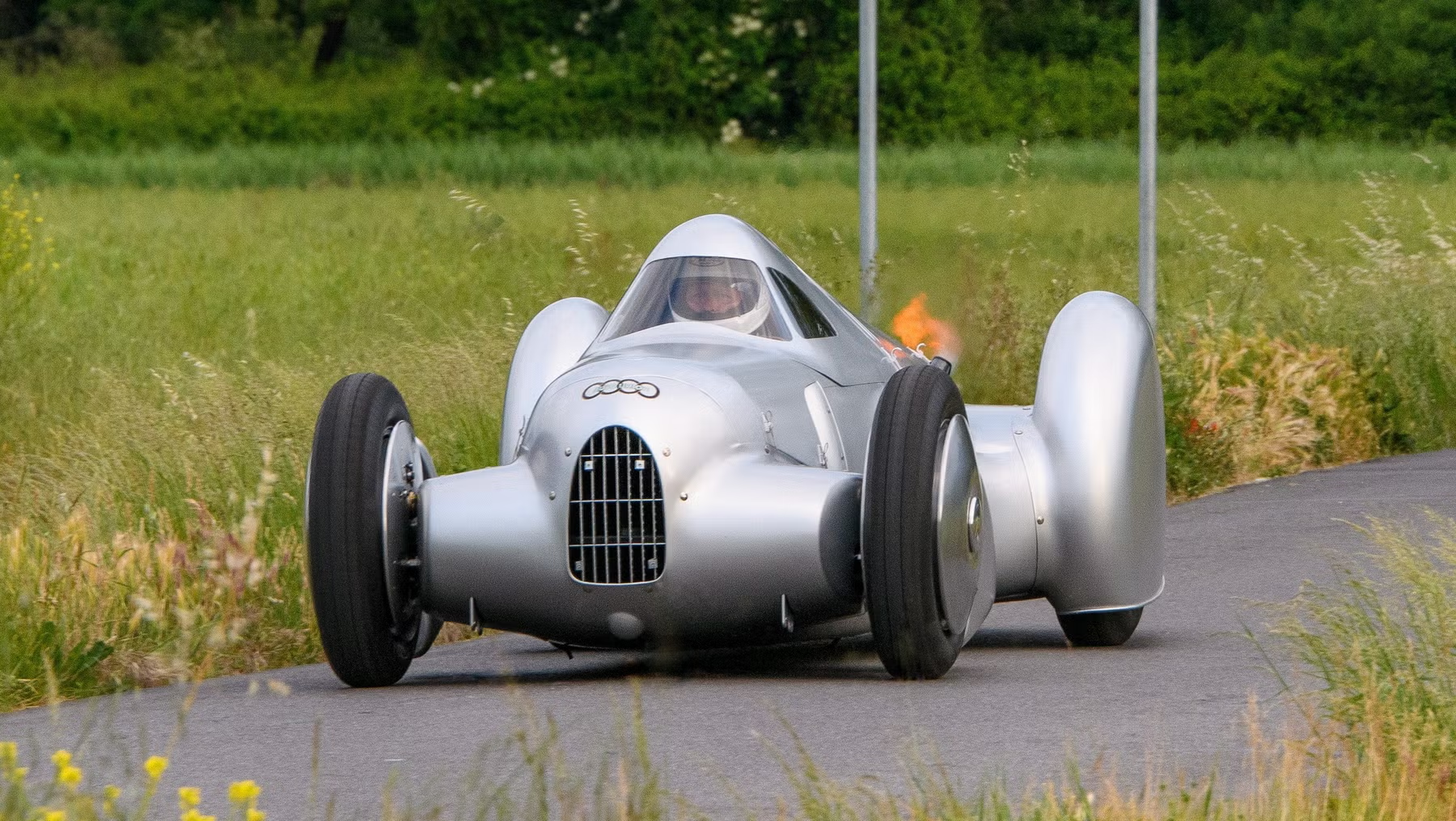
Back when automakers used racing and raw speed to humiliate each other in public, Auto Union built one of the most outrageous machines Europe had ever seen. Now Audi has brought it back from the dead.
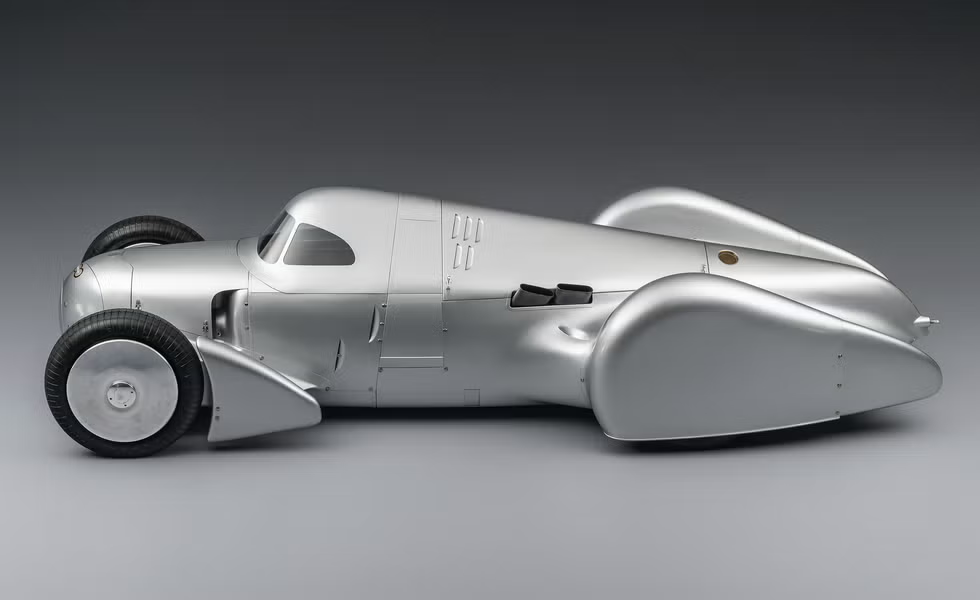
The newly revived Auto Union Lucca, also known as the Rennlimousine, isn’t some modern electric concept wrapped in marketing language. It’s a hand-built recreation of a real 1930s speed-record weapon powered by a massive V-16 engine, designed during one of the fiercest rivalries in automotive history, and unlike most museum pieces, this one is actually going to move — Audi plans to run the recreated car at this year’s Goodwood Festival of Speed. That matters because the Lucca represents something the modern industry has almost completely abandoned: extreme engineering built purely to dominate, shock people, and beat rivals at all costs. In a time when headlines are flooded with crossover SUVs and sanitized EV launches, Audi showing up with a revived 16-cylinder land missile from 1935 feels almost rebellious.
A 1935 Monster That Broke 200 MPH
Auto Union, which included Audi as one of its four member brands, had already set multiple world records in 1934 using its Type A Grand Prix car. Mercedes responded almost immediately with its own purpose-built speed machine, averaging more than 196 mph over a flying-start mile. Instead of accepting second place, Auto Union engineers went back to work over the winter and created something radically different. Starting with the open-wheel Type A race car, they transformed it into a streamlined silver projectile with enclosed rear wheels, aerodynamic front wheel covers, and an impossibly narrow body. The cockpit barely had enough room for a driver, fresh-air intakes were tucked into the rear spine of the body, and exhaust pipes exited just ahead of the rear wheels. Every inch of the car was shaped around one goal: slicing through the air faster than Mercedes. The result looked less like a conventional race car and more like something pulled from a science-fiction sketchbook.
What made the Lucca especially wild for its era was the engine. The original Rennlimousine used a supercharged V-16 derived from Auto Union’s Grand Prix racer, and at the time of its record-setting run, the engine displaced 5.0 liters and produced 369 horsepower. Those numbers may not sound massive by modern standards, but context matters — the car weighed just over 2,000 pounds, giving the streamlined machine enough power to become one of the fastest cars on Earth.
After weather problems and technical setbacks delayed earlier attempts, Auto Union brought the car to a section of autostrada near Lucca, Italy, on February 15, 1935. Racing driver Hans Stuck climbed behind the wheel and delivered exactly what Auto Union wanted: the Lucca averaged just over 199 mph over a flying-start mile and reached a top speed above 203 mph. In 1935, that was borderline unbelievable.
The Lucca was never just a record car. Auto Union also attempted to race the Rennlimousine against Mercedes later that same year at the International Avus Race in Berlin, a notoriously dangerous circuit with two massive straights connected by hairpins. Since the event wasn’t officially part of Formula competition at the time, Auto Union entered two Rennlimousines alongside its standard Grand Prix cars. The results were chaotic — one Rennlimousine suffered a tire failure, and the other retired with coolant line damage after fighting Mercedes near the front, a reminder of just how dangerous and mechanically fragile these early speed machines really were.
Audi Decided This History Was Too Important to Ignore
Audi says it previously lacked any Auto Union speed-record or racing cars from this important early Grand Prix era in its own collection. Instead of leaving the Lucca buried in old photographs and engineering drawings, the company chose to recreate it from scratch. The project follows Audi’s earlier Type 52 recreation, another forgotten Auto Union design revived from original documentation. Historic race specialists Crosthwaite & Gardiner handled the build, using surviving historical records and photographs to reconstruct the Rennlimousine, a process that reportedly took more than three years.
This wasn’t a cosmetic tribute car or a modern reinterpretation — Audi wanted a functioning recreation capable of running in public. The company even tested the rebuilt Lucca in a wind tunnel, where it reportedly achieved a drag coefficient of 0.43, a surprisingly impressive number for a machine originally conceived in the 1930s. Audi also made several changes aimed at durability and drivability: instead of using the original 5.0-liter engine setup, the revived car uses the larger 6.0-liter V-16 from the later Type C race car, with output rising dramatically to 512 horsepower. The recreated Lucca weighs 2,116 pounds, a combination that sounds absolutely unhinged even by modern standards.
Why This Matters Beyond Nostalgia
A project like this could easily be dismissed as wealthy-car-company nostalgia, but the Lucca revival actually says something bigger about where enthusiast culture currently stands. Modern performance cars are increasingly shaped by regulations, electrification mandates, software restrictions, and corporate risk management. Many new vehicles are objectively faster than the old legends, but they often feel emotionally distant from the raw mechanical insanity that built automotive passion in the first place. The Lucca comes from an era when engineers chased speed with almost reckless obsession — there were no focus groups asking whether the design would appeal to suburban commuters, and no touchscreen interfaces or drive-mode gimmicks. There was simply pressure to go faster than the other guy, and that’s exactly why enthusiasts still obsess over these machines nearly a century later.
Audi bringing the Lucca back to life also reminds people that the company’s performance heritage didn’t begin with RS badges or Le Mans victories. The roots go much deeper, into a dangerous period when Auto Union and Mercedes were pushing engineering far beyond what most people thought possible.
Goodwood Is About to Get Loud
The rebuilt Rennlimousine was unveiled in Lucca, Italy, where the original car made history 90 years ago. Next comes Goodwood, which should be one of the most anticipated moments of this year’s Festival of Speed, because the Lucca isn’t just visually dramatic. It represents a kind of automotive madness that barely exists anymore. A lightweight silver missile with a screaming V-16 climbing the hill at Goodwood is the exact opposite of the sterile direction much of the industry is heading, and that may be the biggest reason people are paying attention.
About the Author