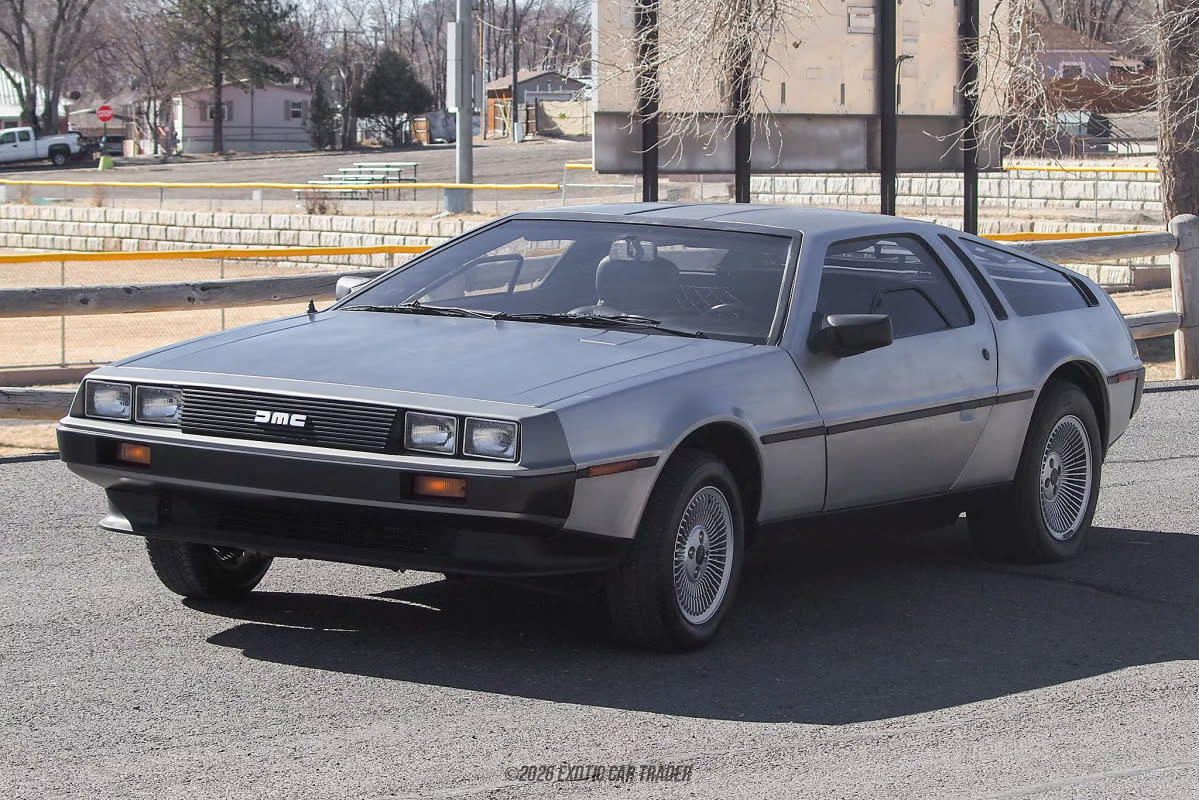
A 1981 DeLorean DMC-12 with 34,758 miles is currently listed for $59,900, giving collectors a shot at a well-preserved example from the model’s very first year of production — and, notably, one equipped with the five-speed manual transmission enthusiasts consider the more desirable way to drive it.
Why Stainless Steel Condition Matters So Much
The DMC-12’s signature brushed stainless-steel body panels sit over a fiberglass underbody, which is itself carried by a steel backbone chassis developed with engineering input from Lotus founder Colin Chapman. That structure gave the car stable, predictable handling for its era, backed by four-wheel independent suspension and four-wheel power disc brakes — genuinely advanced hardware for a car built in the early 1980s, even if straight-line performance was never the point.
Condition on the stainless panels is arguably the single biggest factor in this car’s value. Unlike painted body panels, stainless steel can’t simply be repainted or filled if it takes a dent or gets damaged, which makes clean, undamaged bodywork disproportionately valuable when pricing a DeLorean. That’s a major selling point for this particular example.
A Cabin That Reflects Its Early Build Date
Inside, the car retains a largely original black leather interior. Later DeLoreans sometimes shipped with grey trim, so the darker color here reflects the configuration common to many early production cars. The cabin still carries the thick center console that became one of the DMC-12’s signature interior details, along with its original gauge cluster, and the car came equipped with power windows, climate control, and a cassette player — genuine luxury touches for a car built around futuristic styling as much as outright performance.
The Manual Gearbox Makes A Real Difference
Power comes from the familiar 2.85-liter PRV V6 — a joint Peugeot-Renault-Volvo design — producing 130 horsepower and 153 lb-ft of torque, numbers that put the DMC-12 closer to a grand touring car than a genuine high-output sports car. That’s exactly why the five-speed manual on this example matters so much to collectors: automatic-equipped DMC-12s routinely get criticized for dulling an already modest powertrain even further, while the manual lets a driver extract meaningfully more engagement out of the same engine.
The car’s other defining feature, its gull-wing doors, relies on gas-charged struts to counterbalance their weight and hold them open once raised. On this particular example, those struts reportedly work as intended, letting the doors open and stay upright without the sagging or failure that’s a common headache on higher-mileage DeLoreans.
Why The DMC-12 Still Draws Attention Decades Later
The DeLorean remains one of the most recognizable cars of the 1980s, built around a genuinely international engineering effort: French-sourced V6 power, Lotus-derived chassis design, and unpainted stainless bodywork that sidestepped rust concerns entirely while giving the car a look nothing else on the road shared. That combination of distinctive design and real engineering pedigree is why well-kept examples still command serious money more than four decades after the car went out of production.
At $59,900, this particular car lands right where buyers should expect a clean, low-mileage, manual-equipped DMC-12 to land in today’s market. Between the mileage, the largely original presentation, and undamaged stainless bodywork, it represents a solid entry point for anyone looking to own a car that still looks like nothing else built before or since.
About the Author