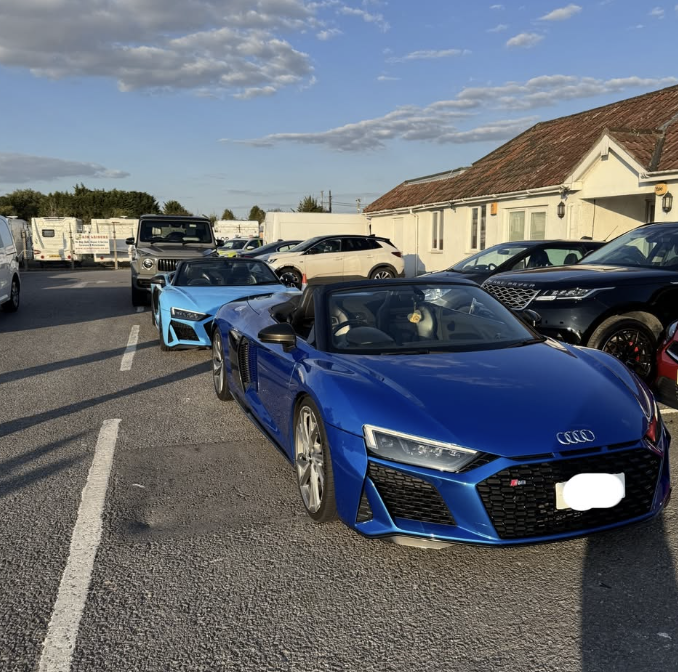
Somewhere in North Somerset there is a wedding album with a gap in it. Four cars that were supposed to roll up to the reception spent the evening on the back of a police recovery truck instead.
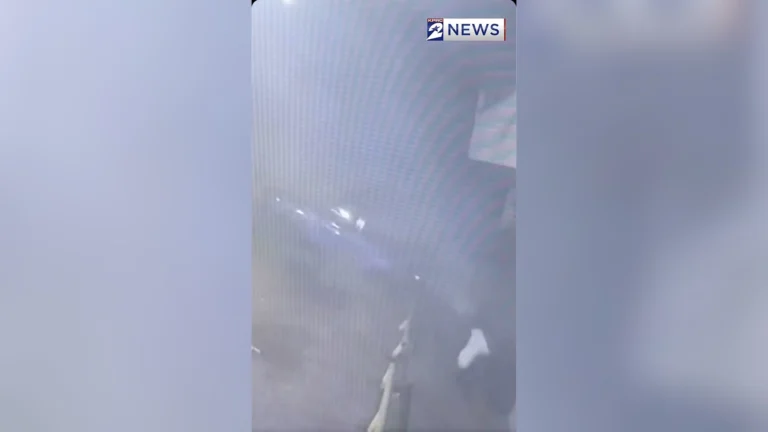
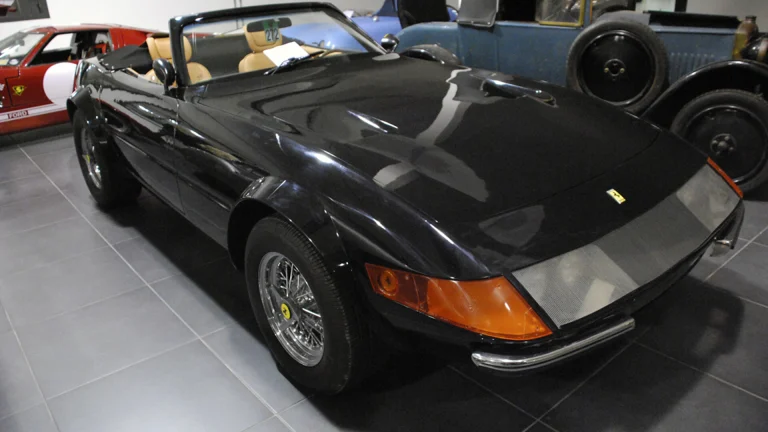
Avon and Somerset Police say they took calls at around 6.10pm on Sunday 23 August about a group of cars being driven dangerously between the M32’s junction with the M4 and junction 17 of the M5 southbound. Officers caught up with the convoy on the A370 at Hewish and stopped two Audi R8s, a Mercedes G63 and a Lamborghini Huracán. All four were seized. The force says files are being compiled to report the drivers and the registered owners, and the roads policing unit’s social media post noted the group was travelling to a friend’s wedding.
Four cars seized, but the photos published by the unit show more metal than that at the roadside, and police say enquiries continue to identify other vehicles. Which tells you the convoy was bigger than the impound bill.
The legal bit everyone is glossing over
The power used here was Section 59 of the Police Reform Act 2002. It is worth understanding properly, because a lot of drivers think it applies to speeding. It doesn’t.
Section 59 lets a uniformed constable seize a vehicle when they have reasonable grounds to believe it’s being used in a way that breaches section 3 or section 34 of the Road Traffic Act 1988, which is careless and inconsiderate driving or unauthorised off-road driving, and that the use is causing or likely to cause alarm, distress or annoyance to the public. Nothing about speed. Nothing requiring a collision. A convoy running nose-to-tail across three lanes at a constant 60mph while someone hangs a phone out of a window can qualify.
Related Articles
- Dreame Bought a $10 Million Super Bowl Ad to Sell a Hypercar It Never Actually Built
- Electric Defender Timeline: What JLR Has Actually Committed To Building
Section 59 is a seizure power, not an offence. Having your car lifted under it does not mean you’ve been convicted of anything.
Here’s what changed nine weeks earlier
This is the part that makes the story more than a good caption.
Until this summer, Section 59 came with a built-in safety net. Officers generally had to issue a warning first, valid for twelve months, before they could actually take the car. There were exceptions, but in practice a first offence usually bought you a stern chat and a form.
That safety net is gone. Section 8 of the Crime and Policing Act 2026 repealed subsections (4) and (5) of Section 59 outright, and the Home Office circular confirms the effect is to remove the need to warn anyone before seizing. It came into force on 29 June 2026 and applies only to driving on or after that date.
The wedding convoy was stopped on 23 August. Under the old regime, a first-time group with no prior warnings would very likely have collected four bits of paper and carried on to the reception. Under the new one, the tow truck comes on day one.
The clock also runs faster now. Following a Home Office consultation, the government confirmed it would cut the disposal timeframe from the point of seizure to seven days, with those changes taking effect from 22 July 2026. Leave a seized car sitting in the compound while you sulk about it and you may find the compound has made its own arrangements.
What it costs to get a Huracán out of the pound
Recovery isn’t priced by what the car is worth, which is the one mercy here. The statutory scale set by the 2023 amendment regulations charges £192 to remove a vehicle up to 3.5 tonnes that’s upright and undamaged on the road, plus £26 for every 24-hour period it sits in storage. A G63 and an R8 are billed identically. Under the 2002 regulations covering Section 59 seizures, release also requires satisfying the authorised person that you’re the registered keeper or owner.
That last point matters enormously if any of these cars were hired for the day, which is extremely common for wedding convoys. The registered keeper is then a rental company, and it’s the rental company that has to physically retrieve the car. Every supercar hire contract in the country has a clause covering impound recovery, and it will not be sympathetic. Expect the removal and storage charges to be passed through, plus an administration fee, plus loss-of-use for every day the car isn’t earning. Anyone booking a car for a wedding should read that clause before the stag do, not after.
Convictions, points and premiums
The seizure and the prosecution are separate tracks. Careless or inconsiderate driving under section 3 carries three to nine penalty points and a discretionary ban.
Related Articles
- Bugatti Brouillard Homologation: Why The First Solitaire Still Isn’t Delivered
- Sold Your Car in Ontario? Why Your Name May Still Be on It
If the Crown Prosecution Service concludes the driving fell far below the standard of a competent and careful driver, and that the danger would have been obvious to such a driver, that’s dangerous driving under section 2A, and the CPS guidance explains that test in detail. That’s a different world: obligatory disqualification, and the Sentencing Council notes the court must also order disqualification until an extended retest is passed, which costs double a standard practical test and always runs over an hour.
Insurers price a DD40 endorsement roughly the way they’d price a house fire. On a car with a Huracán’s group rating, a five-year declarable conviction can quietly outcost the car’s depreciation.
The bit that’s actually easy
Nobody is telling anyone not to bring the good cars to a wedding. The failure mode here is specific and avoidable: convoys create speed differentials, and speed differentials on a motorway are how ordinary traffic ends up in the barrier. Run at normal spacing, in normal lanes, at normal speed, and regroup in a car park two miles from the venue. Then do the photos where the only thing at risk is the gravel.
The cars will look identical in the pictures. The difference is whether they’re in them at all.
Images Via: Avon and Somerset Roads Policing Unit on Facebook
About the Author