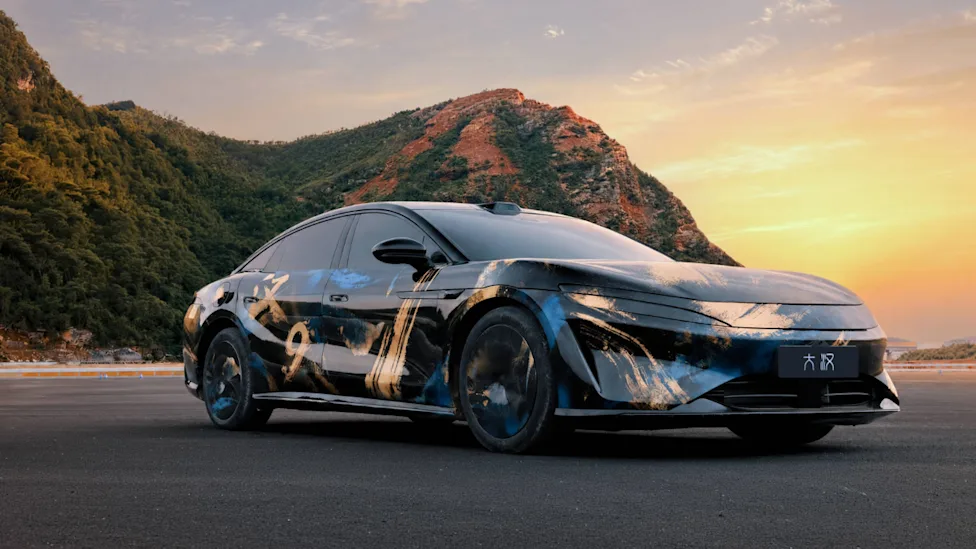
BYD has spent years quietly turning the electric vehicle market upside down, and now the Chinese automaker is going after the part of the business that legacy brands thought was untouchable. The company that already outsells Tesla globally is building a full-size luxury sedan aimed squarely at the Porsche Taycan. It is called the Great Han, known internally as the Han 9, and it signals that BYD is finished playing in the budget aisle.
The move matters because it changes who BYD is competing against. For most of its rise, the company has been associated with affordable models and high volume. The Great Han flips that story. This is a deliberate strike at the high-margin luxury segment, the kind of territory European and American brands have defended for decades.
A Car Built To Pick A Fight
In China, the Great Han is classified as a D-class vehicle. That puts it in the same size category as a full-size luxury sedan in the United States, which is exactly the footprint needed to line up against the Taycan. BYD did not stumble into this comparison. The car was designed to occupy that space.
The exterior borrows from the Han L, including a horizontal trim piece that links the headlights across the front. From the side, the Great Han stretches out with a long silhouette, and the roofline tapers back from the B-pillar in a fastback shape meant to echo European sports sedans. It is the kind of styling that telegraphs intent before the badge even registers.
Inside, the cabin pulls inspiration from the Great Tang SUV. The layout leans on luxury, comfort, and digital features, with the clear goal of outclassing the traditional premium players rather than simply matching them. BYD is not trying to look the part. It is trying to take the part.
The Numbers That Should Worry Stuttgart
Here is the part that matters. BYD does not just build cars. It builds the charging infrastructure too, and the Great Han is engineered to take advantage of the company’s megawatt flash charging technology. That means the sedan is designed to refill at speeds that make older systems look slow, a detail that hits legacy automakers where they are weakest.
The flagship will come in both plug-in hybrid and pure electric configurations, and it benefits from BYD’s second-generation Blade Battery. The early specifications are the real headline. The lineup includes an 880 km AWD LiDAR Flagship Edition and a 1,008 km RWD LiDAR Exclusive Edition. That top figure works out to more than 600 miles of range, a number that puts serious pressure on anything currently wearing a premium badge.
That detail matters because range and charging have been the two pain points that luxury EV buyers complain about most. BYD is attacking both at once, with one car, in the same segment where the establishment charges the most money.
Why The Timing Is No Accident
The Great Han is set to launch in the third quarter of this year, and it arrives with a job to do. Smaller BYD models have been dealing with recent sales slumps, and this sedan represents a push to reverse that by climbing upmarket. Instead of fighting harder for low-margin sales, the company is going where the profit lives.
The ambition here is bigger than one sedan. BYD is not just trying to sell more cars. It is trying to change the kind of customer it attracts. A Taycan rival tells the world that BYD wants the buyers who currently sign checks to Porsche, Mercedes, and Audi. That is a different ambition than flooding the market with cheap EVs, and it is a far more direct threat to the old guard.
The Bigger Target Across The Ocean
The Great Han is one piece of a larger plan. BYD’s ultimate goal includes entering the North American market, with 2026 set as the arrival window for Chinese brands. The company is assembling a broad lineup capable of rattling both American and European competitors, and it has already shown it can build vehicles that legacy automakers only talk about. The Yangwang U8 hyper SUV, which can float on water, made that point loud and clear.
For now, Western enthusiasts are stuck watching from a distance. The Great Han is not on this side of the ocean yet, and the 2026 timeline means the wait will continue. But the message is impossible to miss. BYD is no longer content owning the mass market. It is hunting the luxury segment, and it is bringing real range, real charging speed, and real intent to the fight.
If the Great Han delivers supercar acceleration to go with those range figures, the brands that have ruled the premium EV space will finally have to answer for their prices. The only question left is how ready they are for a competitor that builds the car, the battery, and the charger all at once.
Source
Images Via: BYD
About the Author